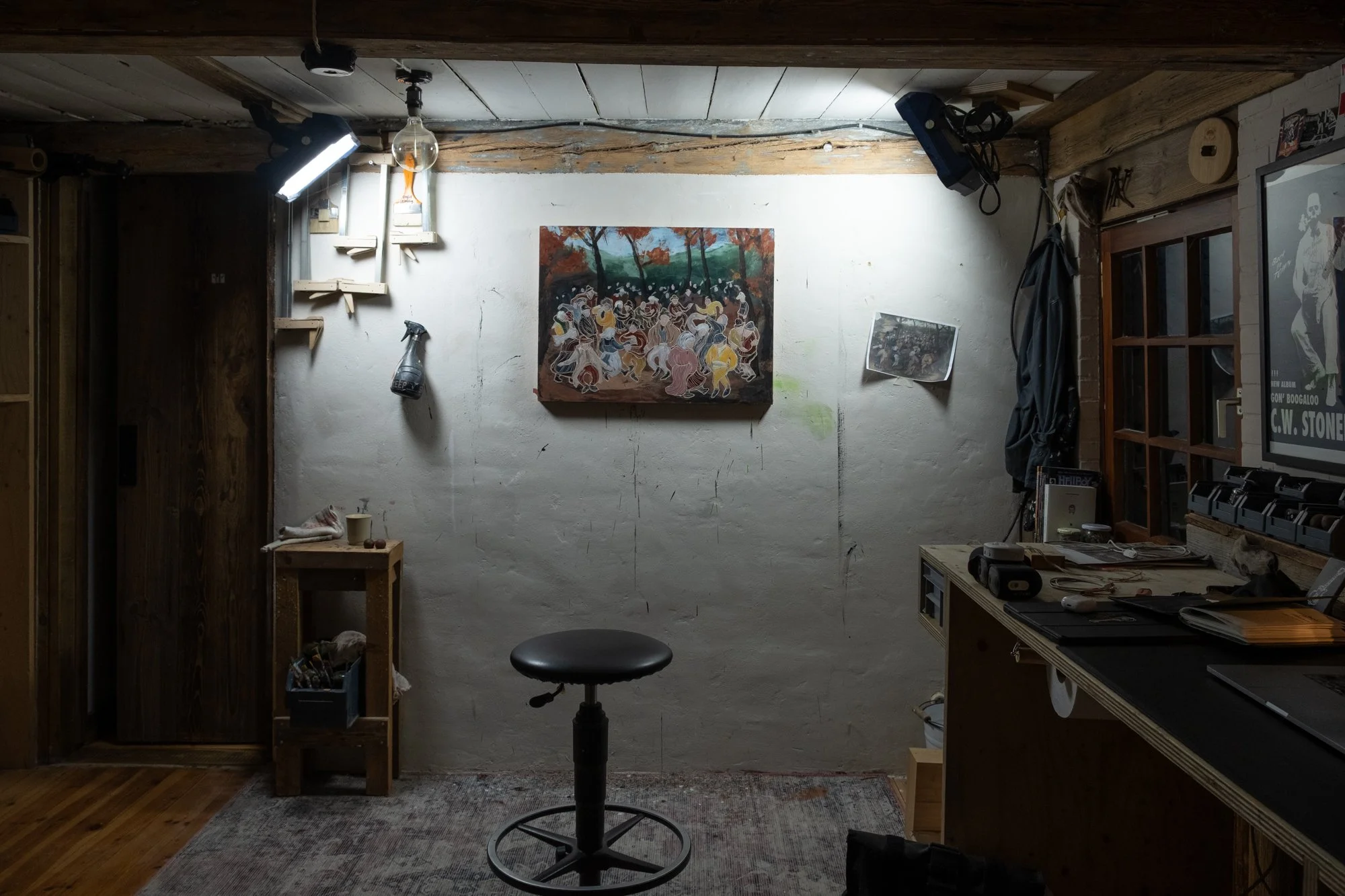
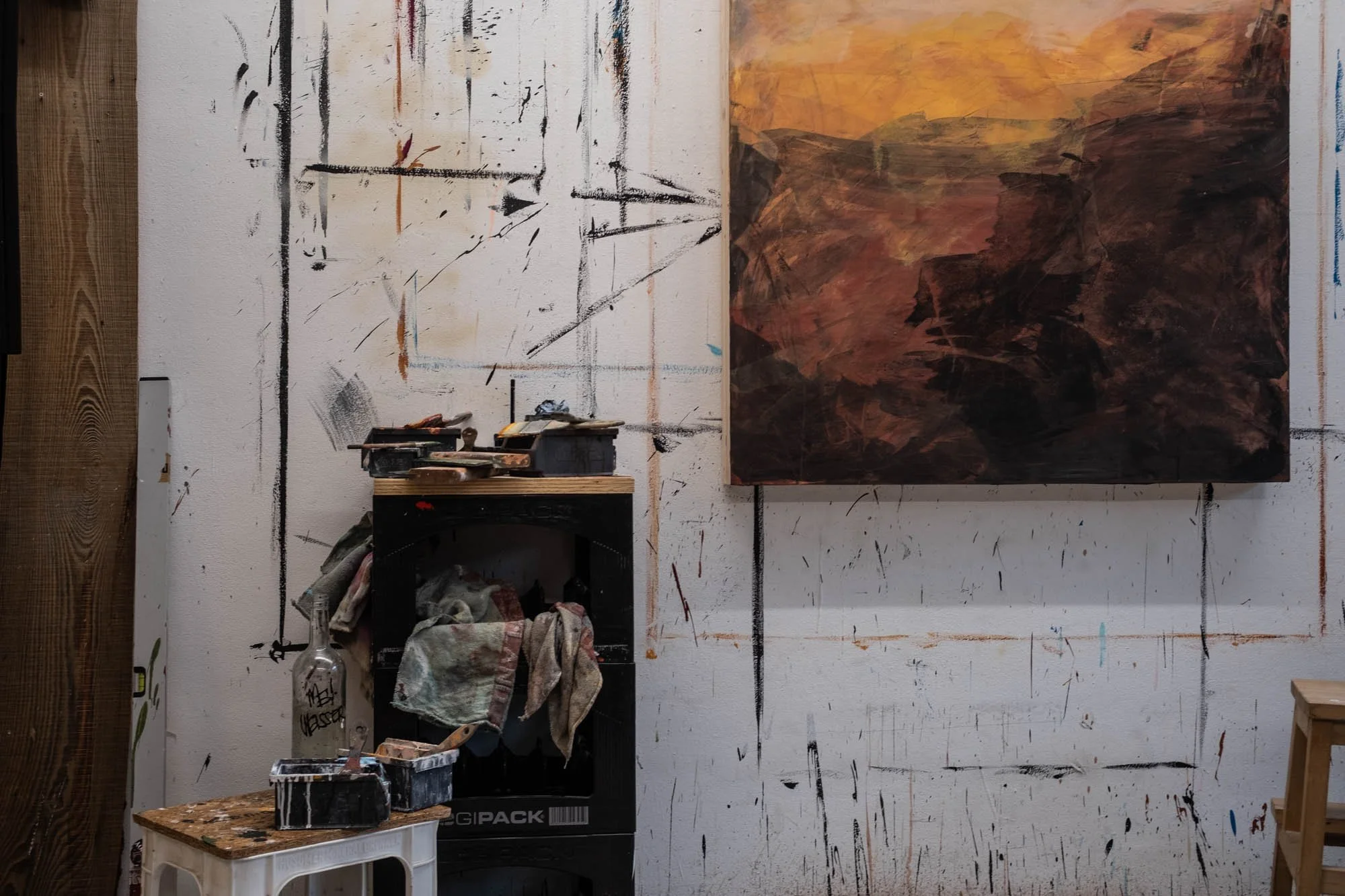
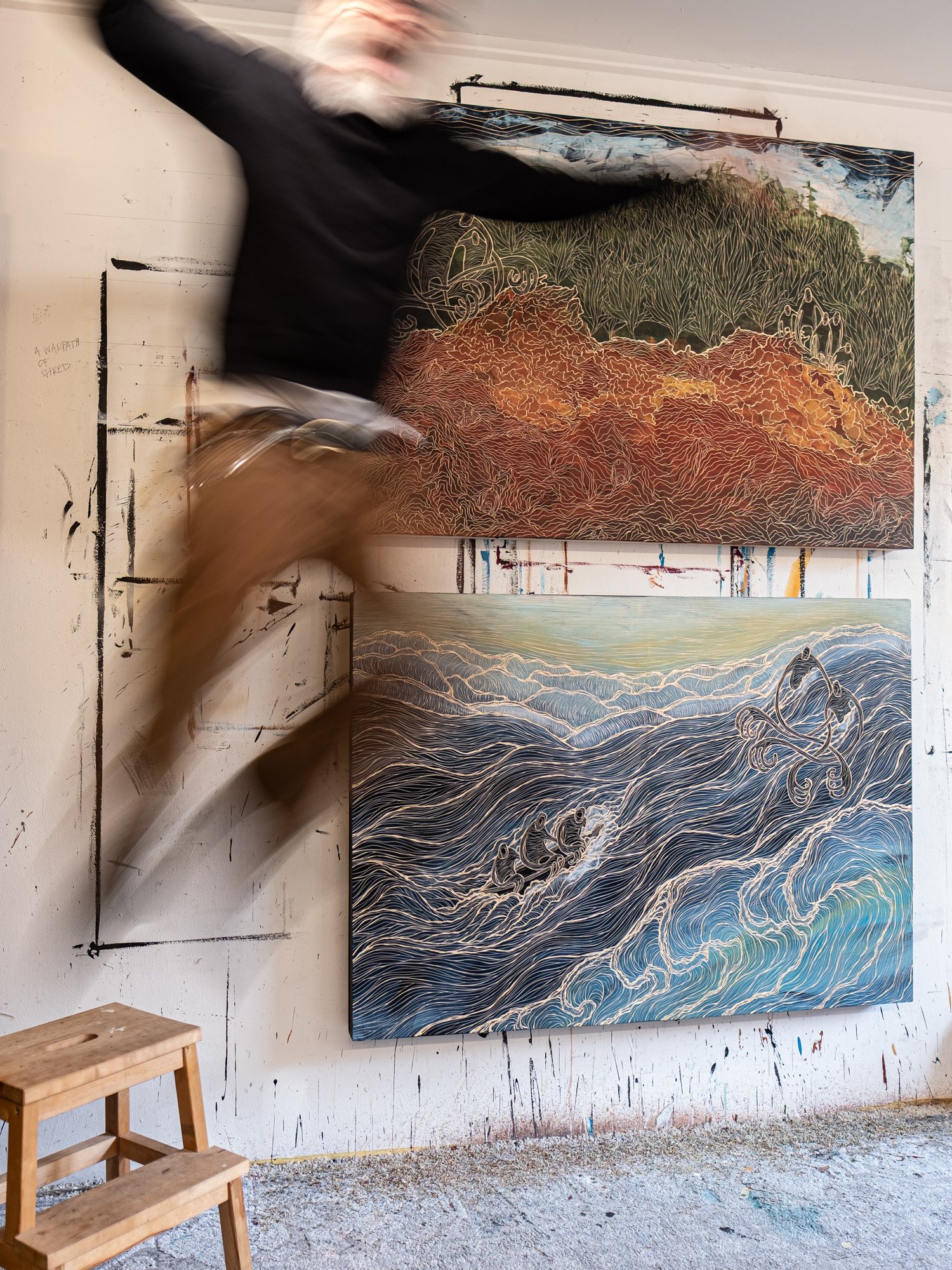
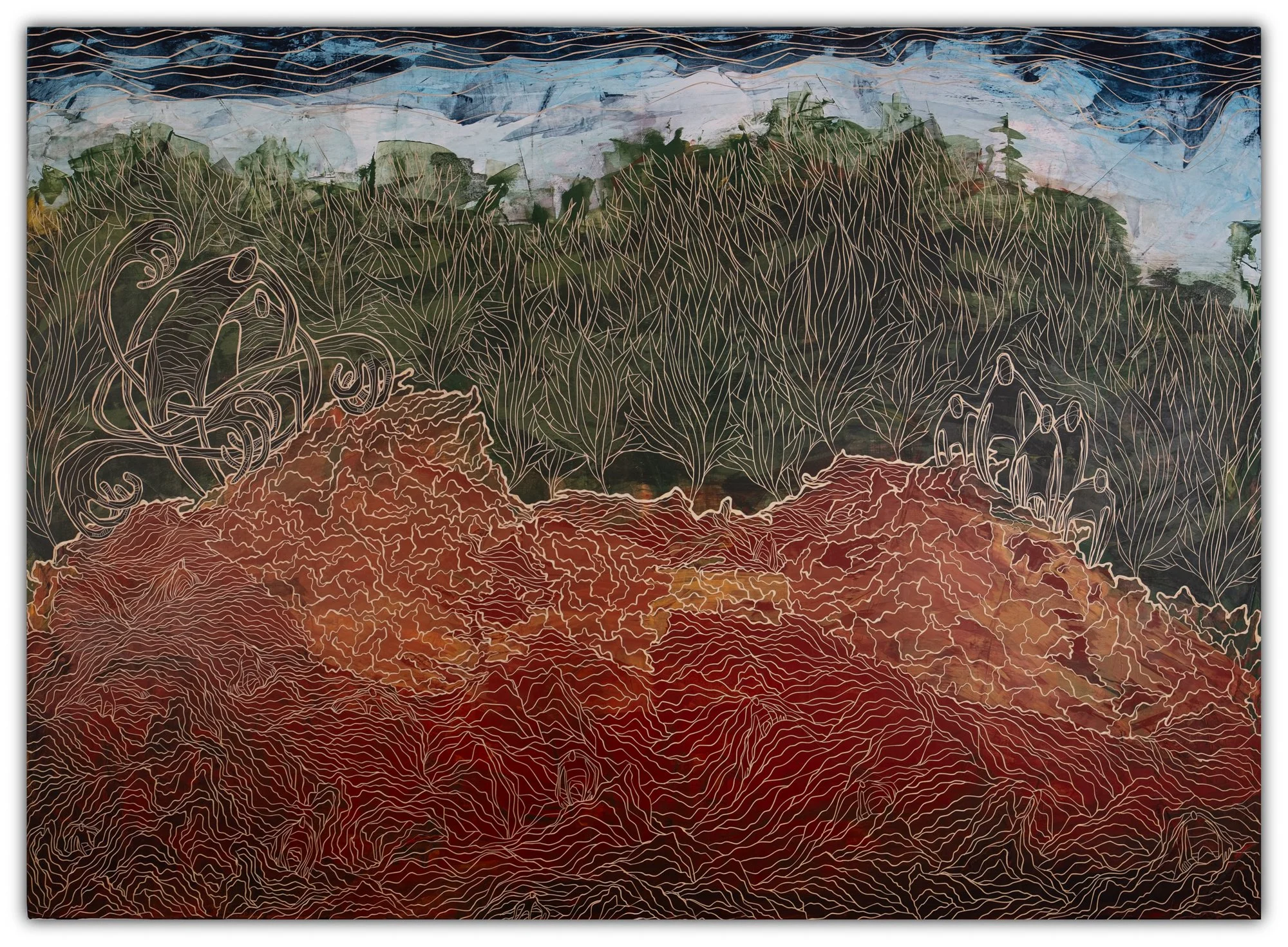
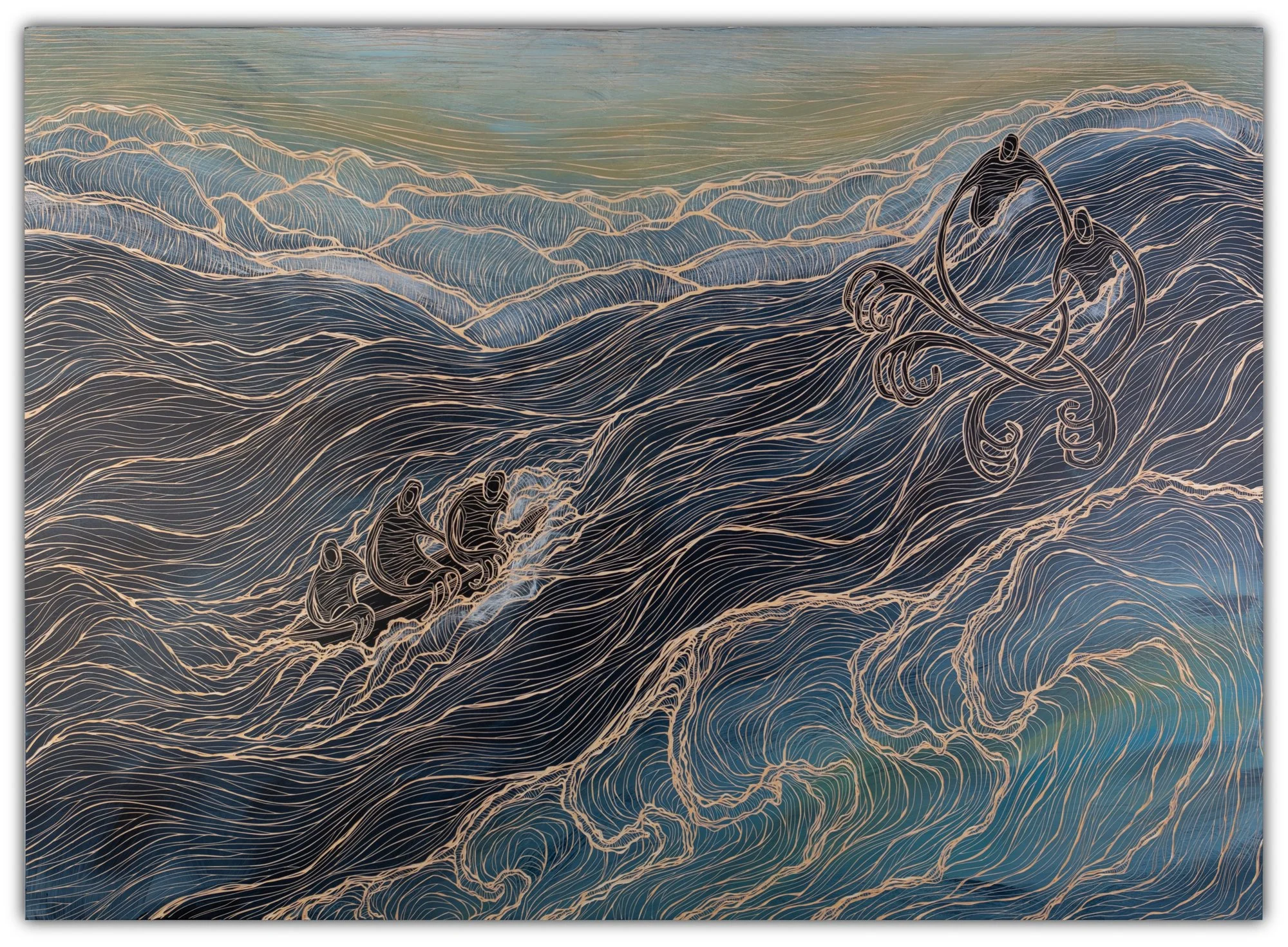
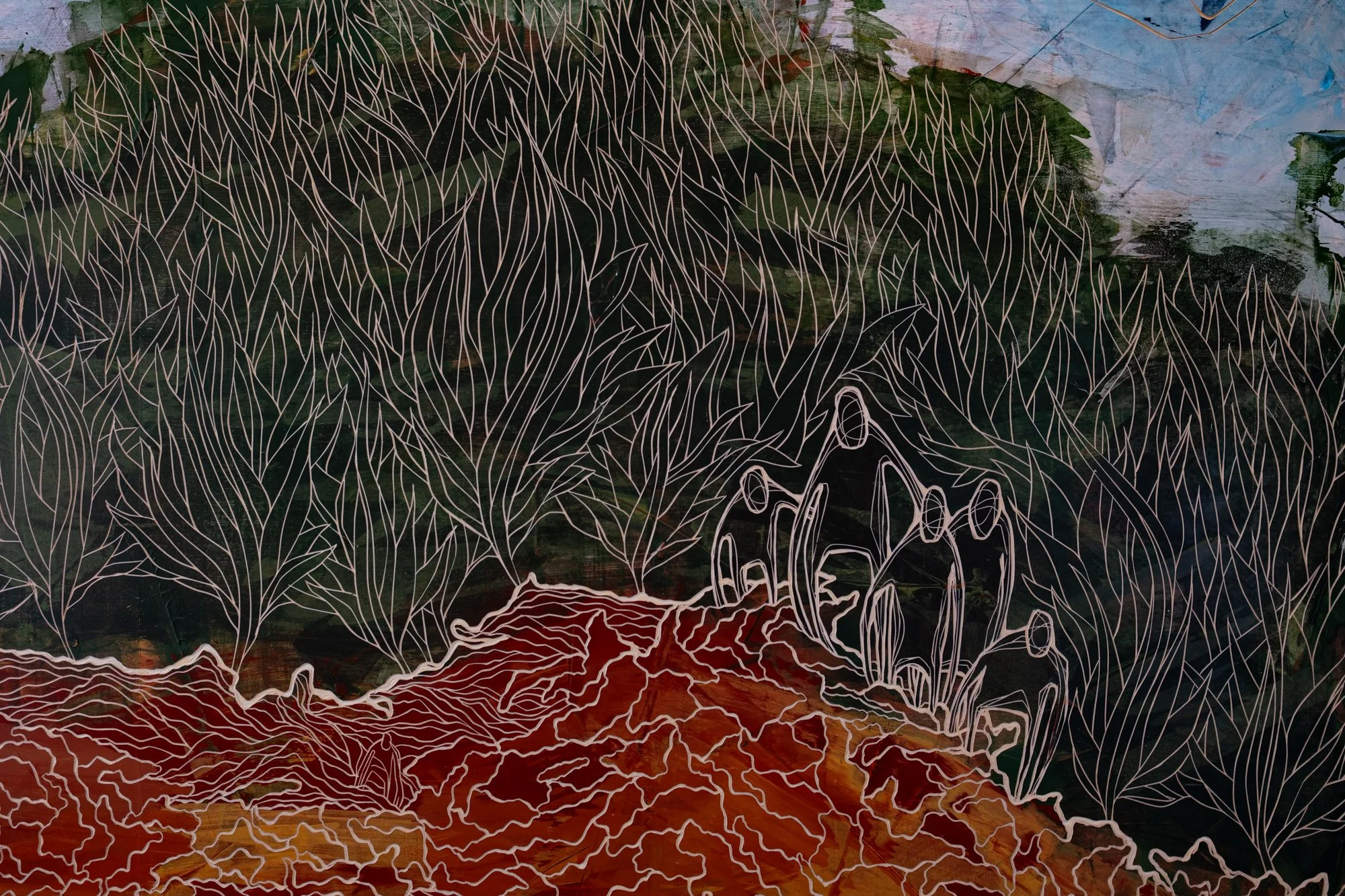
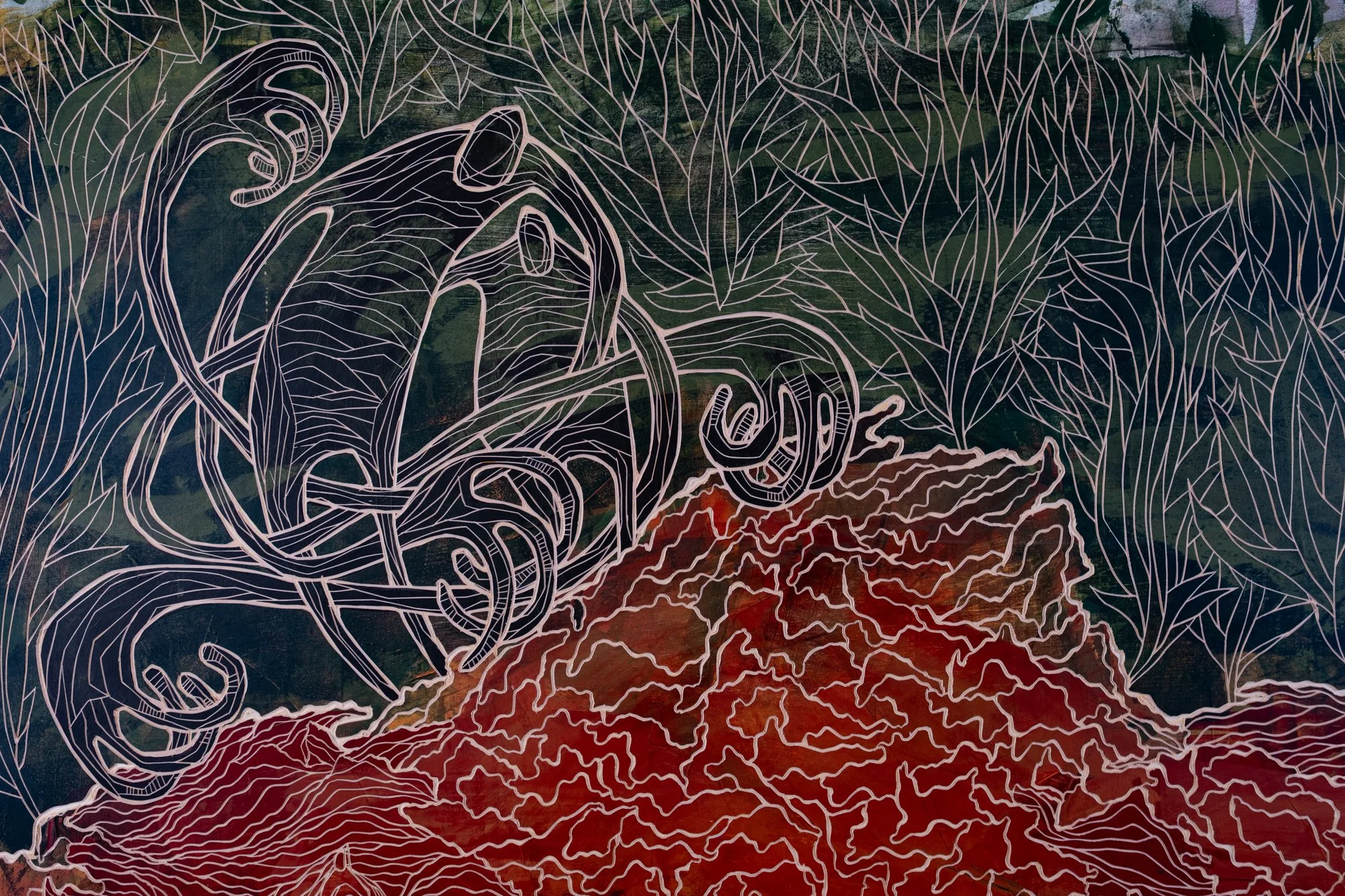
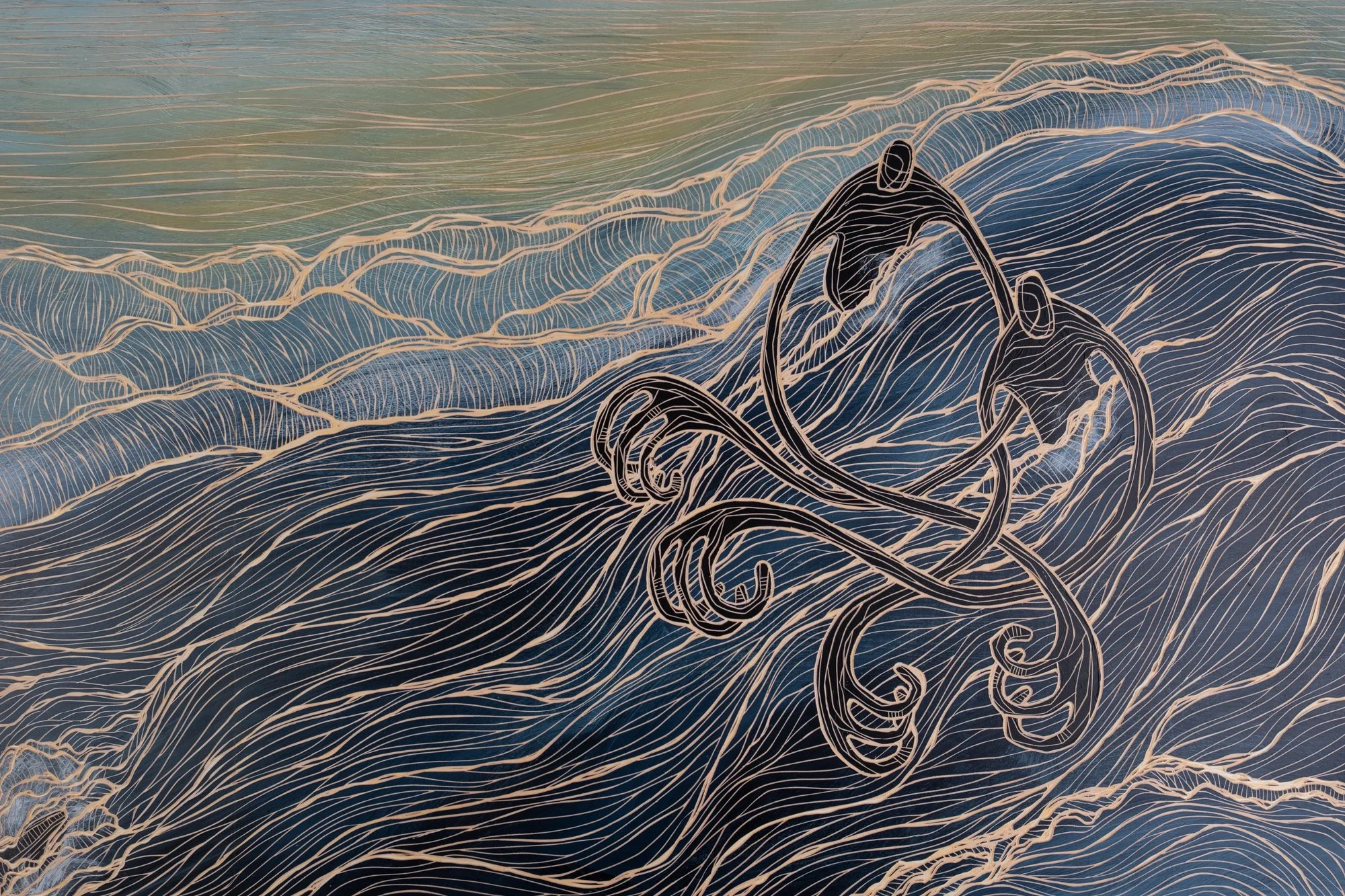
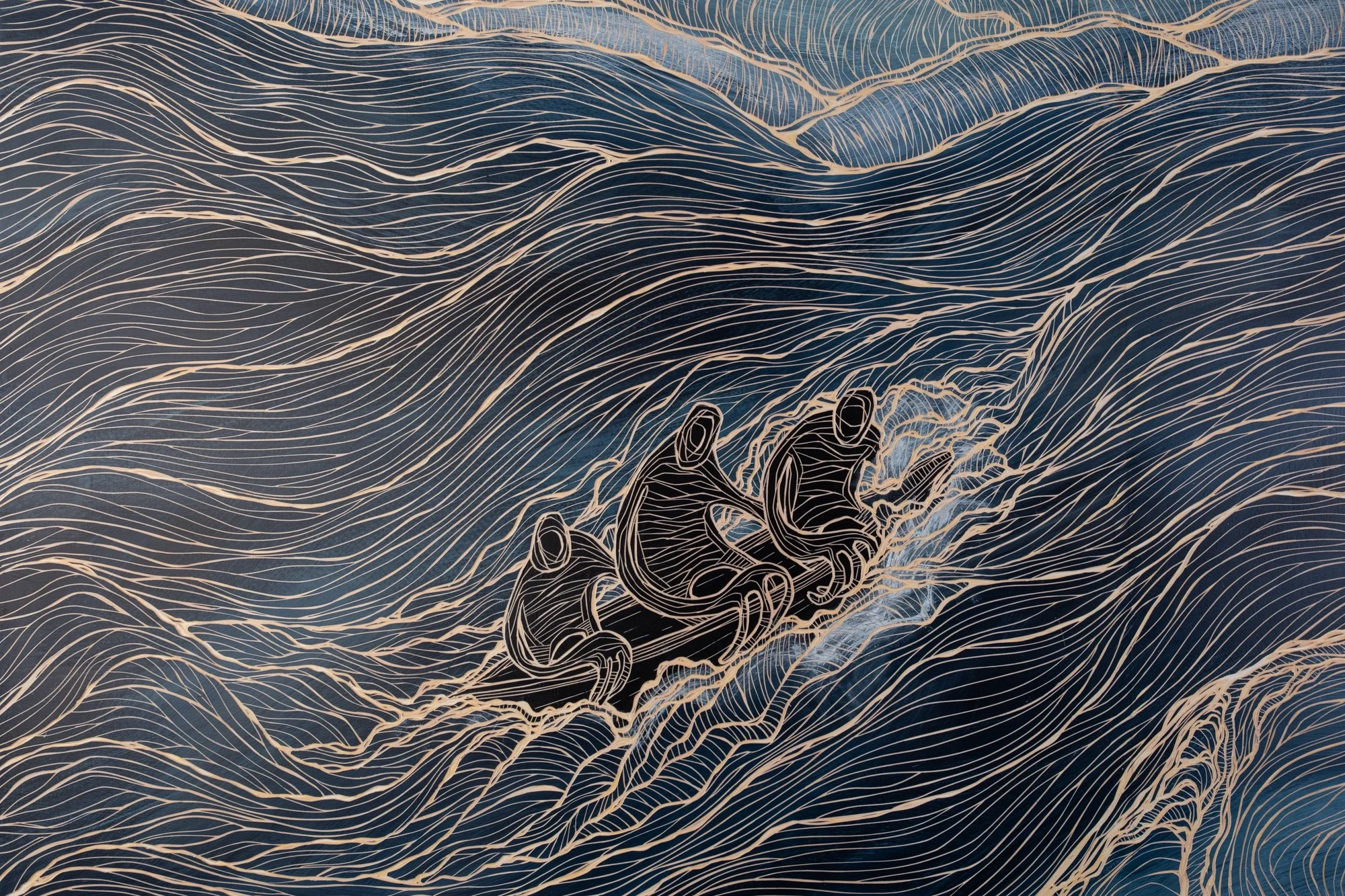
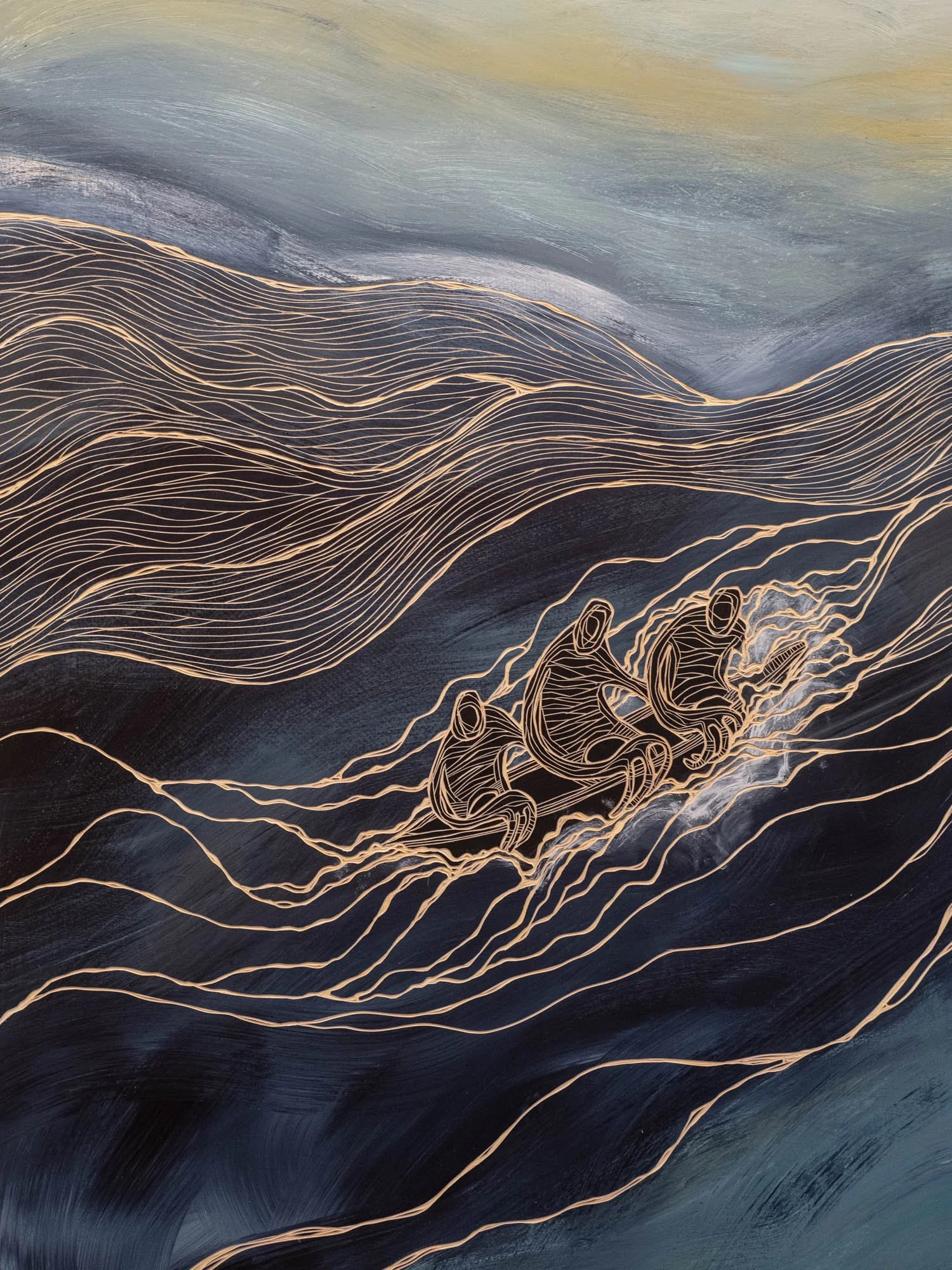
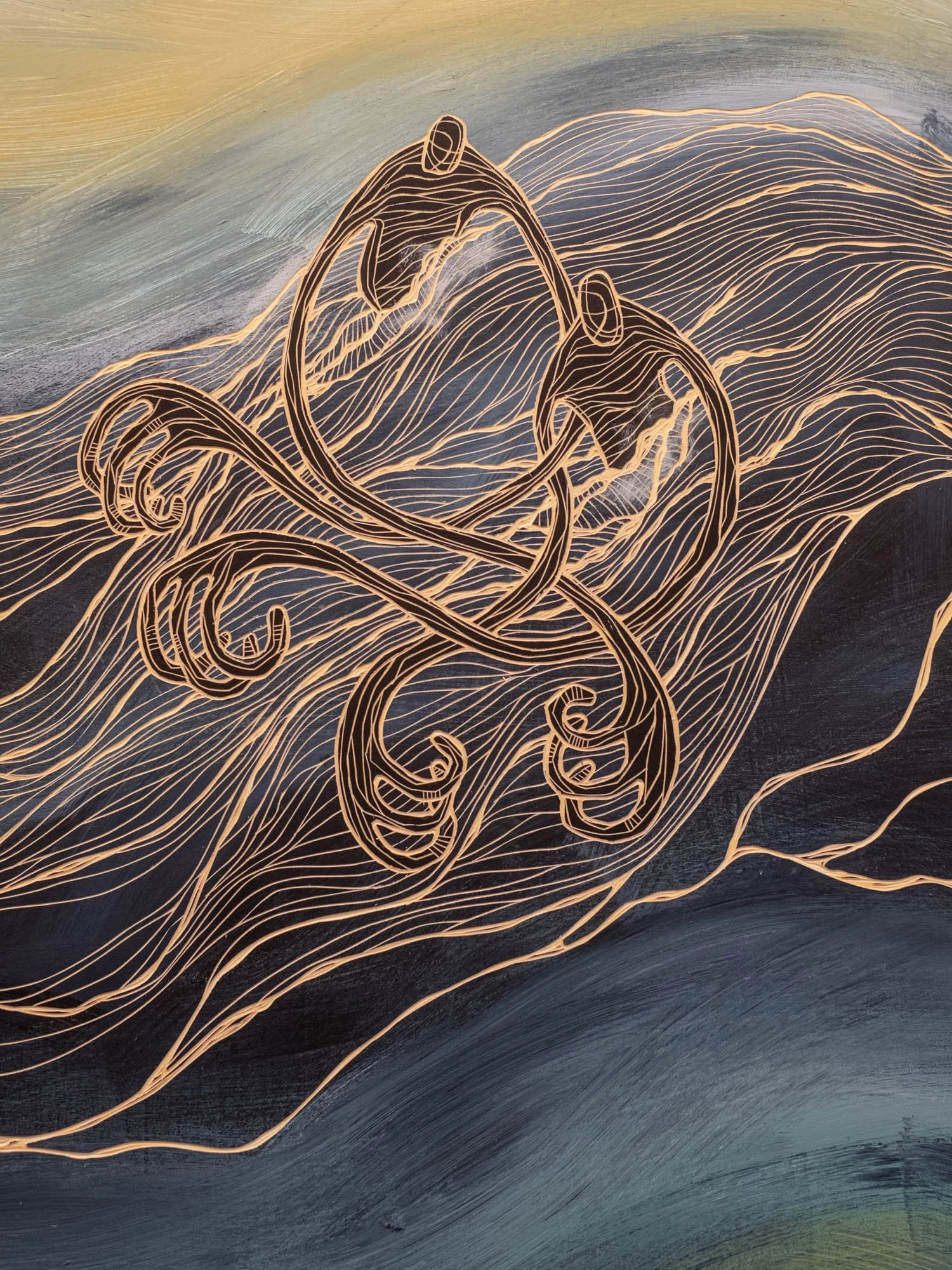
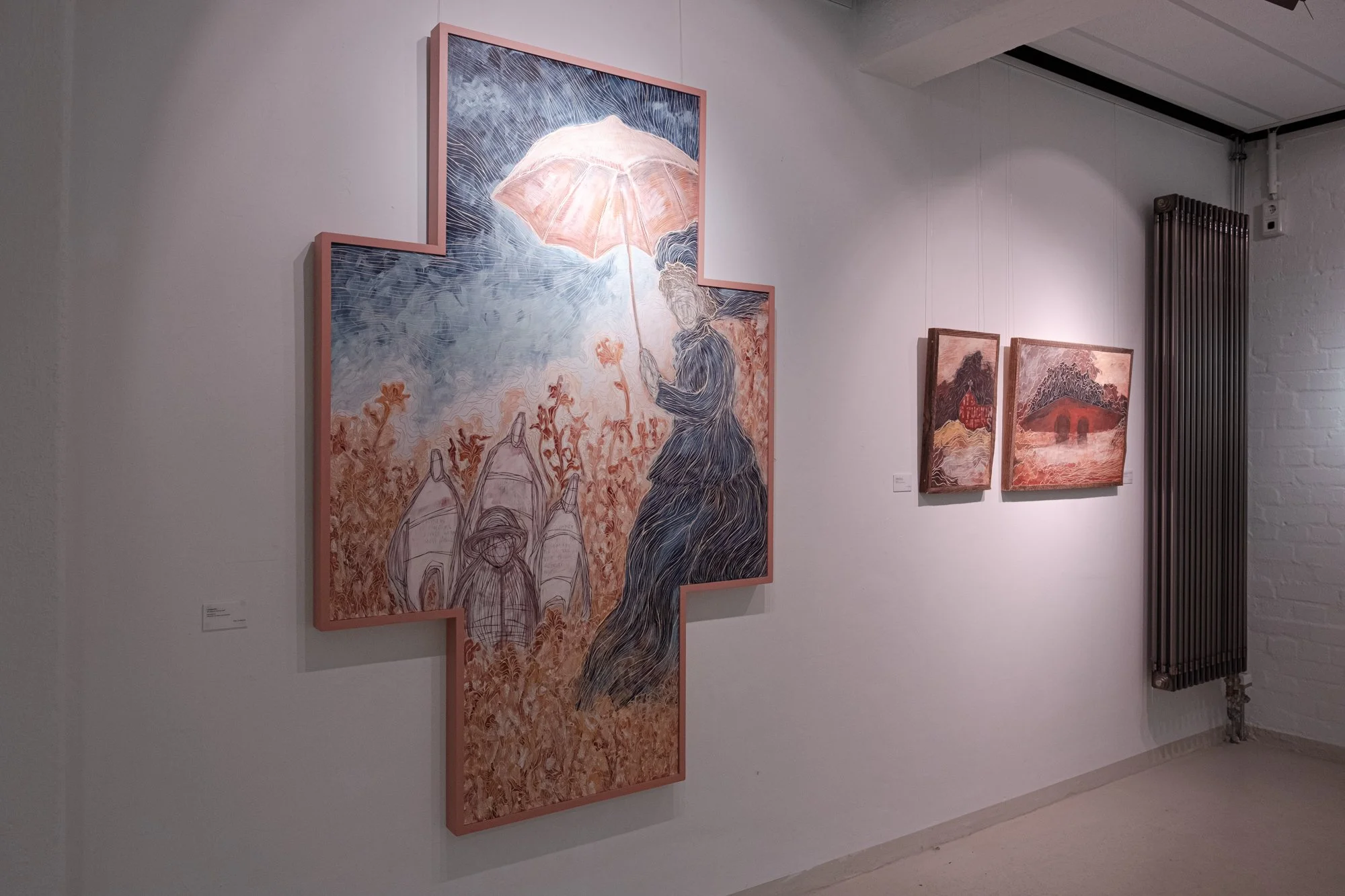
I began in January with Claude Monet („Waterlilies and Agapanthus“, 1923), then moved on to Egon Schiele („Four Trees“, 1917), dove into the painterly genius of J. M. William Turner („Evening Landscape with Bridge and Castle“, 1798-99), and finally worked with Max Ernst’s „Arbre solitaire et arbres conjugaux“ (1940).
Max Ernst – that was probably the most obvious choice for me.
Why? Here’s a little insight into my own biography:
Max Ernst (1891–1976) fascinated me back in school – probably because he was born in Brühl (near Cologne) and played a big role there. I was raised in Brühl, and I went to the high school named after him. My earliest exhibition visits back then were to the annual presentations of the Max Ernst Scholarship winners at the local information center, where my mother worked.
At that time, I was captivated by the Surrealists and deeply familiar with Max Ernst’s history and work. So from very early on, he was one of the most formative artists for me.
Today, there’s a wonderful Max Ernst Museum in Brühl. Back then, there was only a small cabinet – more like an archive – lovingly run by volunteers, and a plaque on his birthplace.
Without comparing myself to him, there are definitely parallels in my own artistic journey that might remind people of Max Ernst – perhaps most visible in the diversity and abrupt shifts of styles, techniques, series, and themes: the restless search for ways to express an insatiable mind.
Very much in Ernst’s spirit:
“For me, painting is neither decorative amusement nor the plastic invention of felt reality. It must always be: invention, discovery, revelation.”
And that, in a way, brings us full circle to the beginning of this rather long text.
In the introduction to a major Max Ernst exhibition at Fondation Beyeler in Basel in 2013, curators Raphaël Bouvier and Ioana Jimborean wrote:
“Max Ernst’s creativity in dealing with images and sources of inspiration, the ruptures between numerous phases and subjects, surprise the viewer. Like a revolutionary of vision, he recombined images, creating new connections between images and the viewer’s consciousness.What remains constant is the consistency of apparent contradiction.”
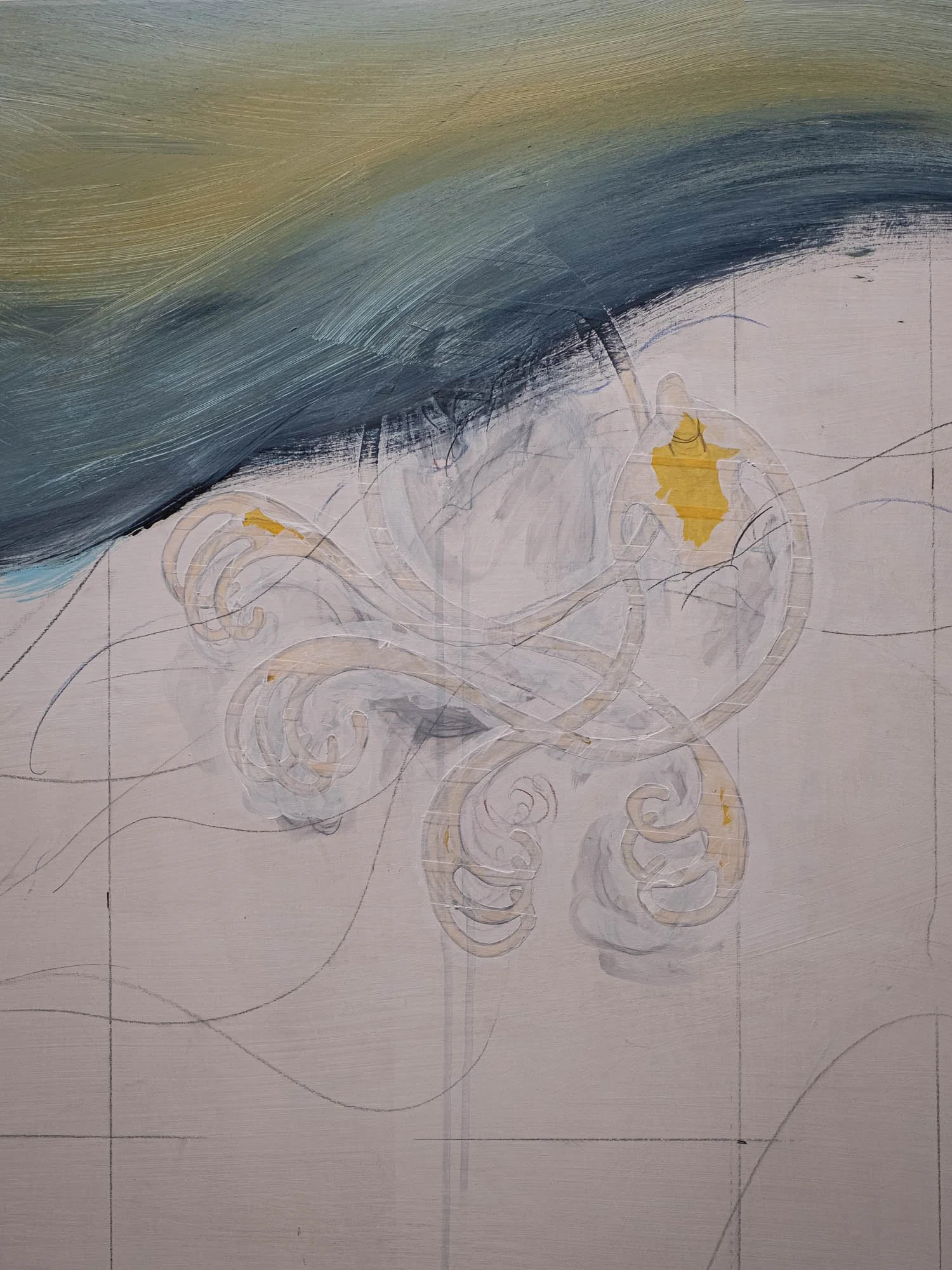
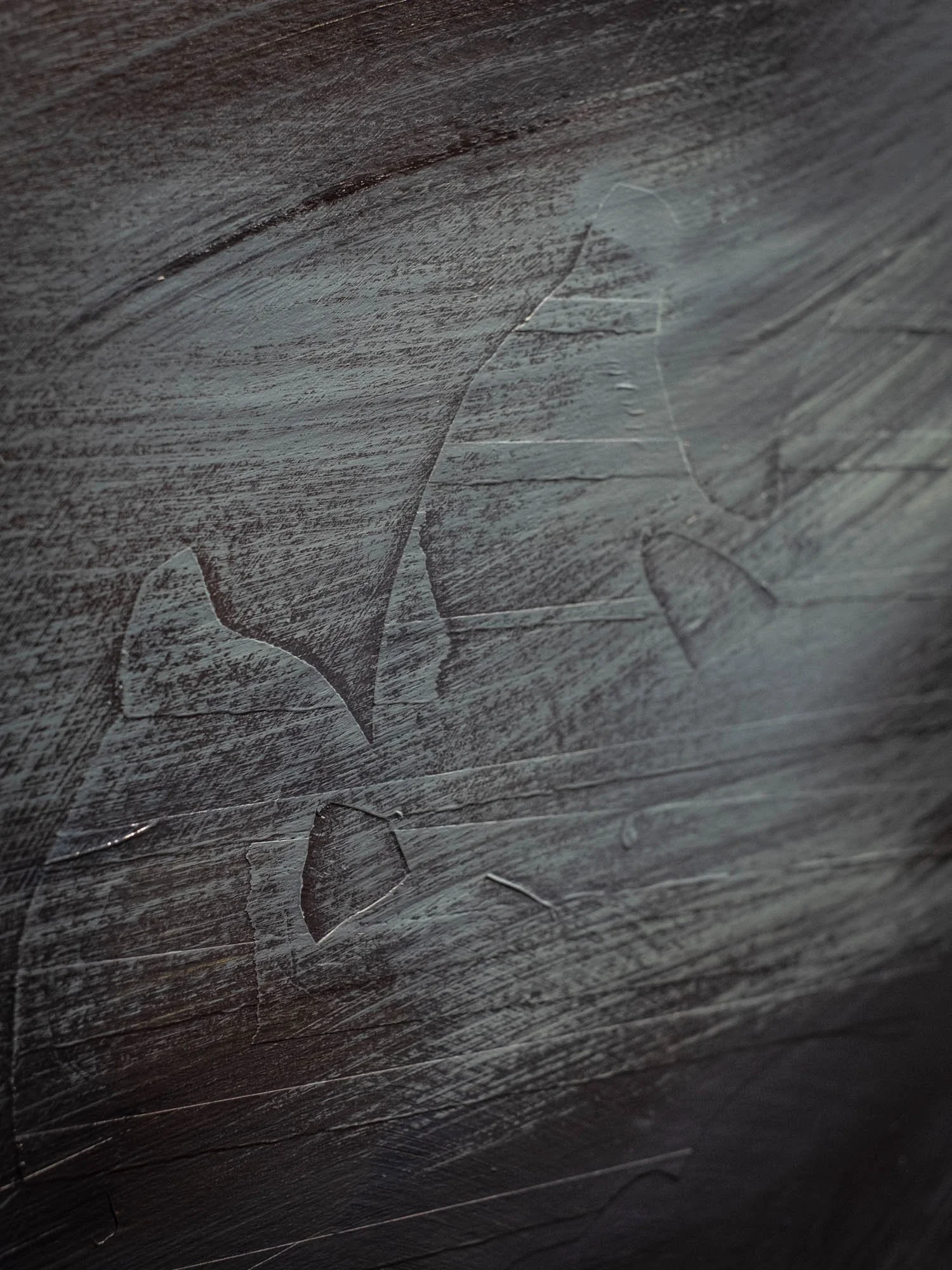
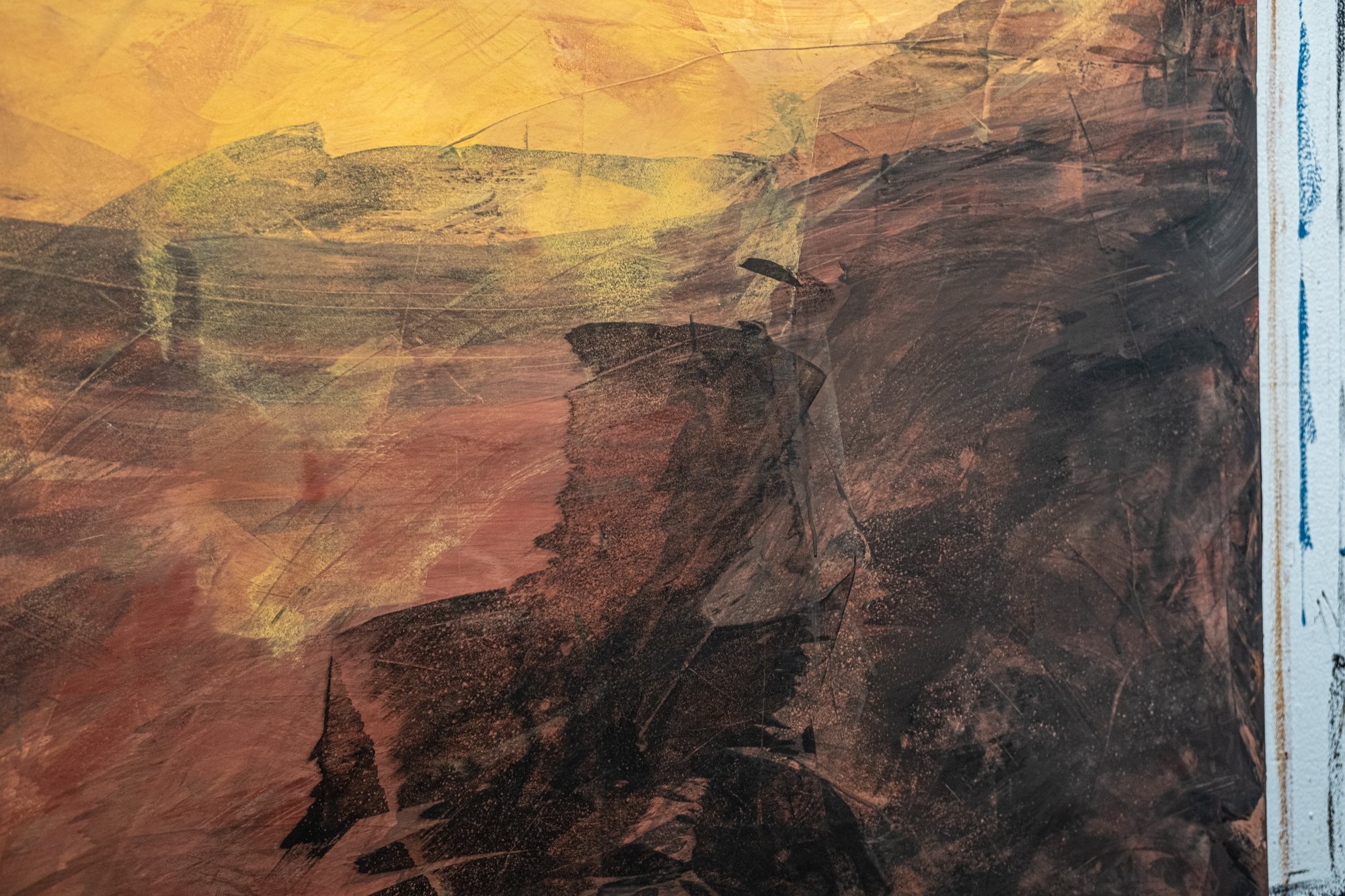
Two of the techniques Max Ernst experimented with and ultimately perfected were central to my reinterpretation of his 1940 work „Arbre solitaire et arbres conjugaux“:
The transfer technique of decalcomania and frottage.
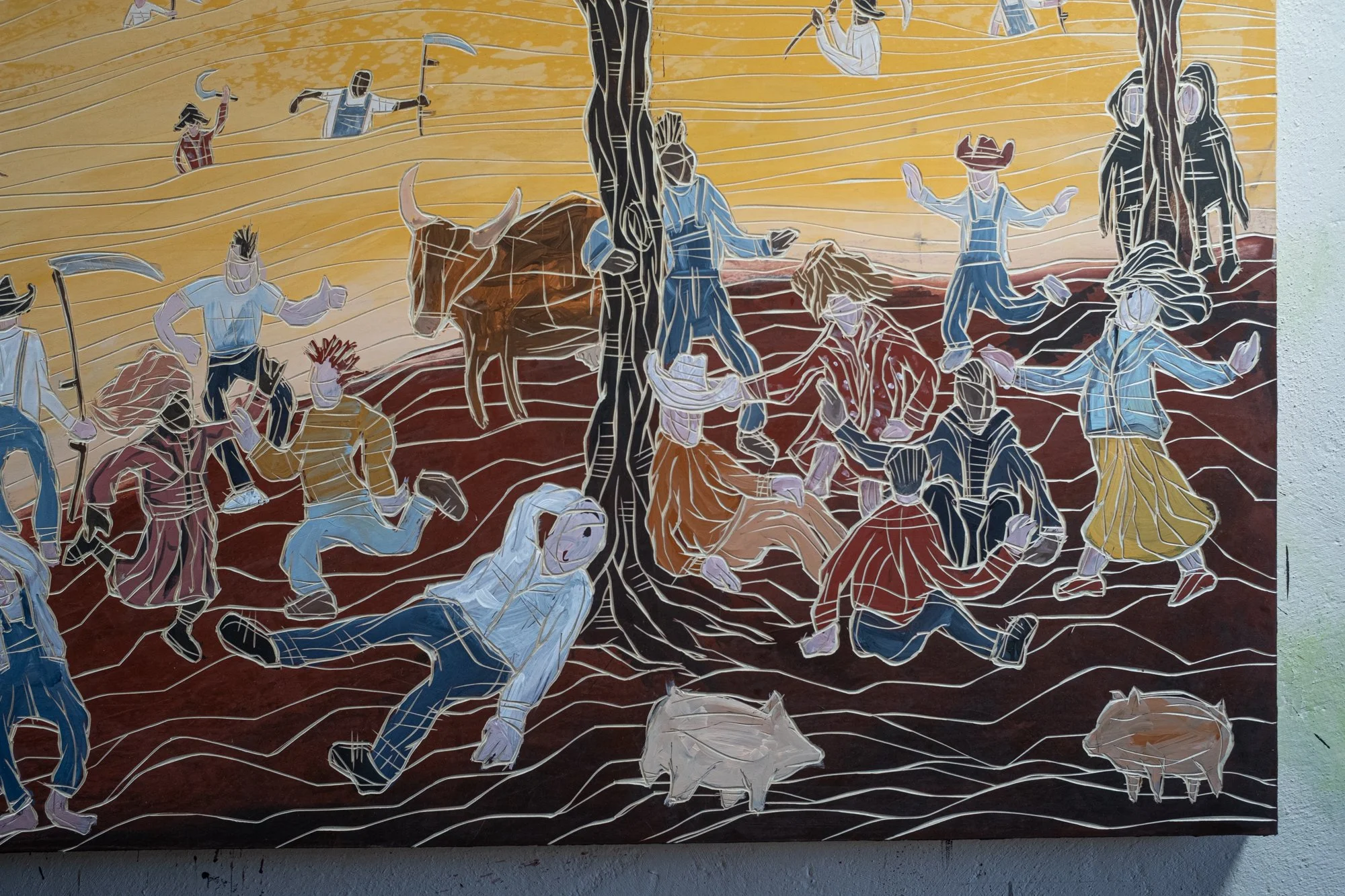
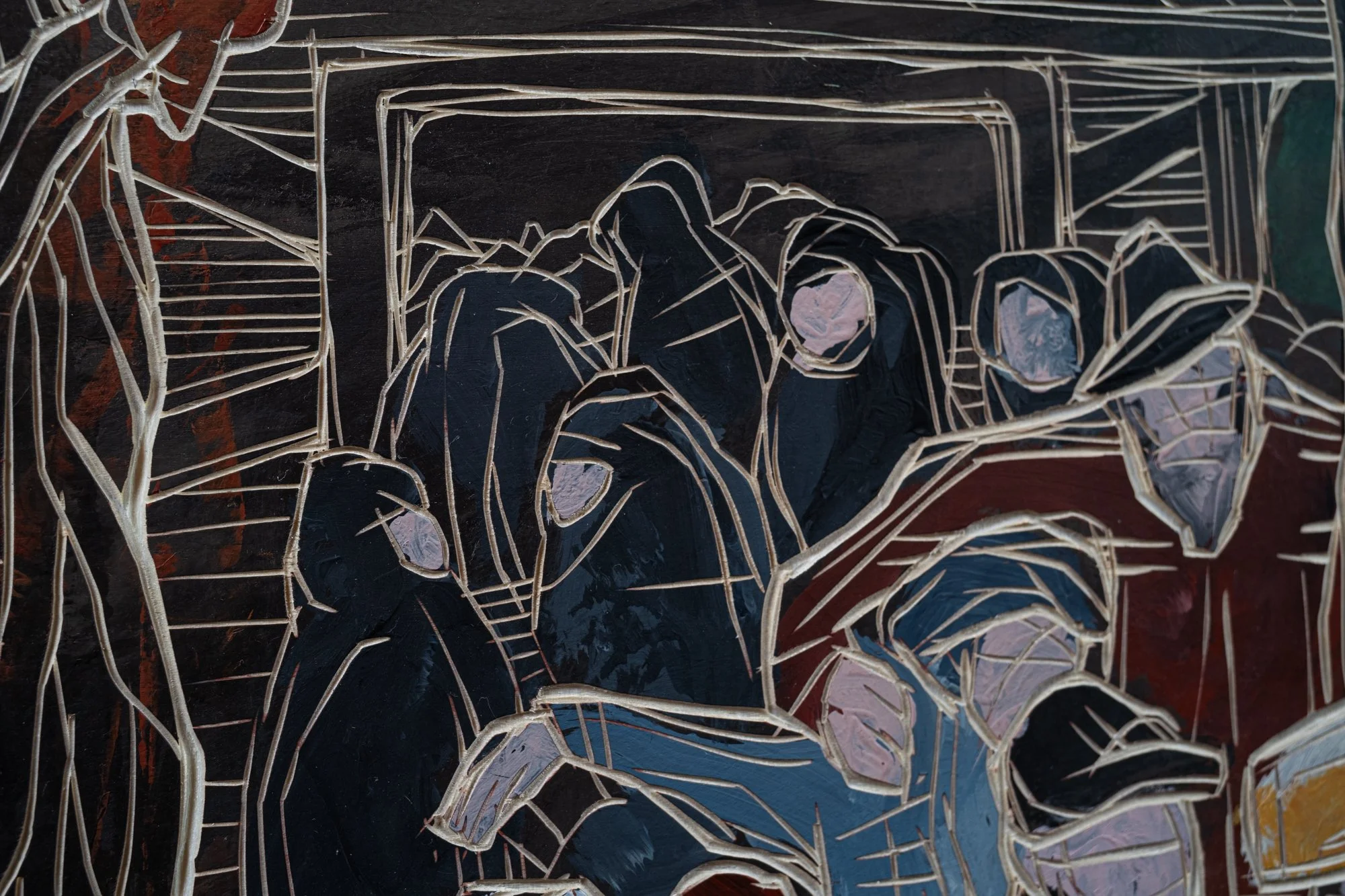
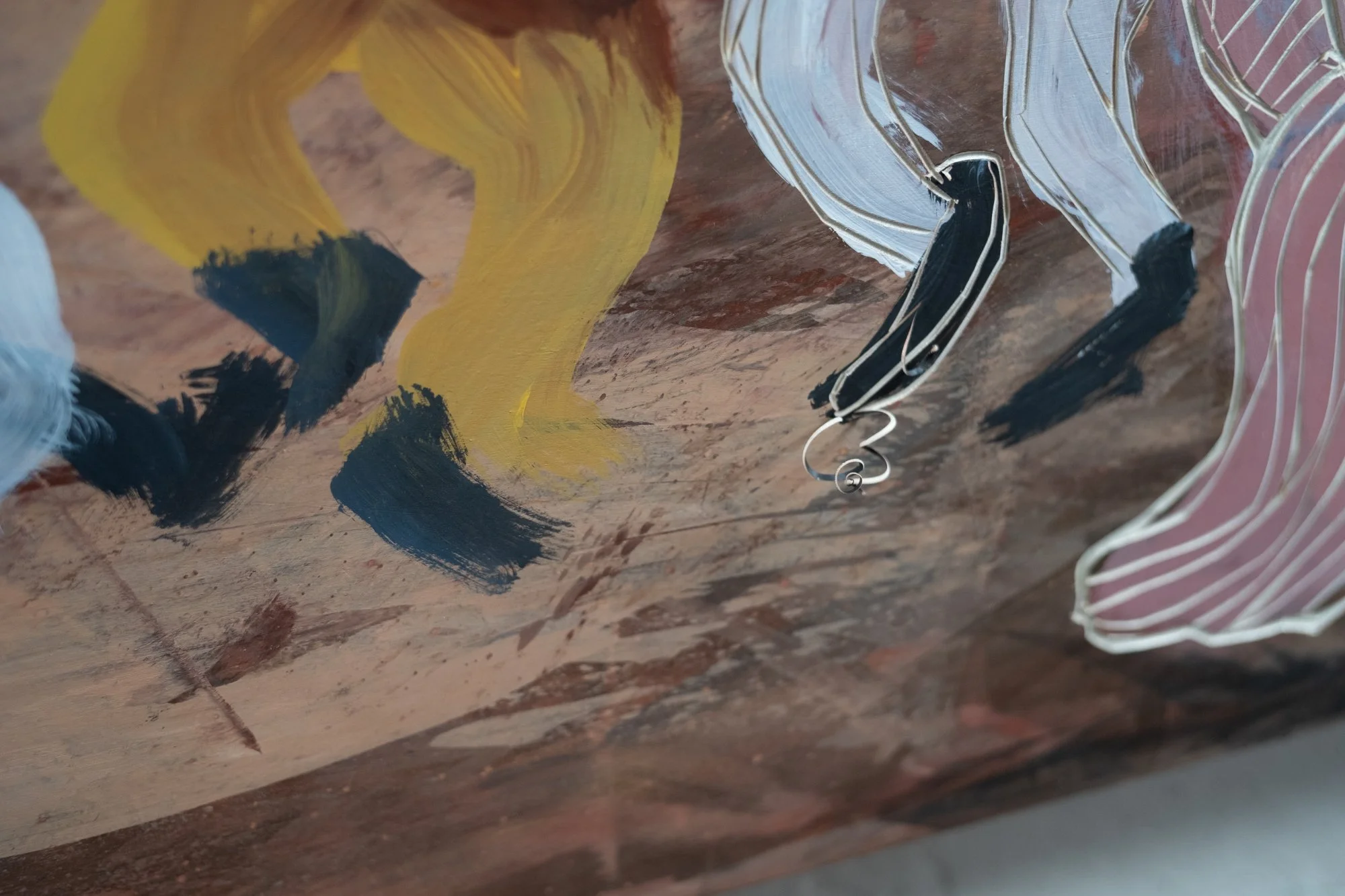
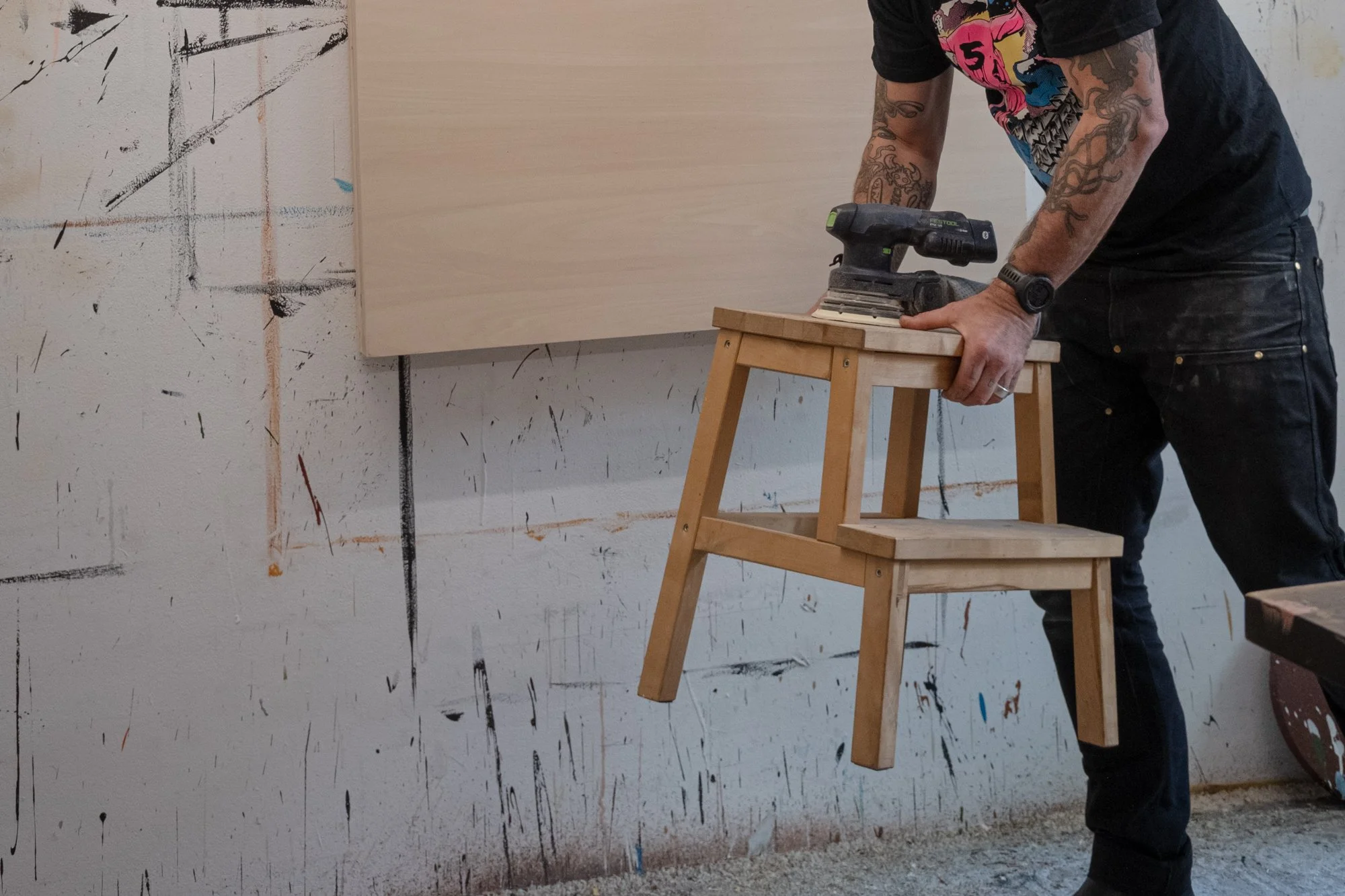
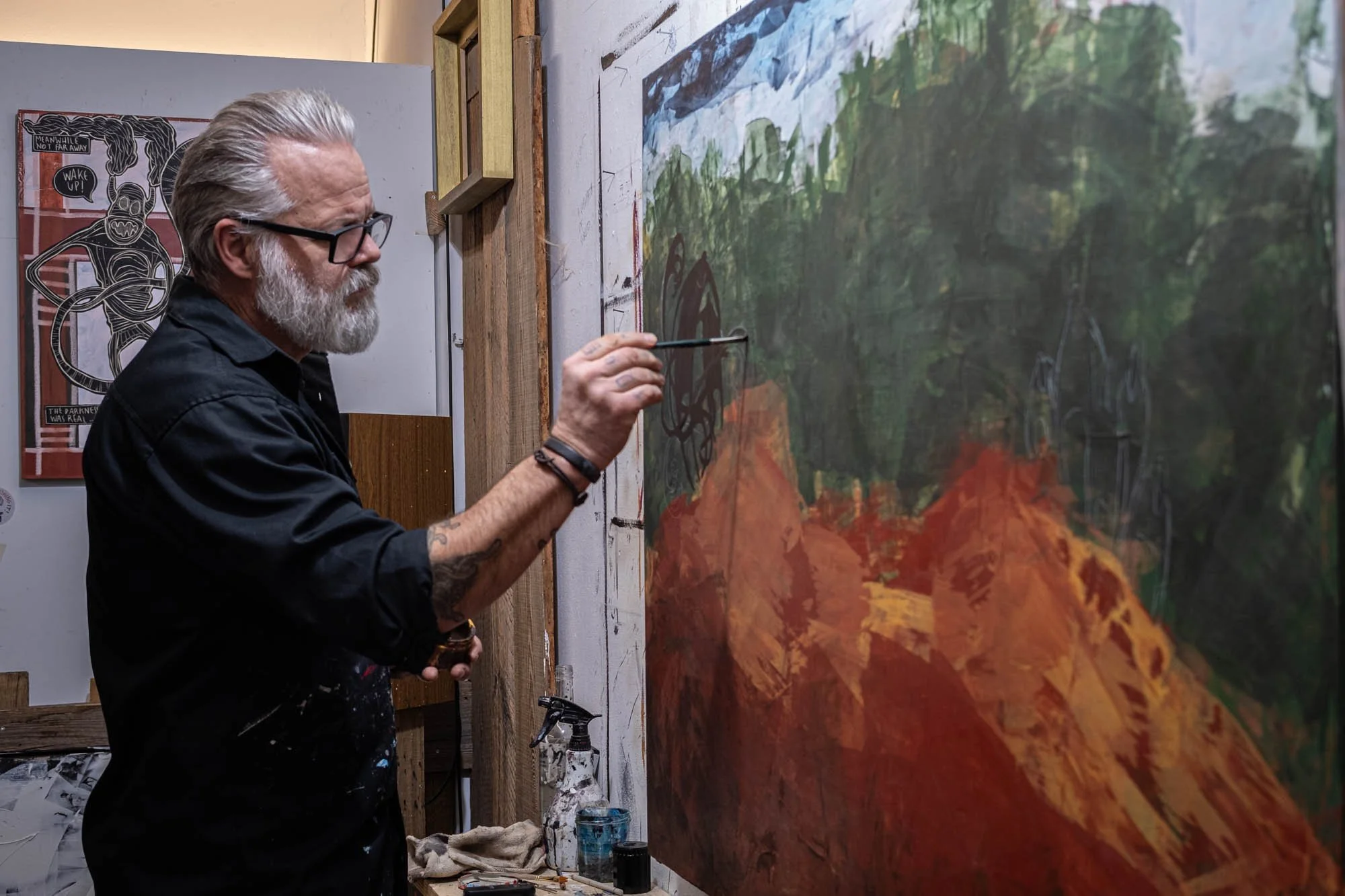
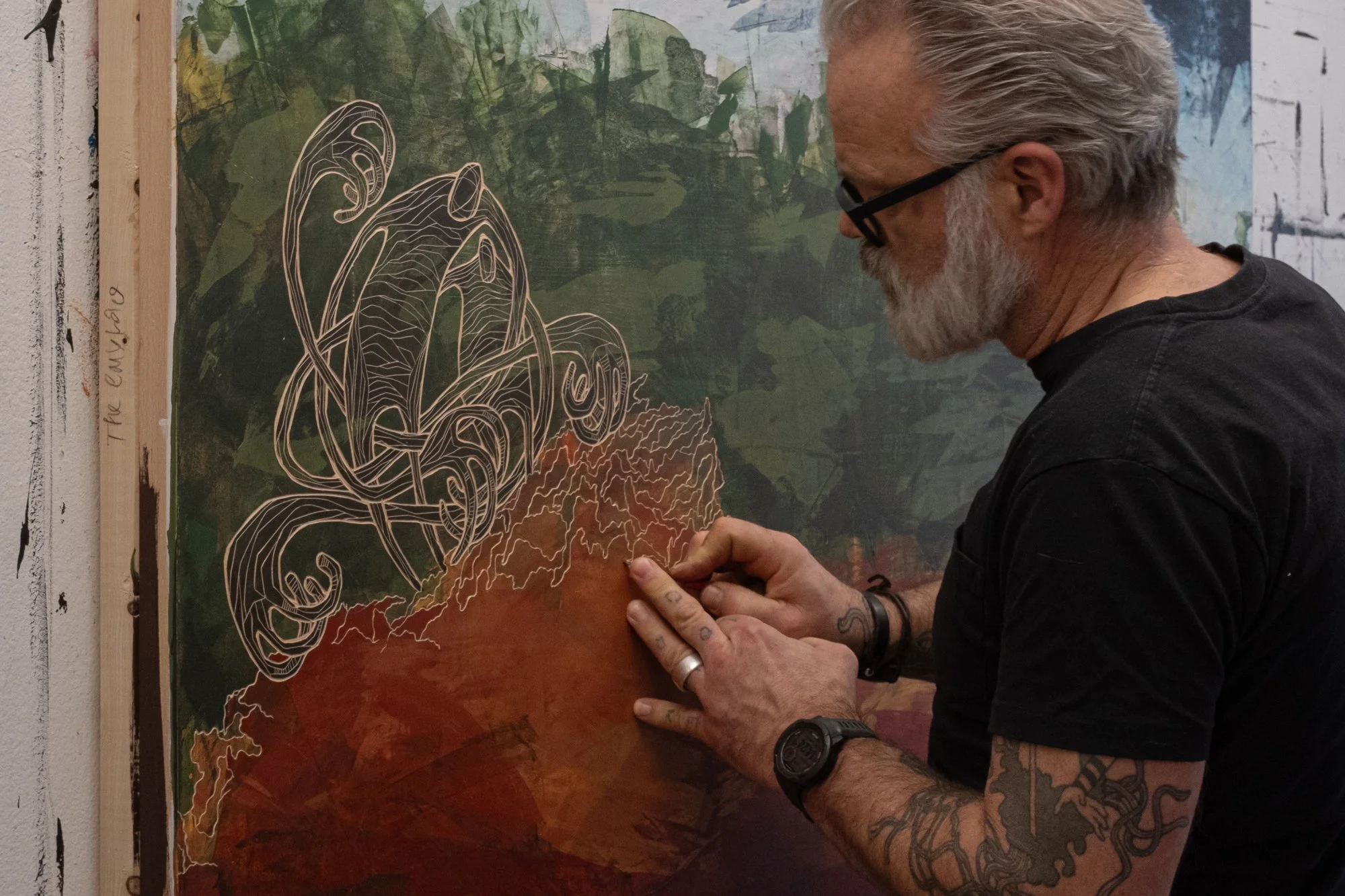
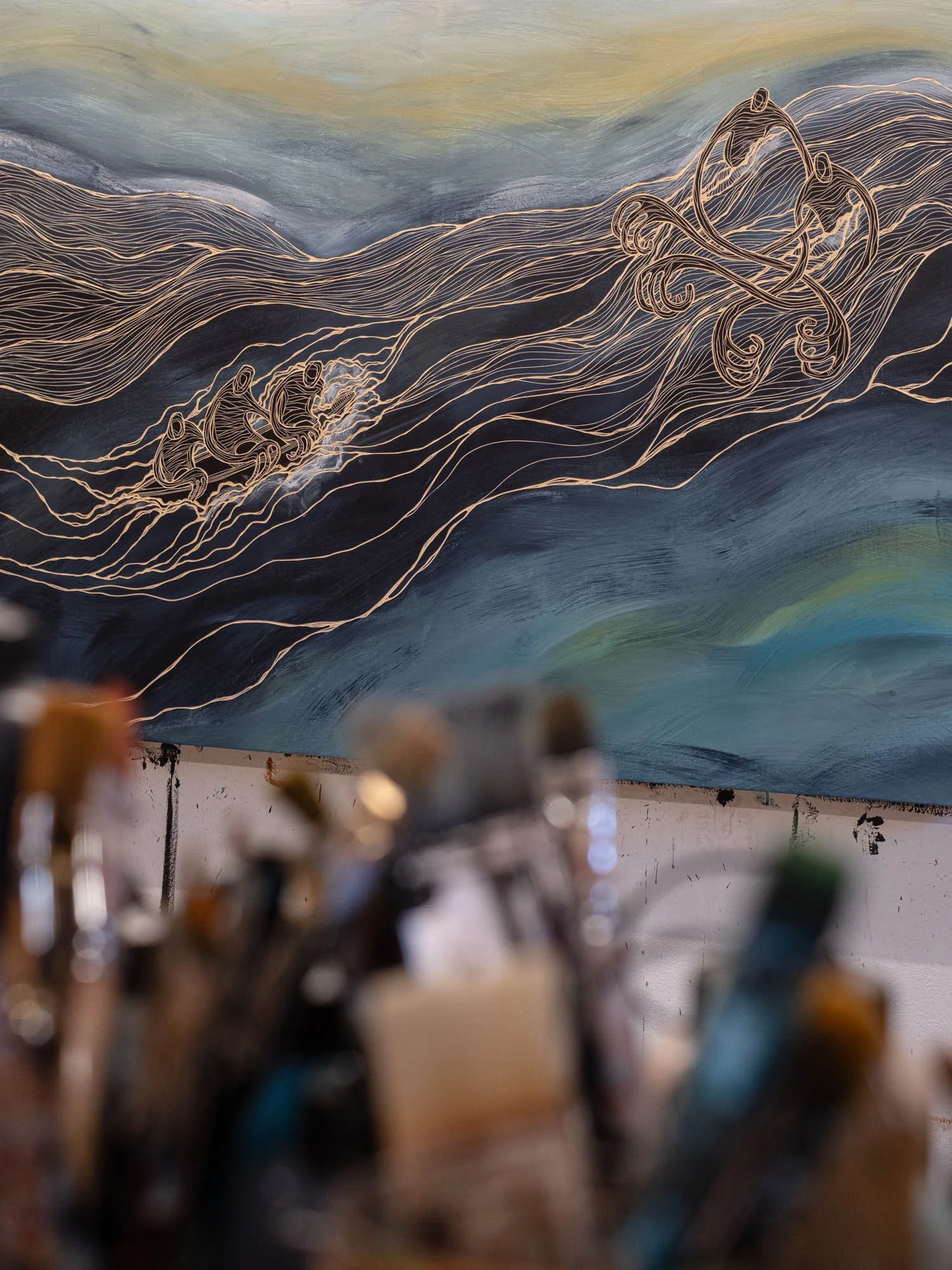
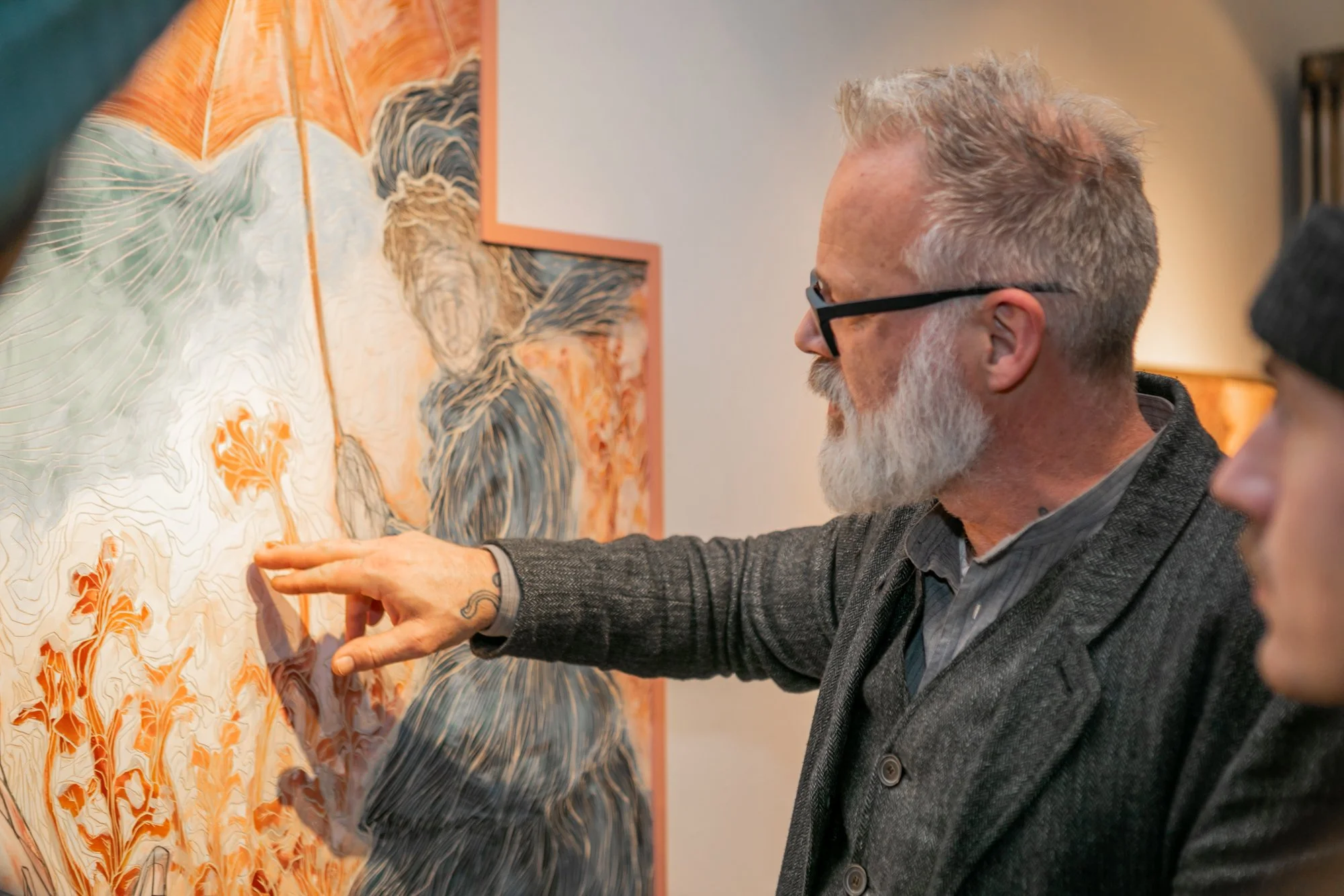
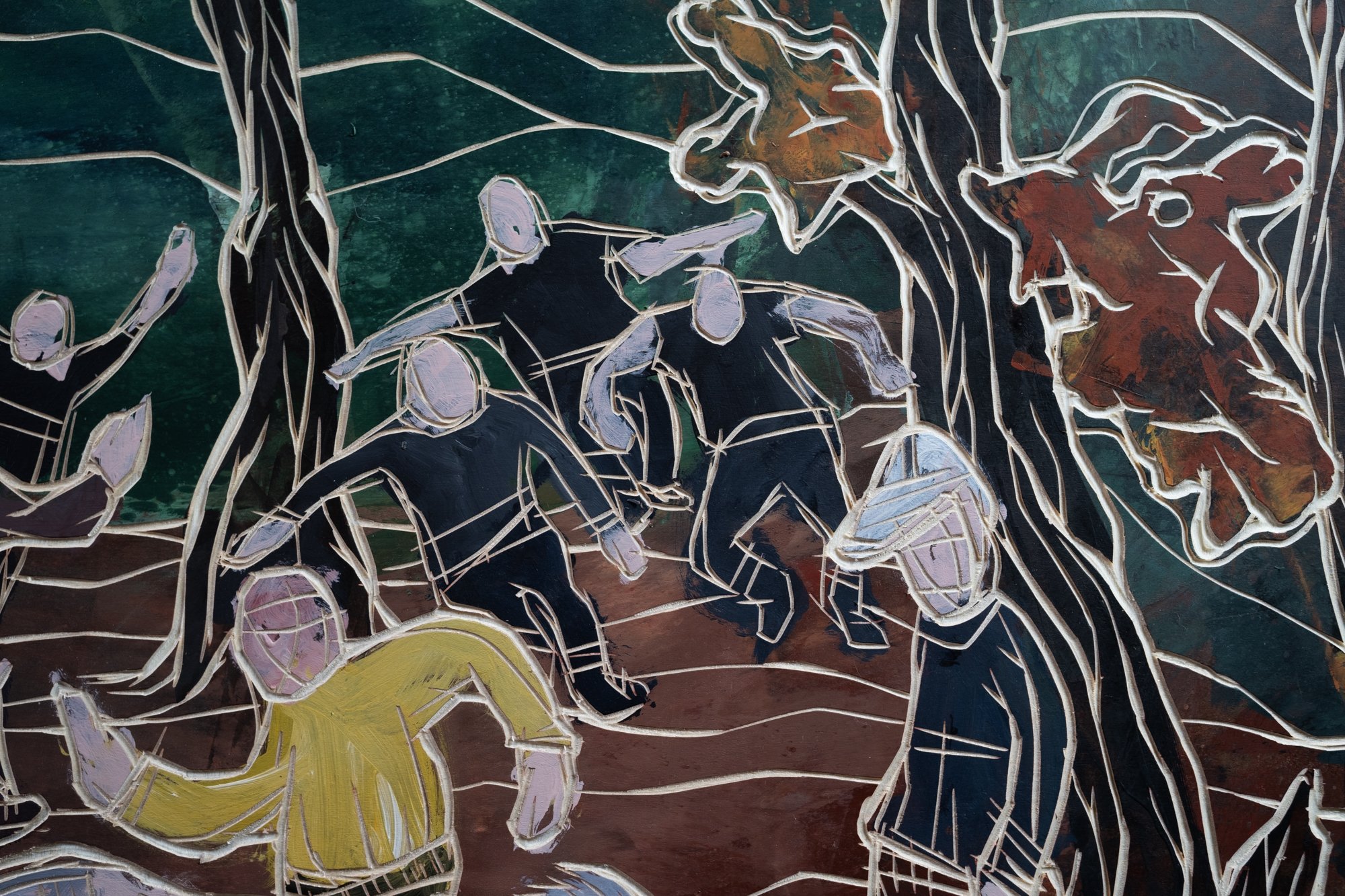
While Max Ernst carefully (and masterfully) painted in the details after applying color, I instead used blades and my signature carving technique at that stage.
Across all four pieces in this series, I focused on the role of nature in each artist’s life and work.
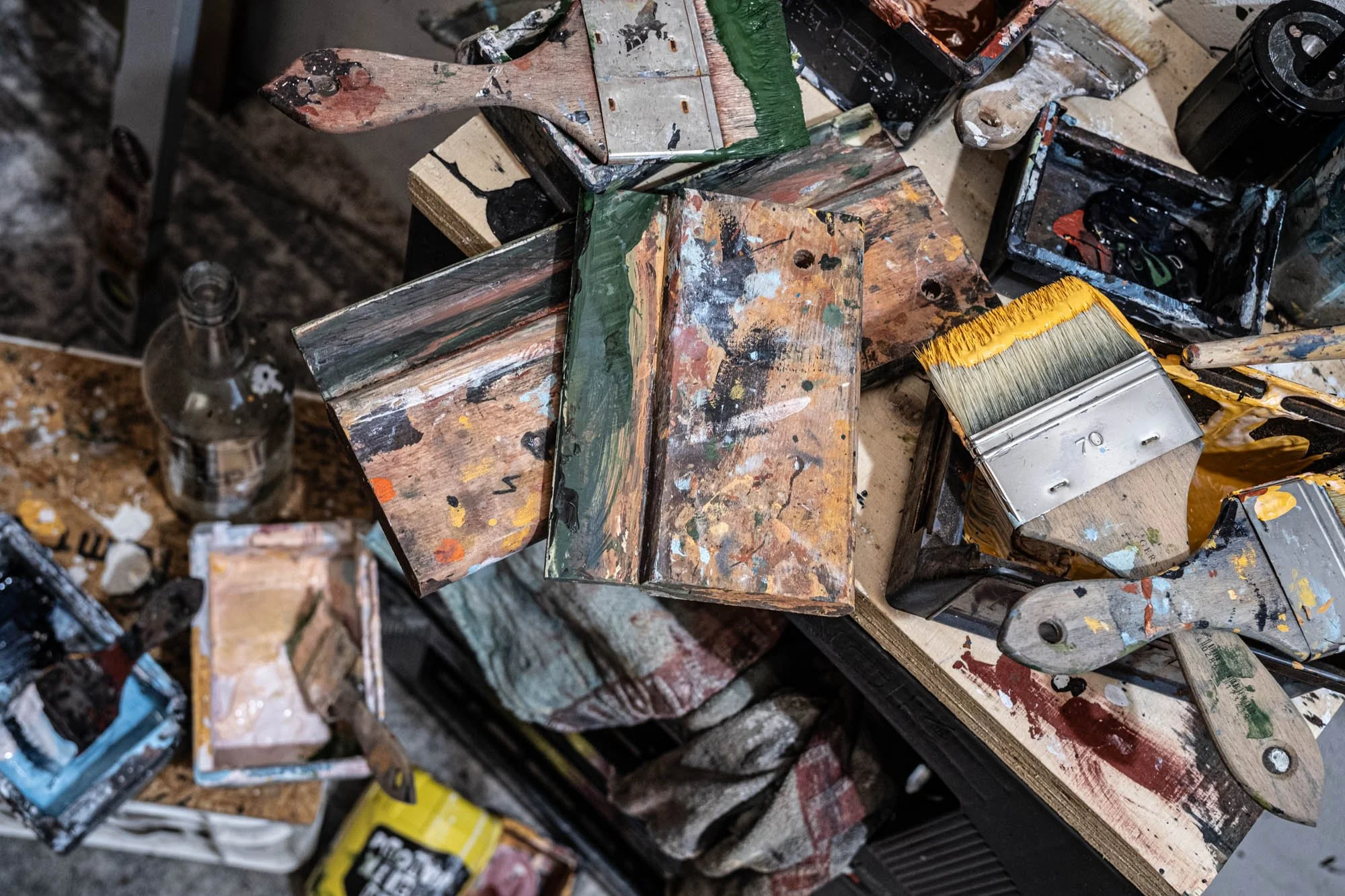
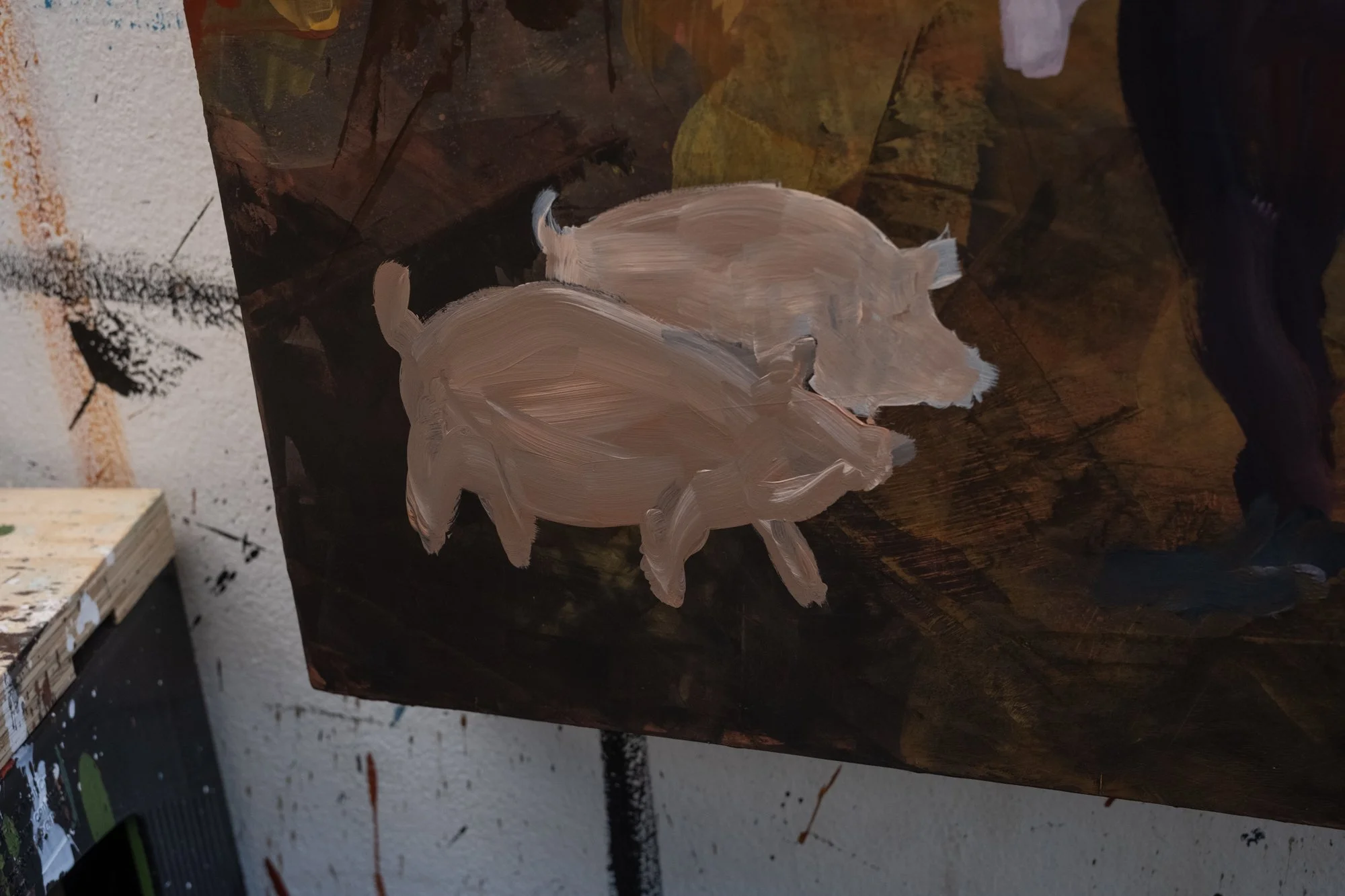
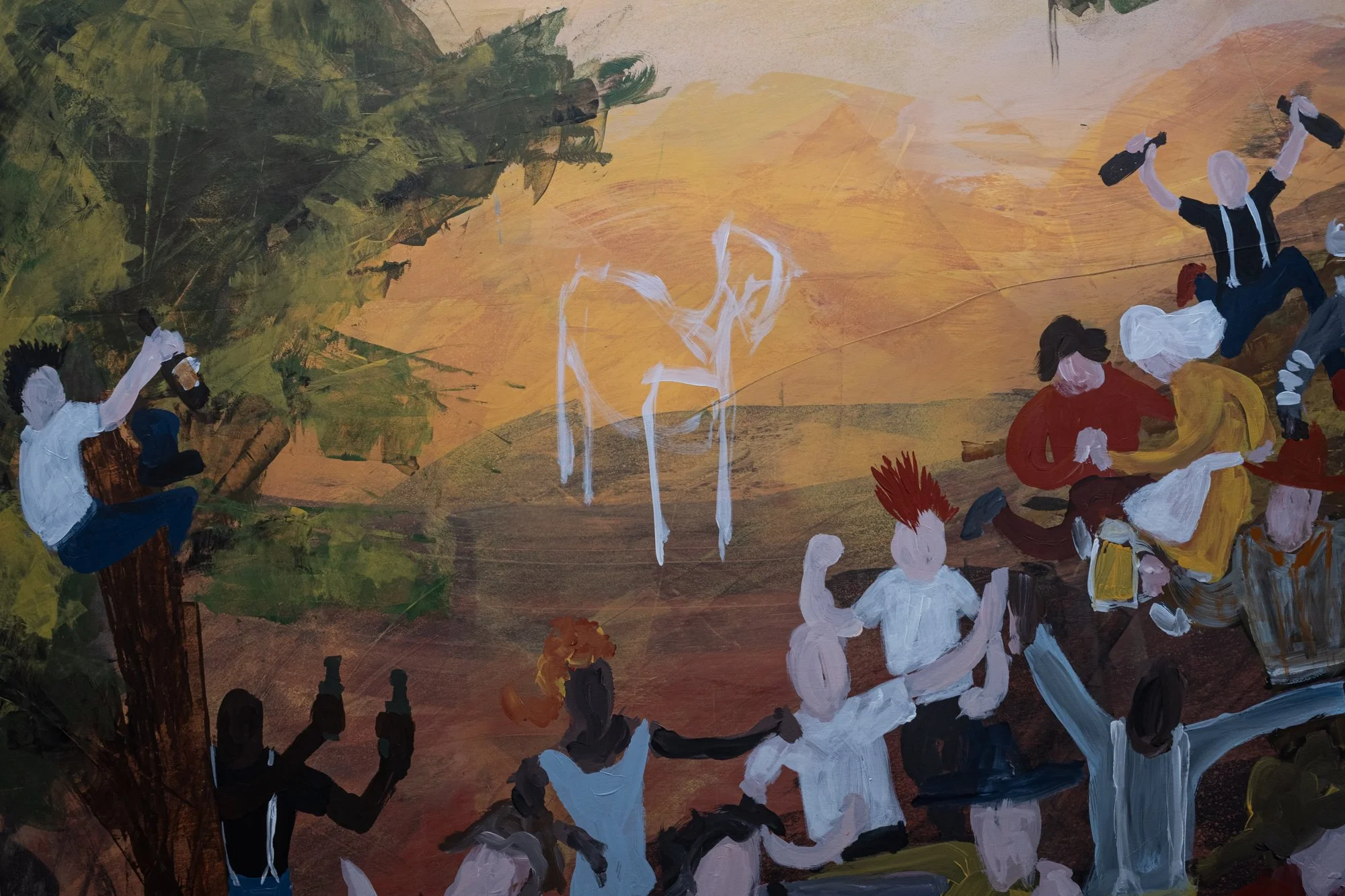
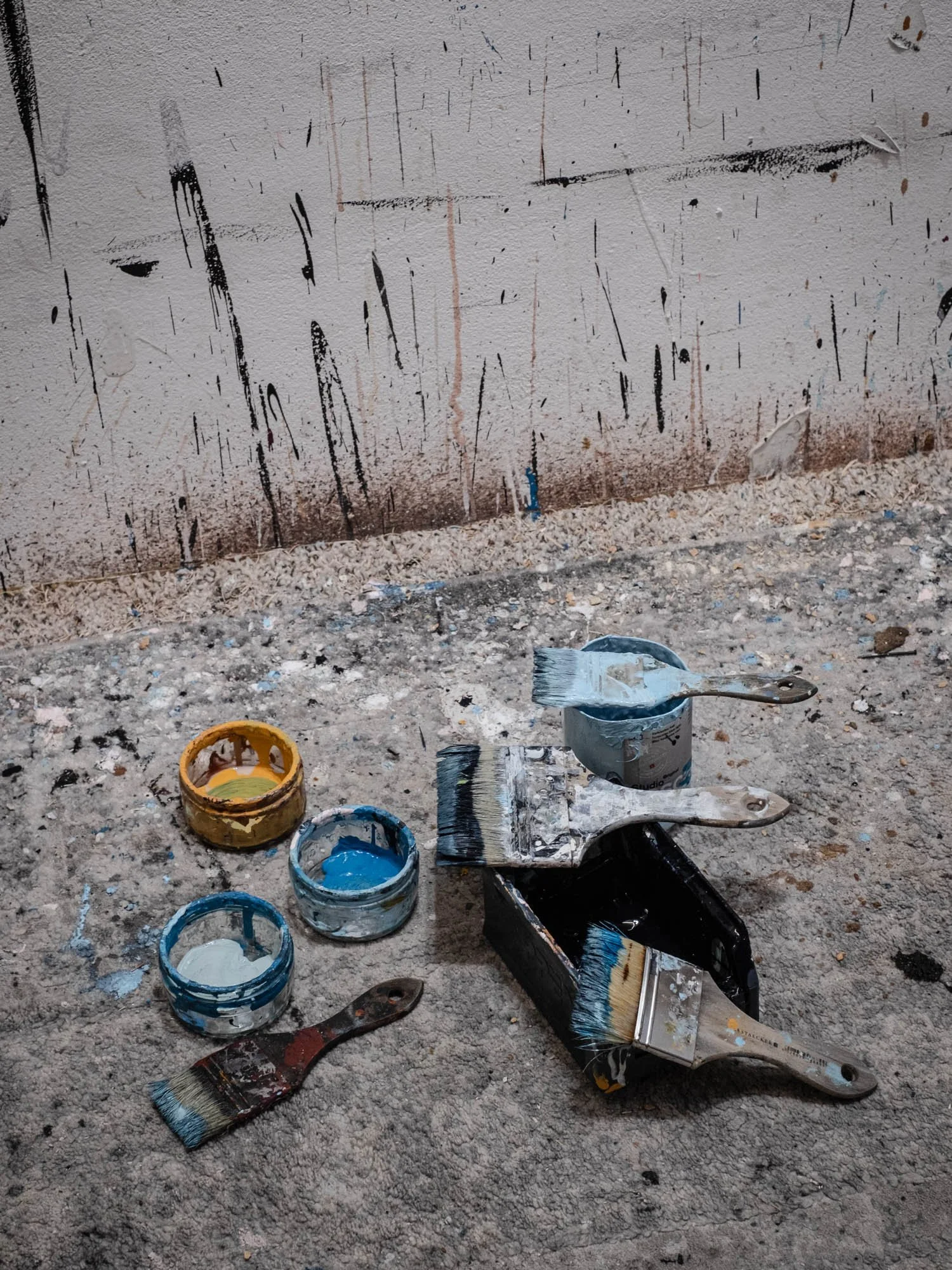
As I mentioned before, I’ve been experimenting with techniques and deeply engaging with their biographies and artworks – and you can see this in many details of the final works, sometimes only on very close inspection.
If you take a close look at my latest woodcut, you might even spot hidden figures among the trees – just like Max Ernst used to do.
What else?
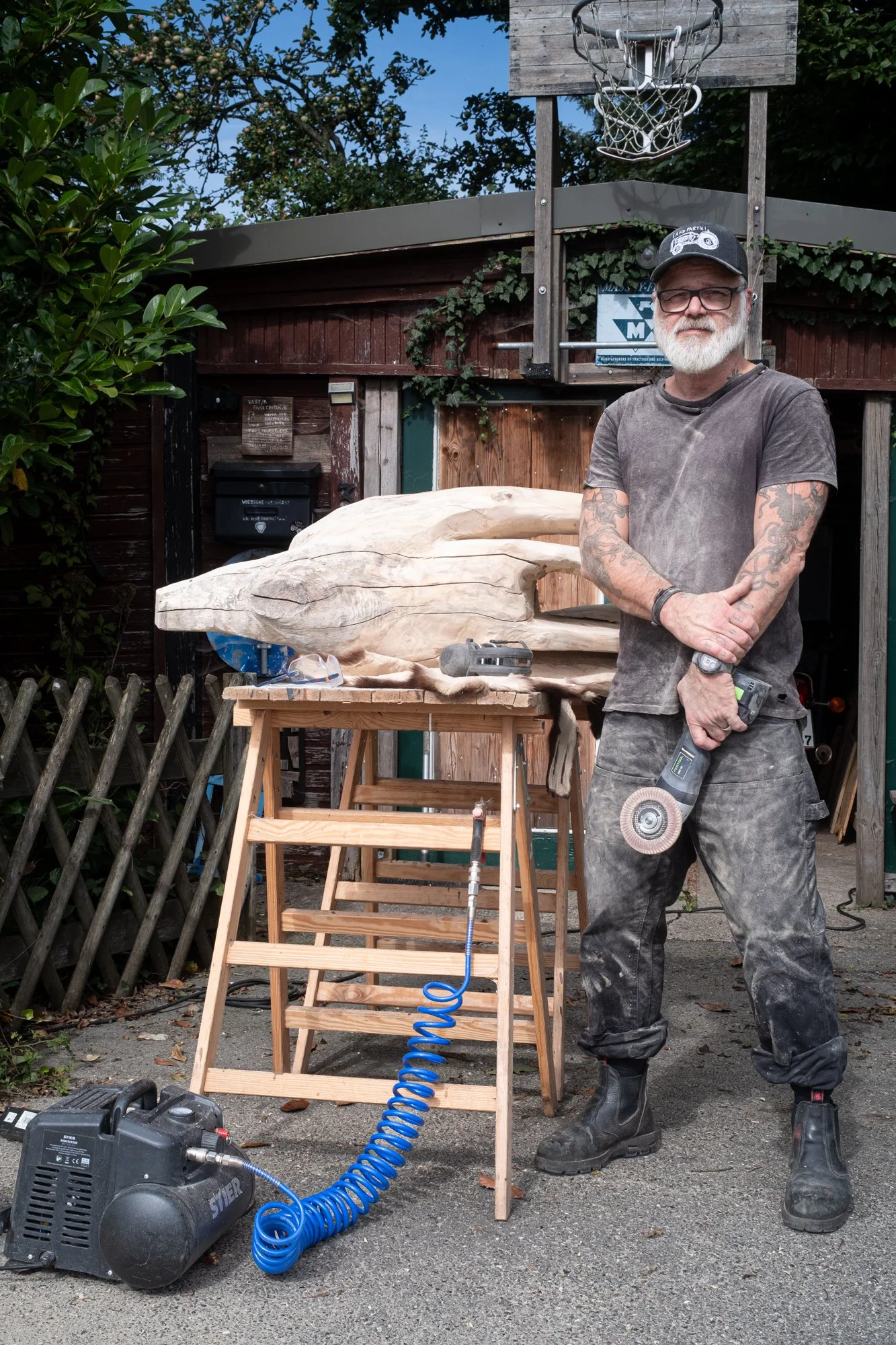
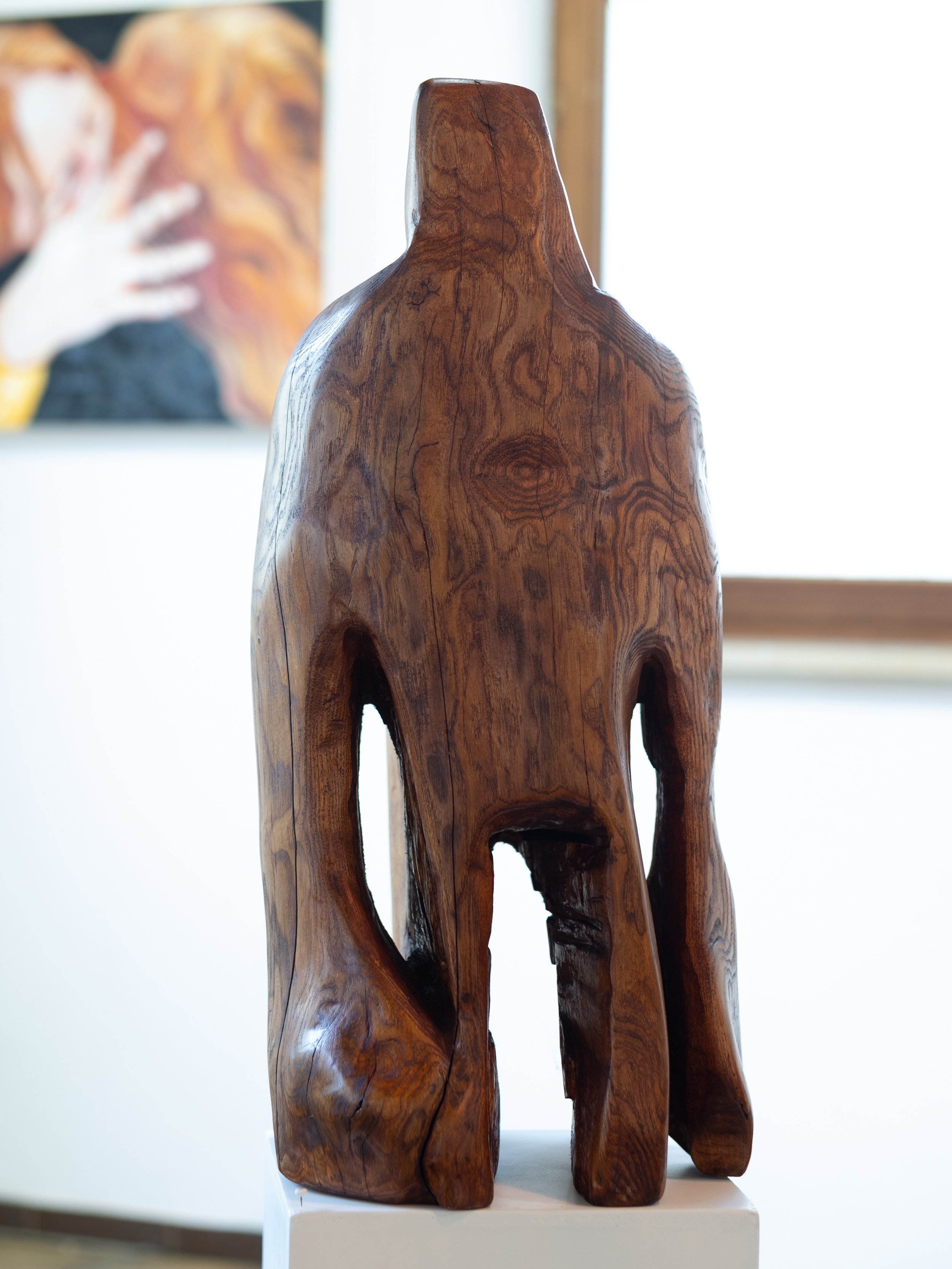
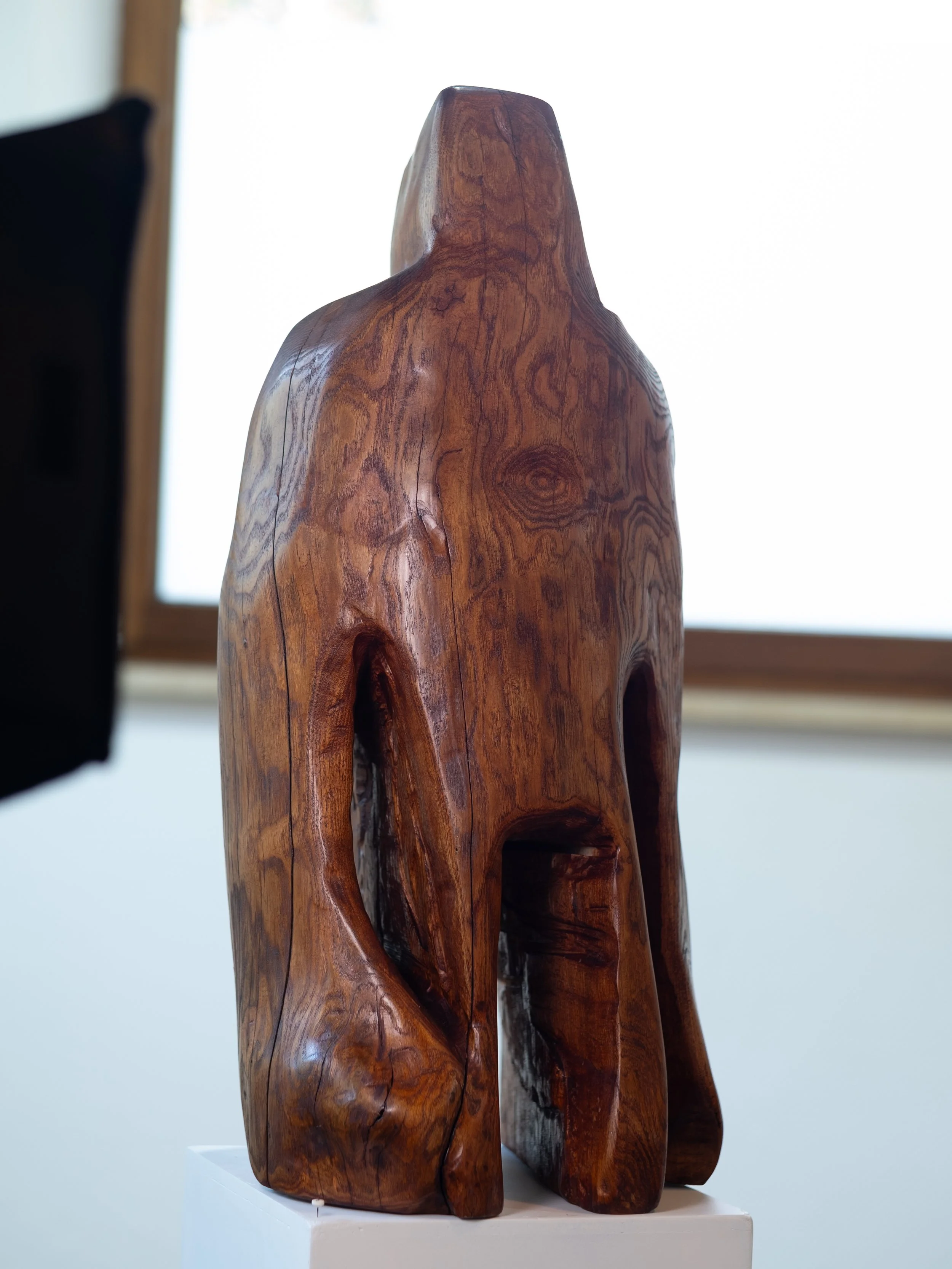
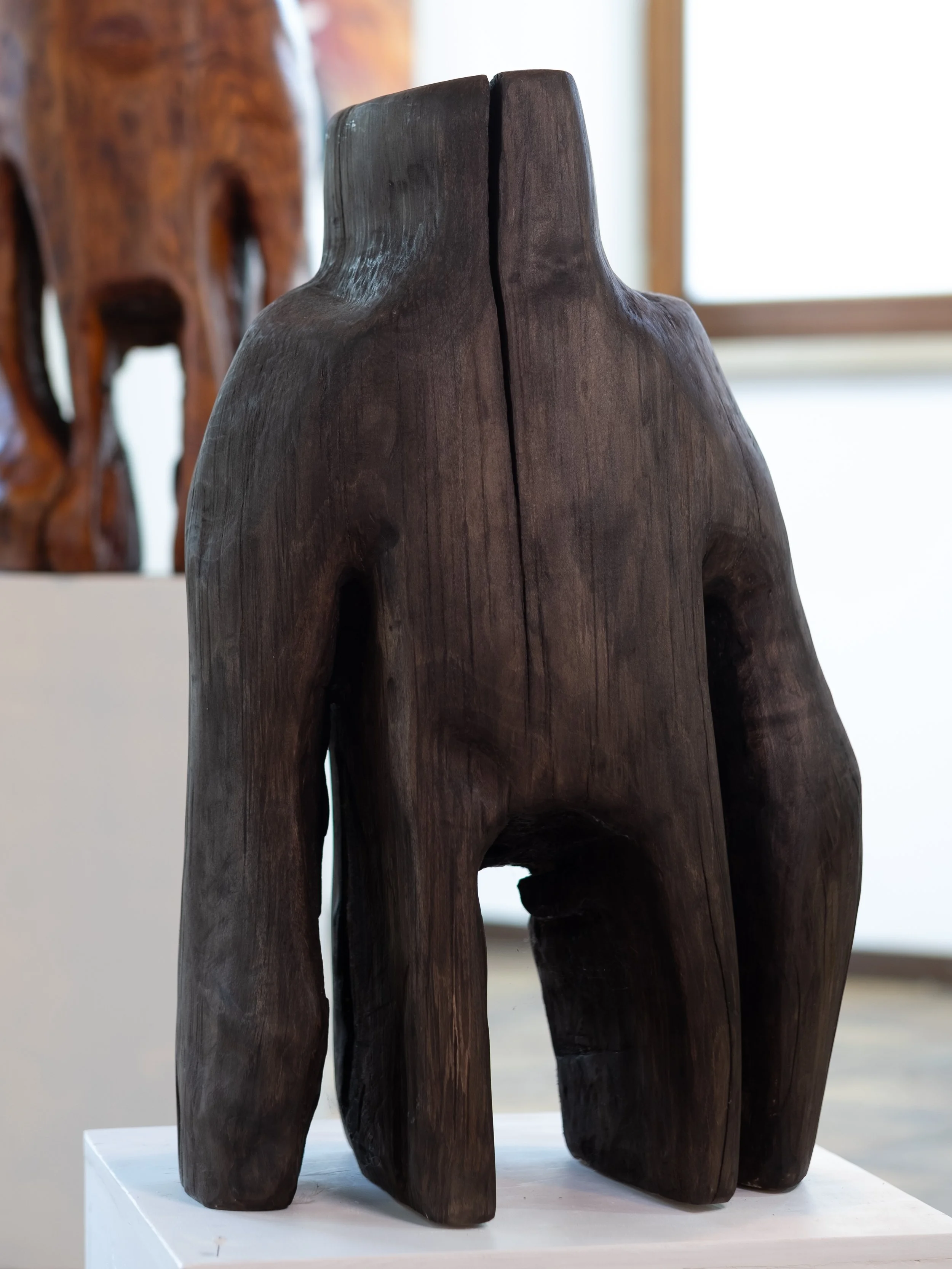
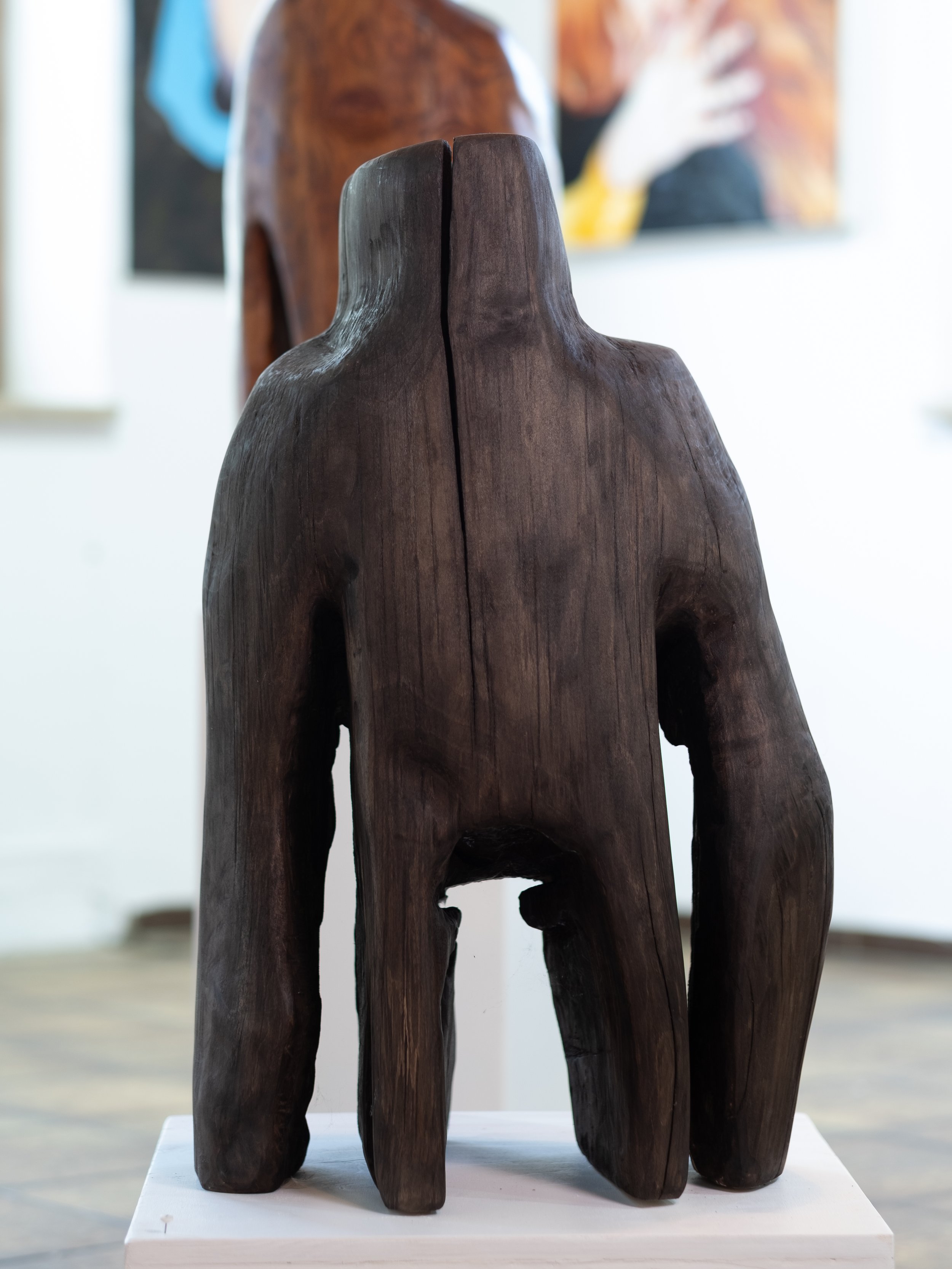
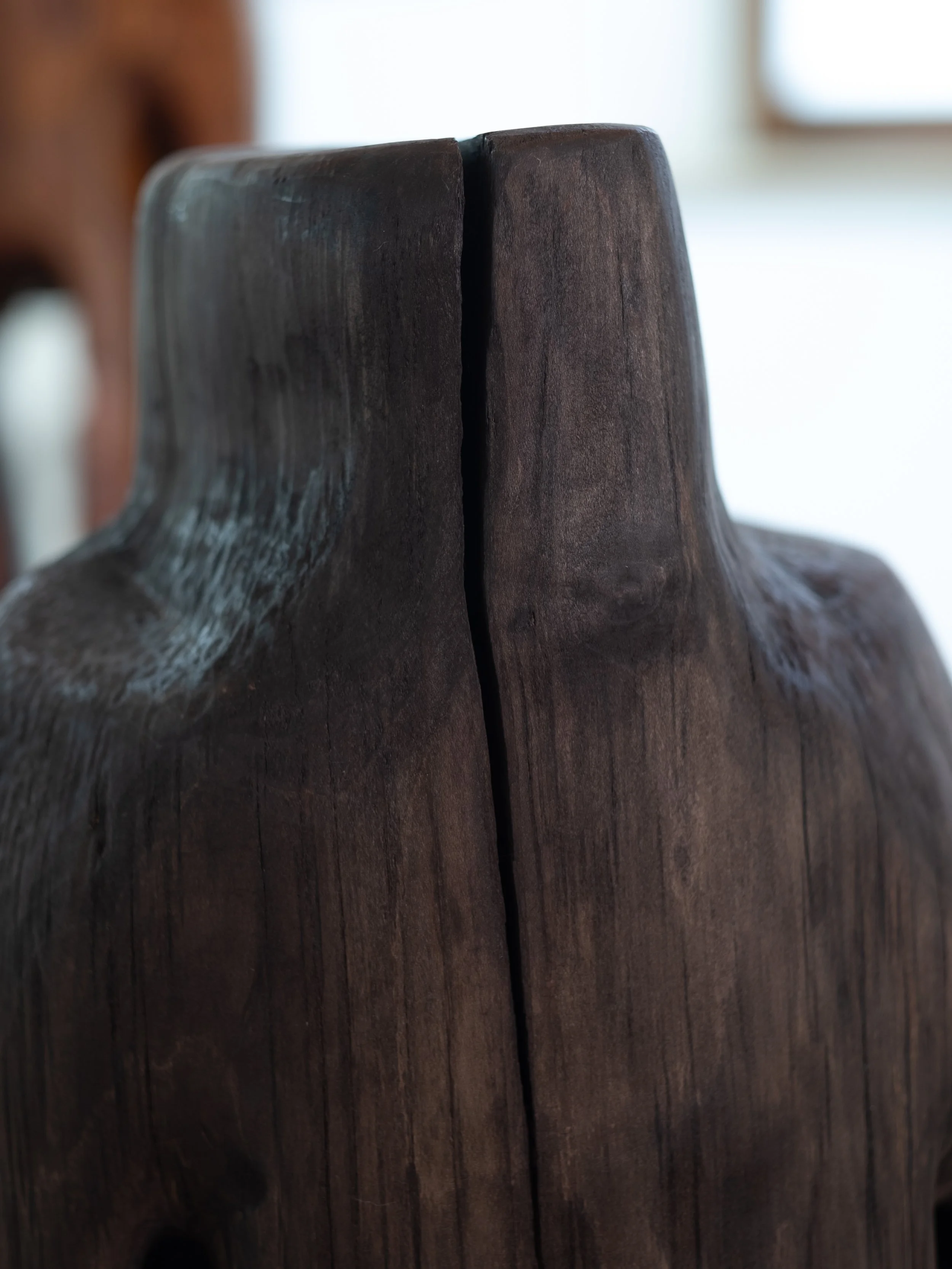
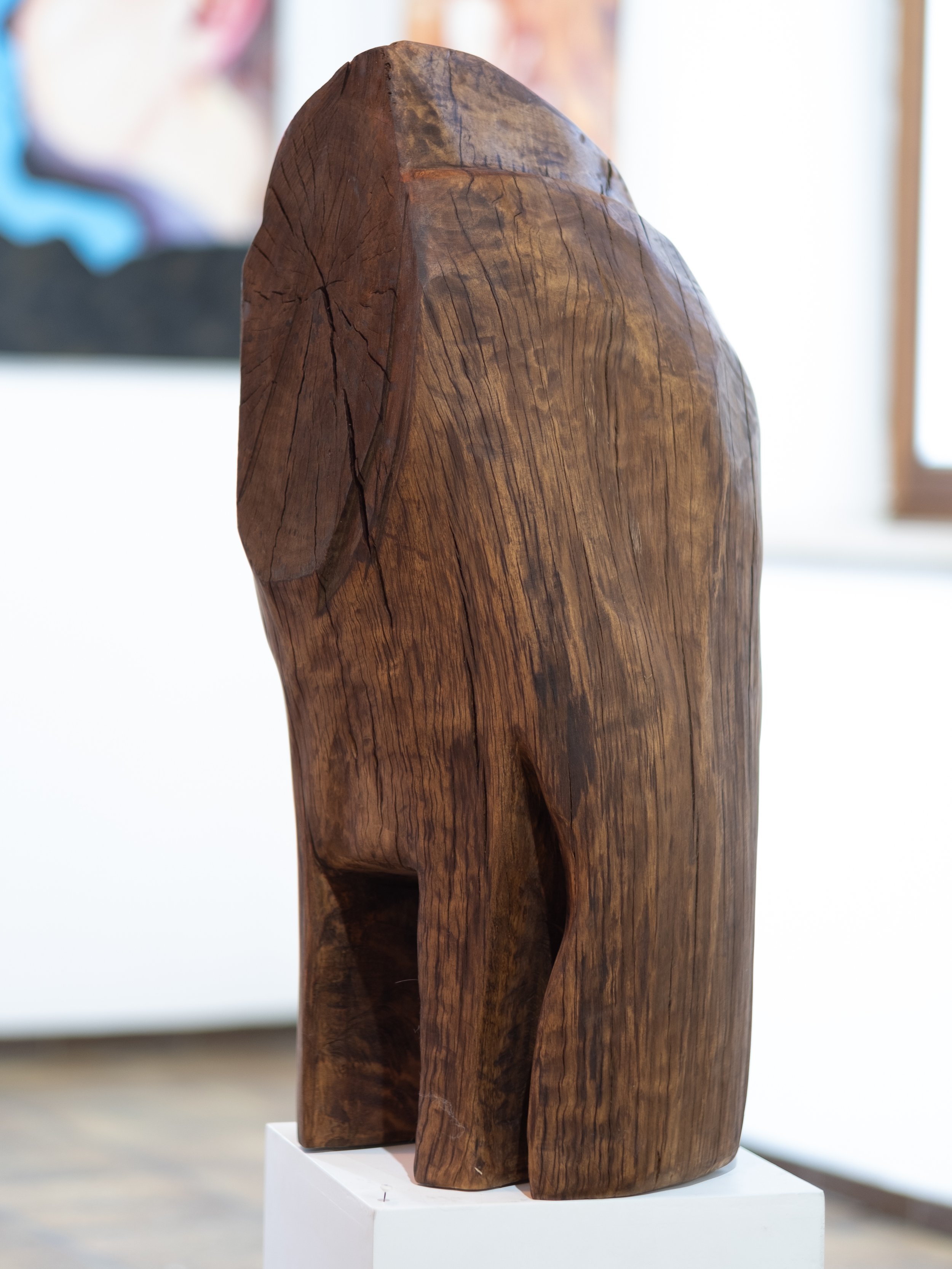
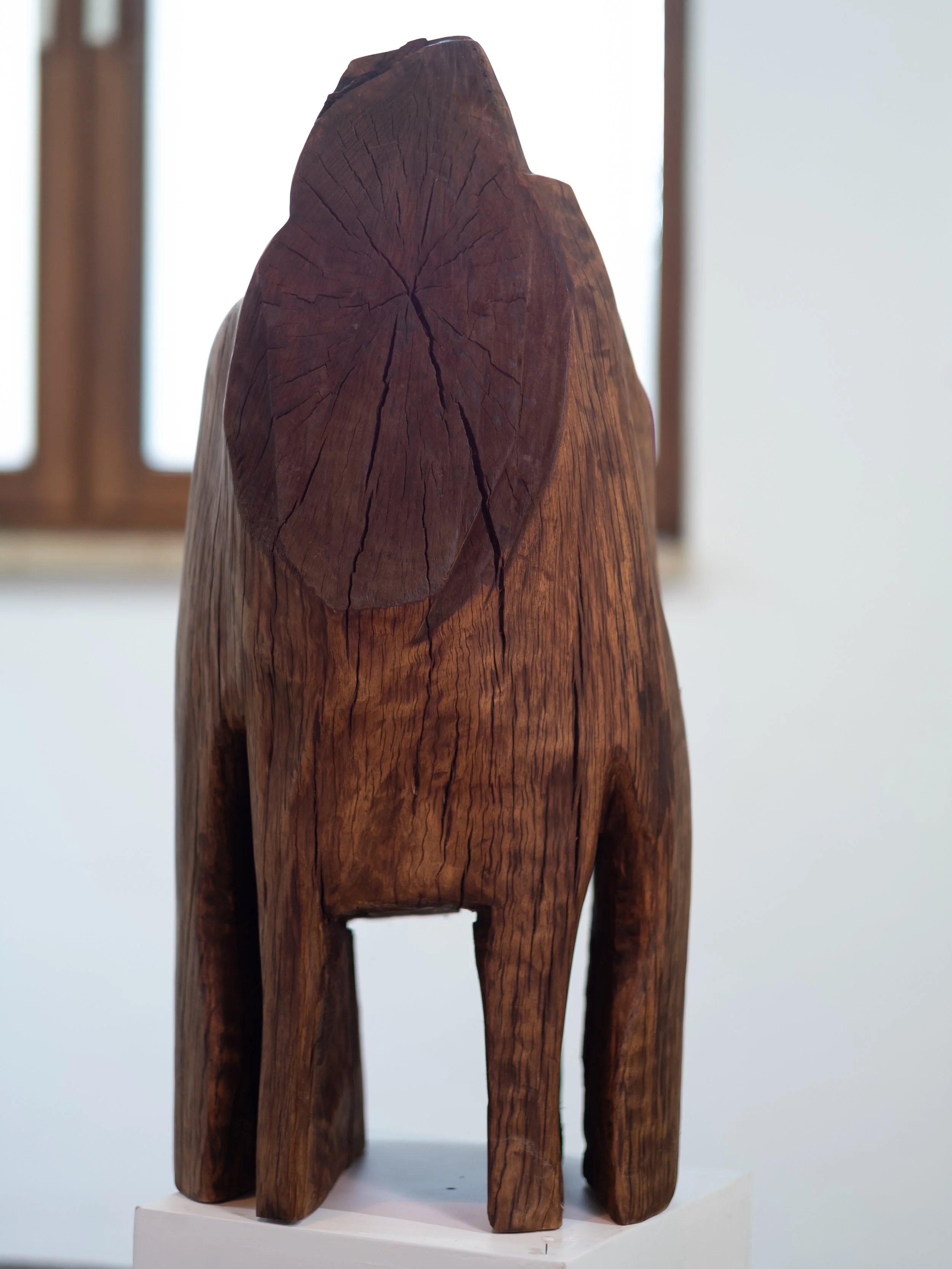
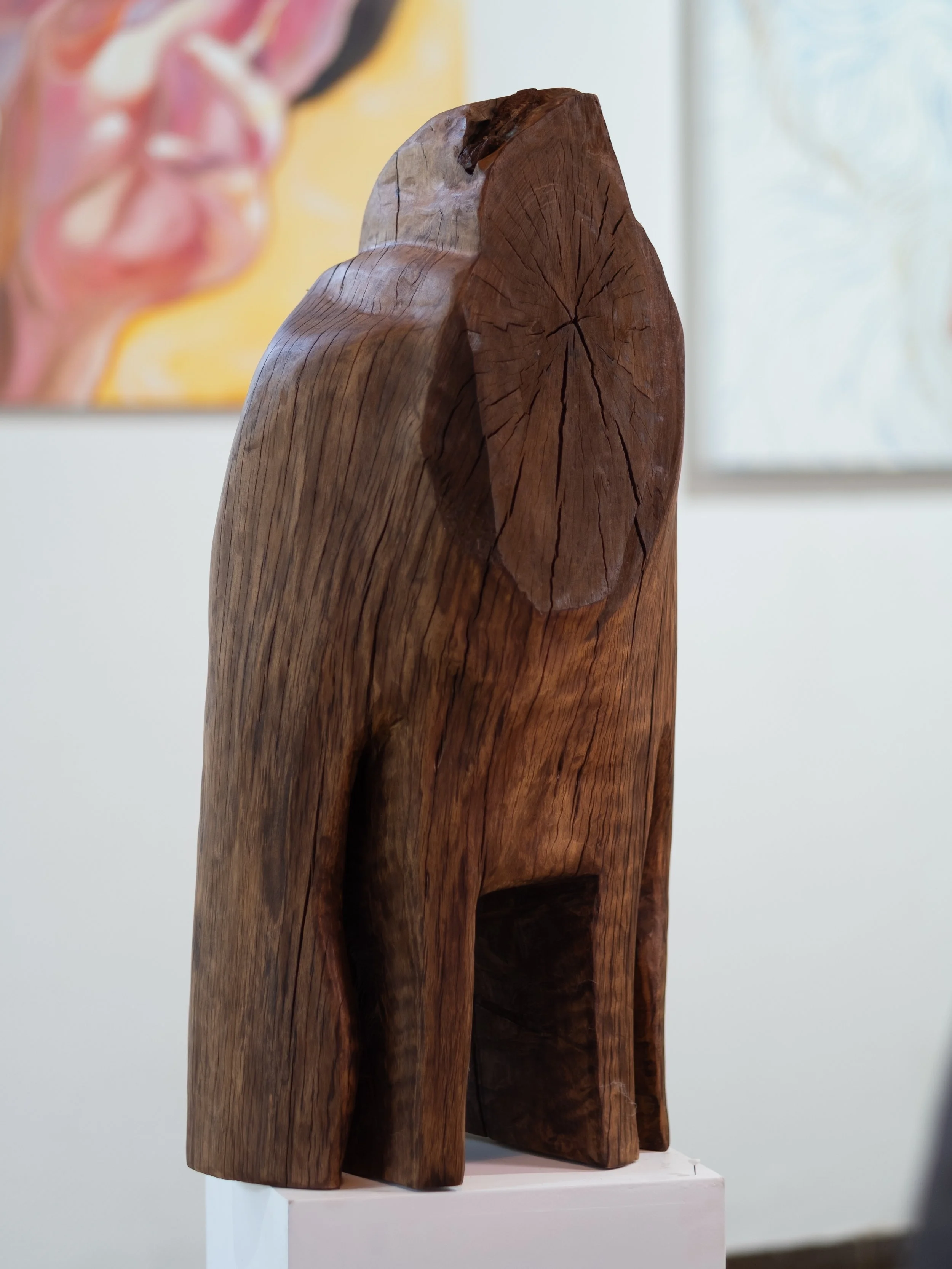
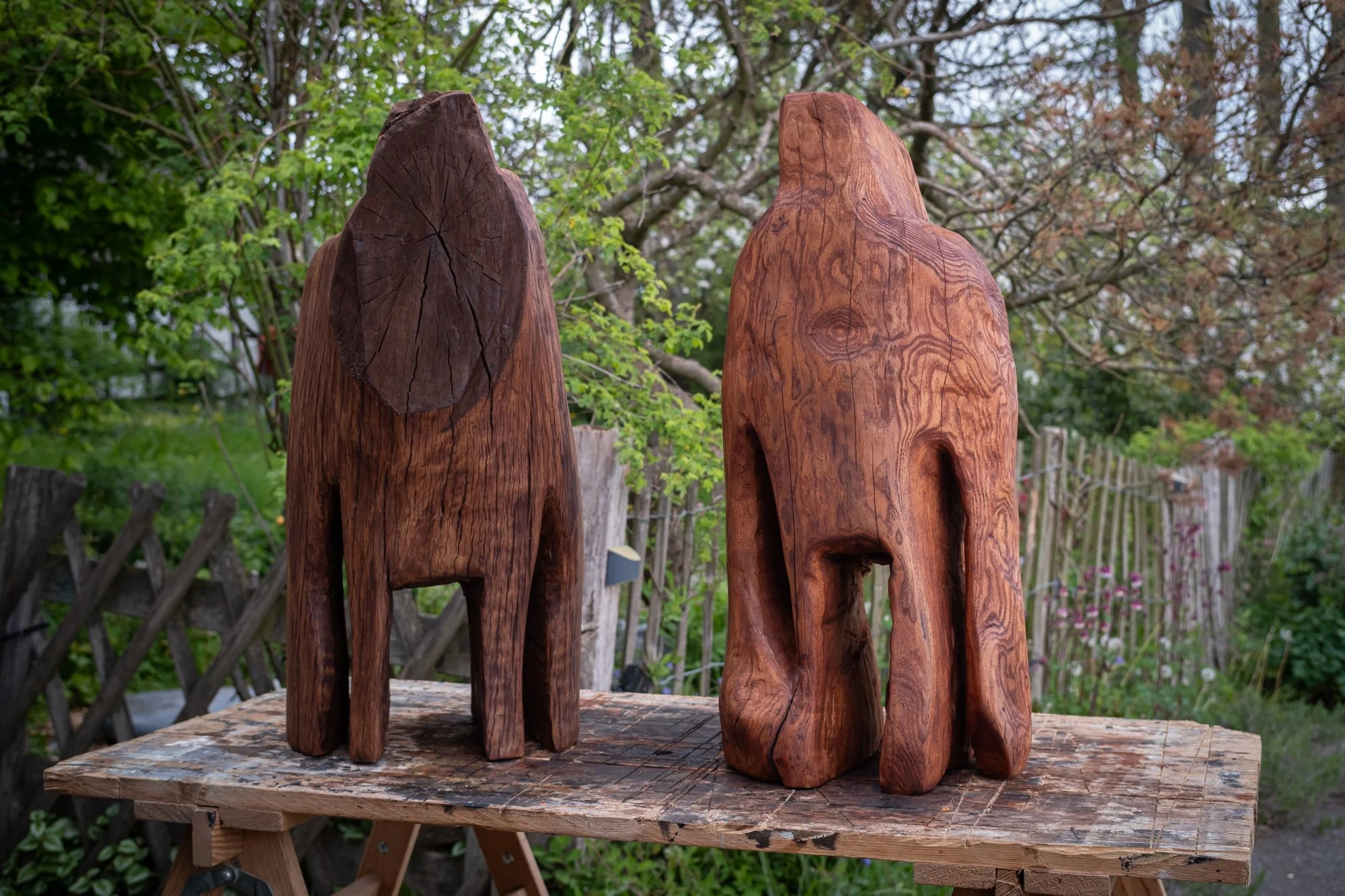
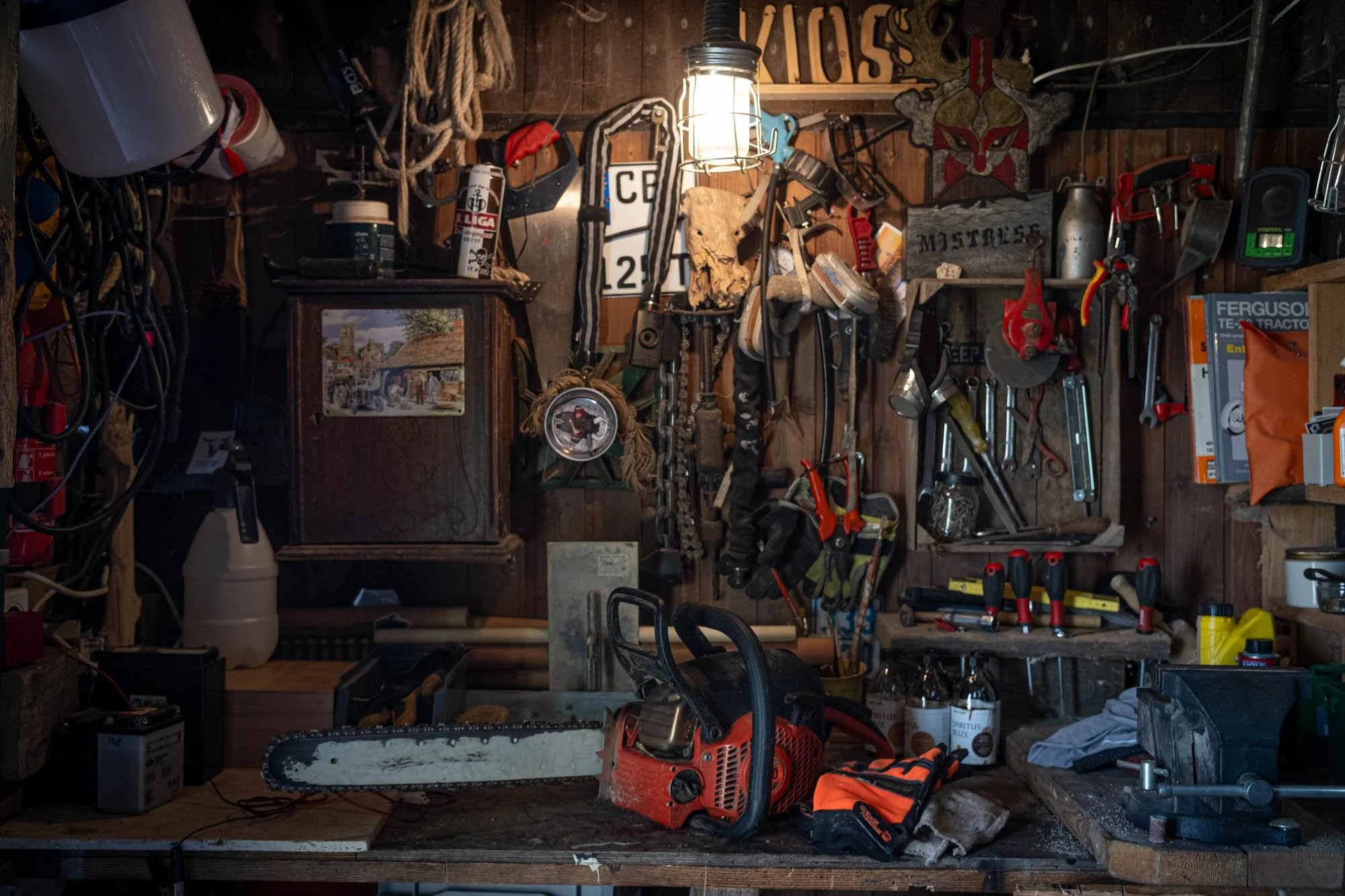
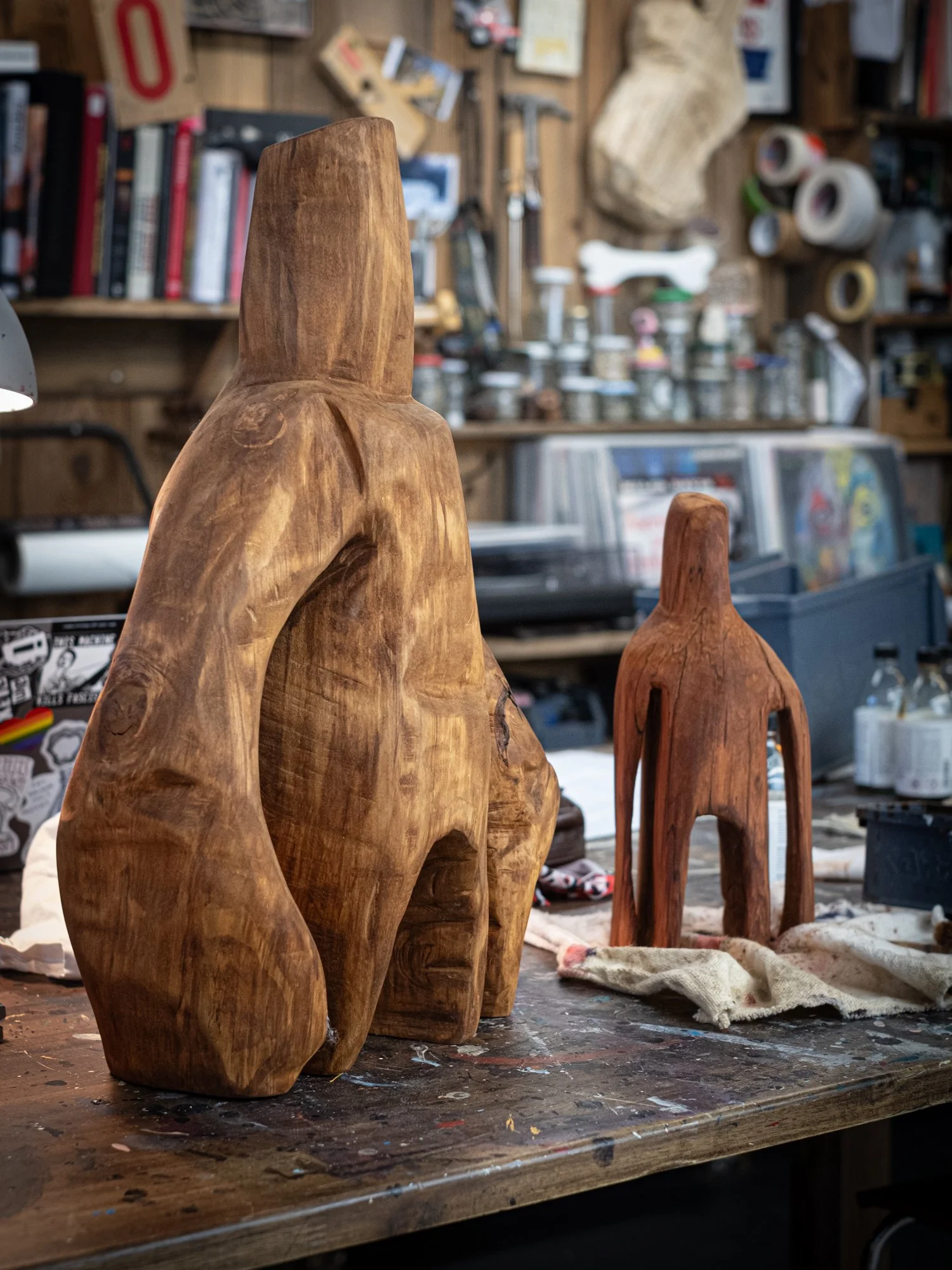
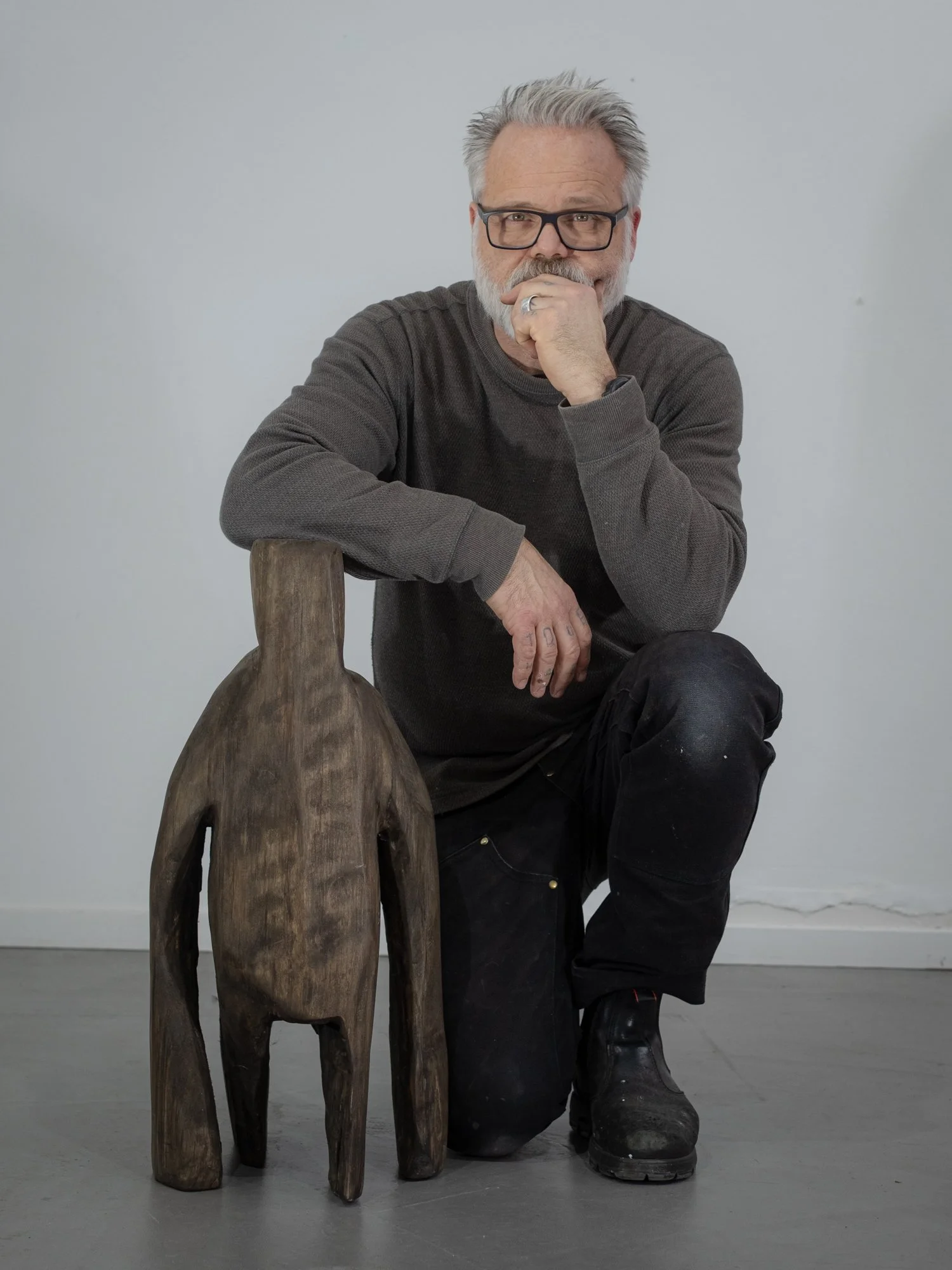
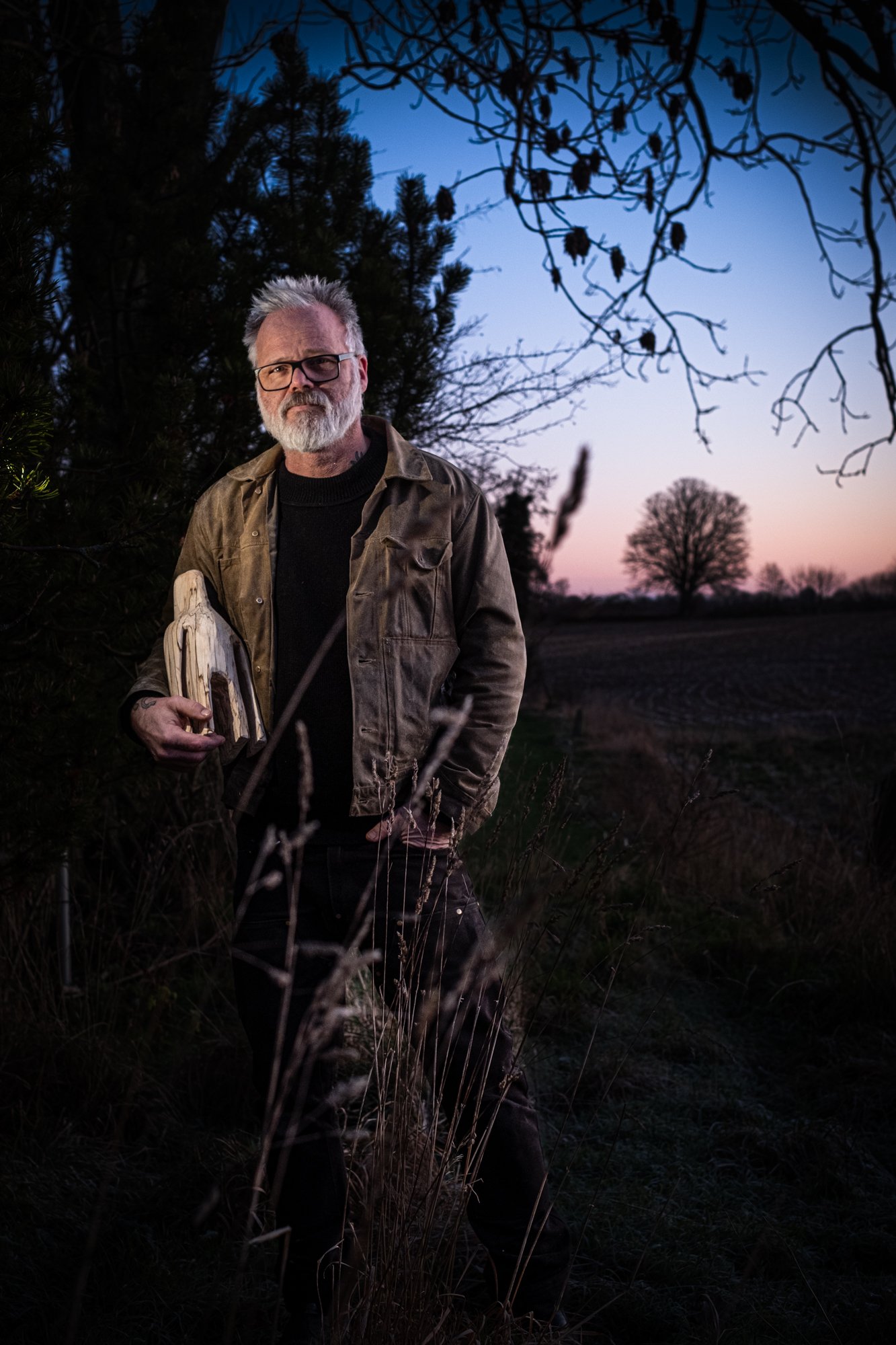
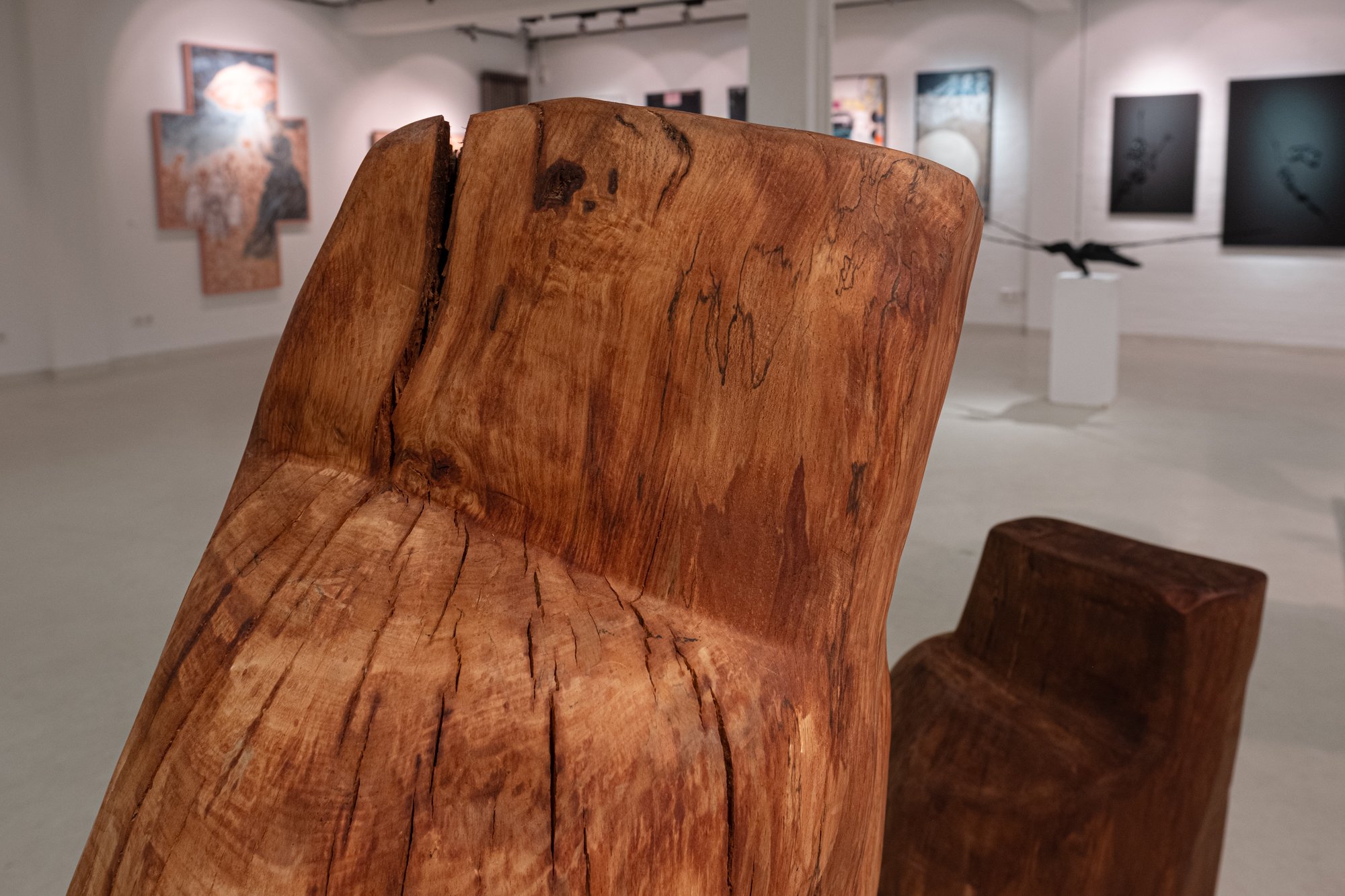
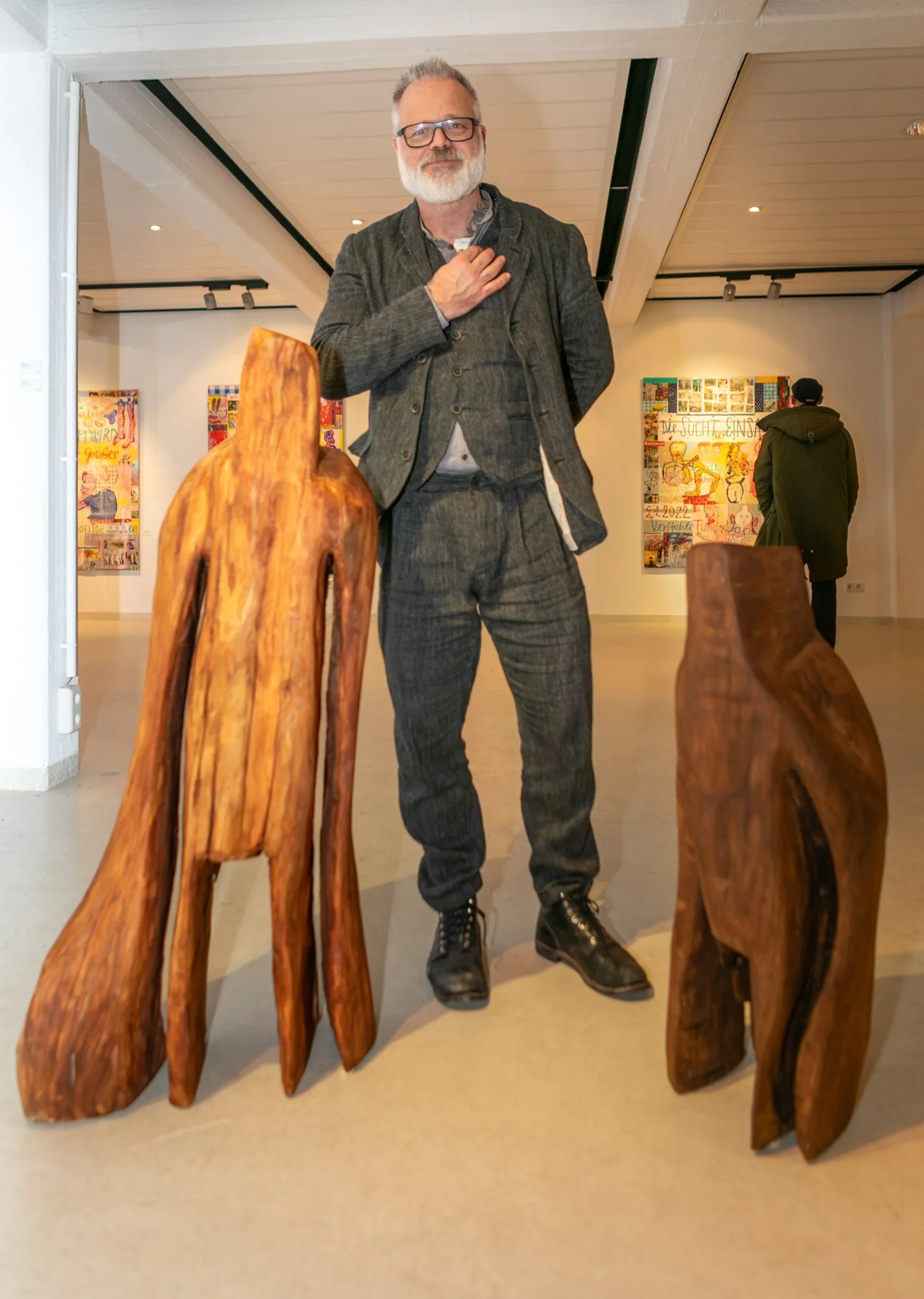
Today, I fired up the chainsaw again to carve new sculptures.
Very early stages, right now, it is more about organizing the tree trunks and finding potential shapes.
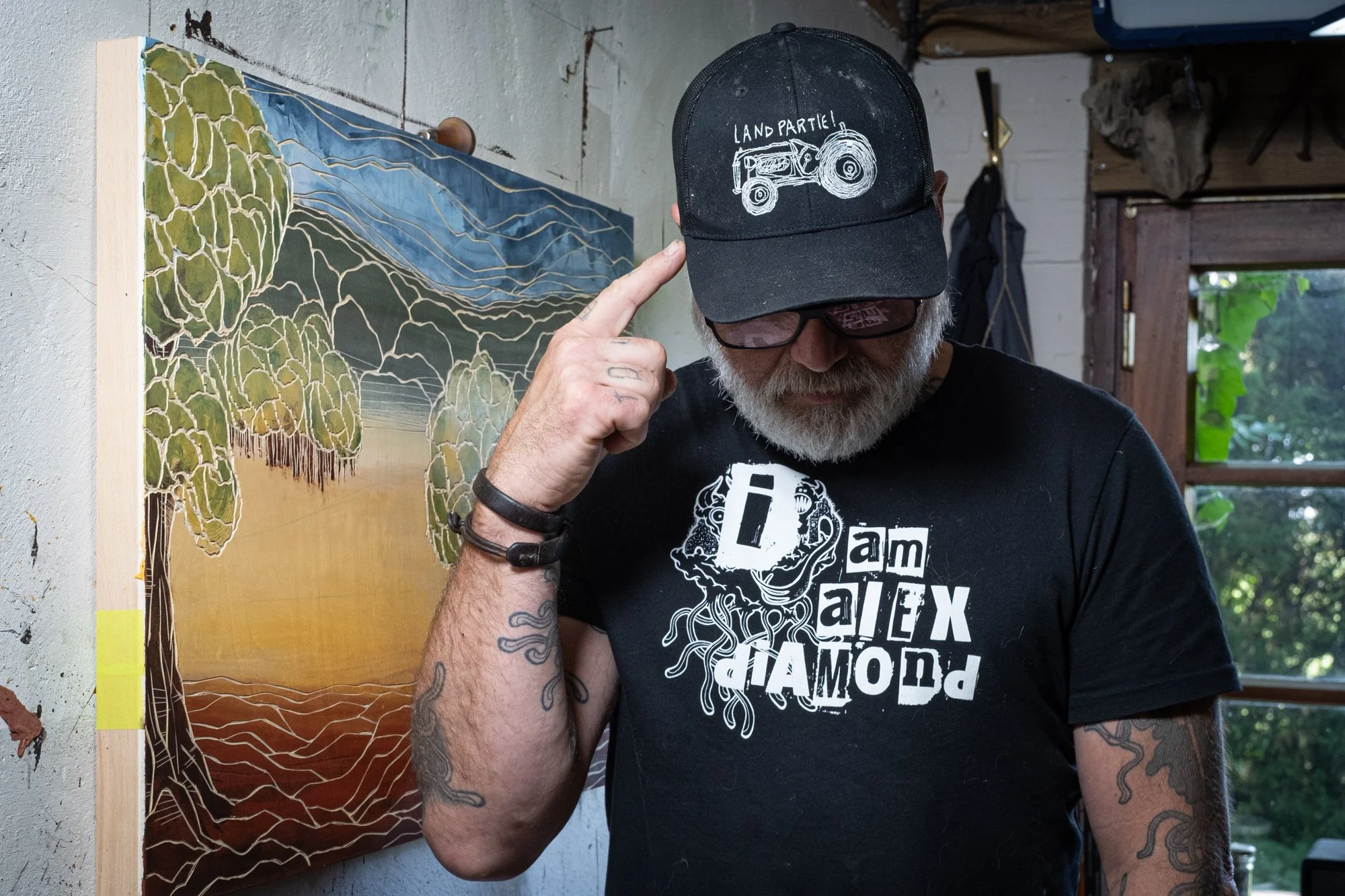
The trees (mostly beech) that I recently cut on my neighbor’s meadow and hauled back to my rural studio with my little gray tractor still need some time to dry. I’m also not entirely sure yet whether there’s really (or currently) the right material among them.
There’s also a chance I might get some cherry wood. We’ll see.
Working with wood always requires patience. And as I mentioned above - it is all a process, not a plan.
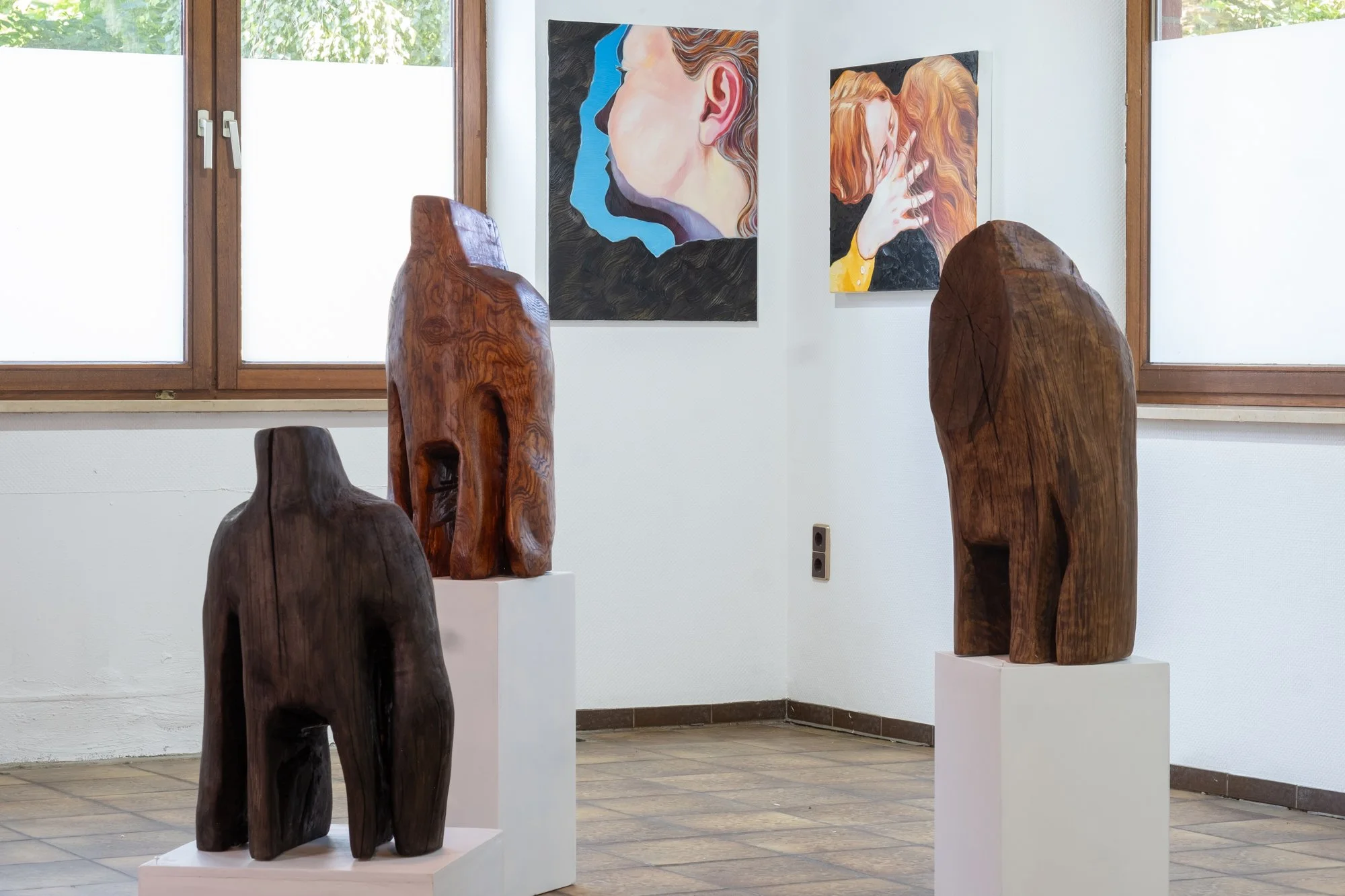
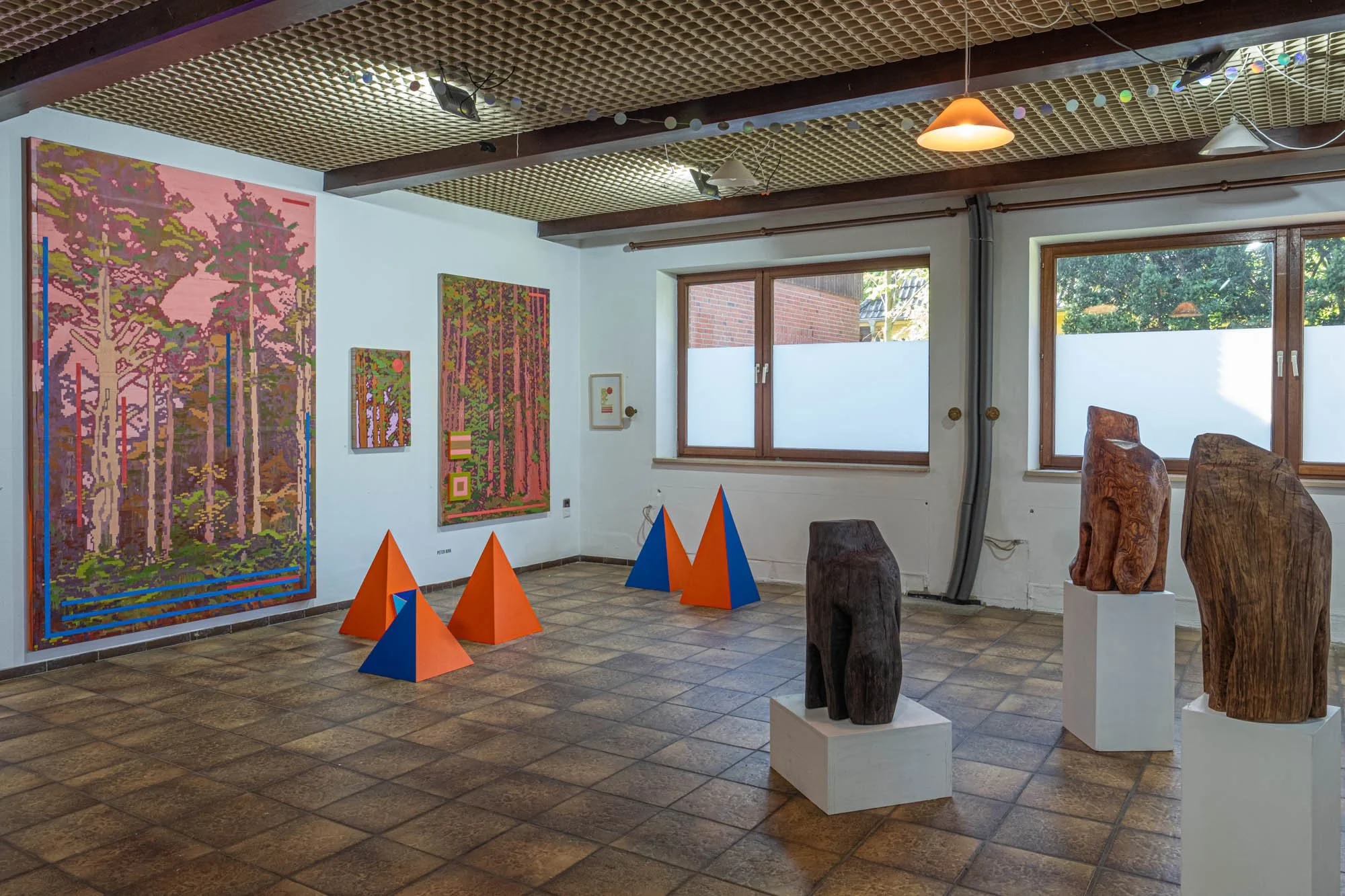
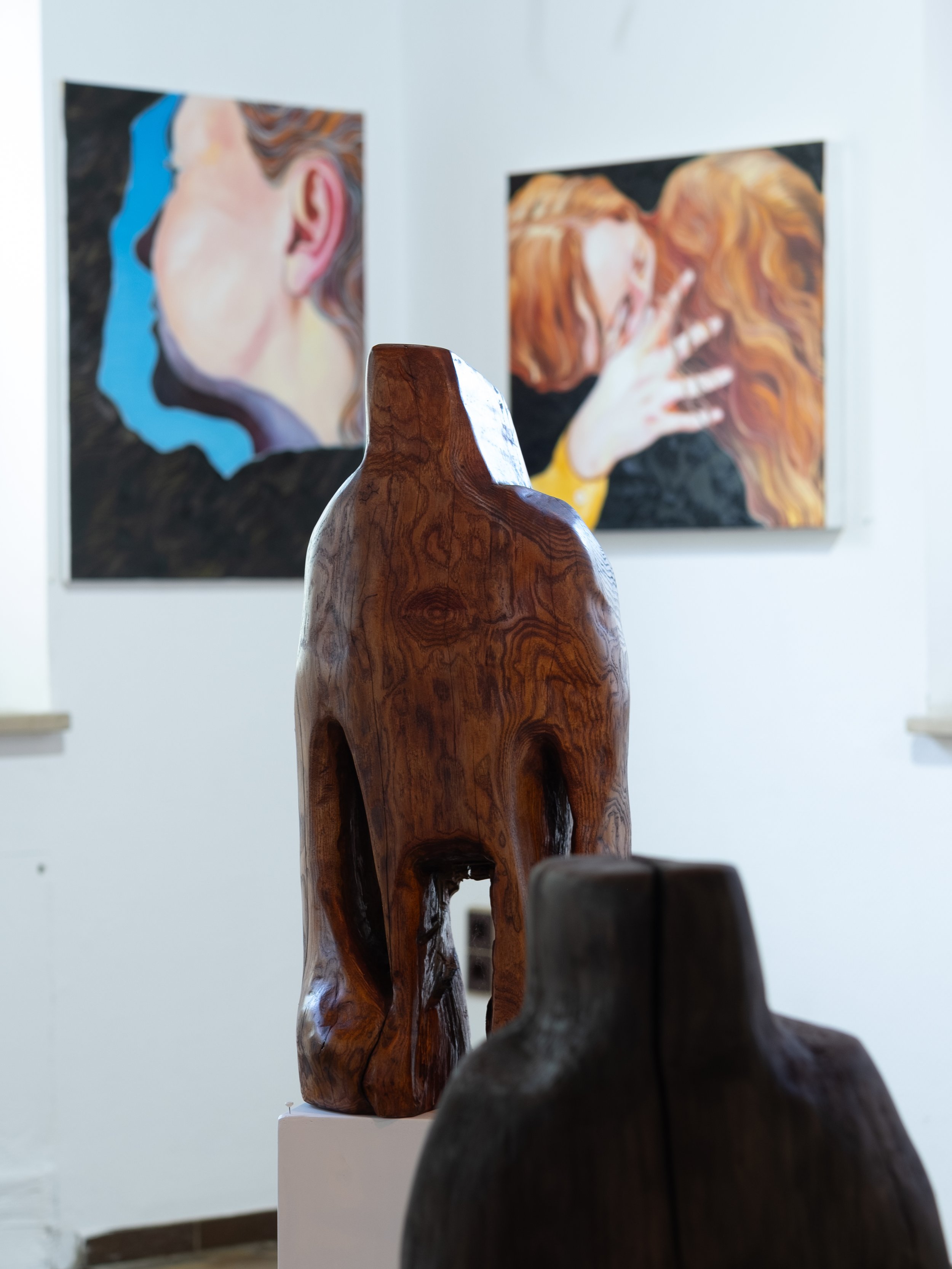
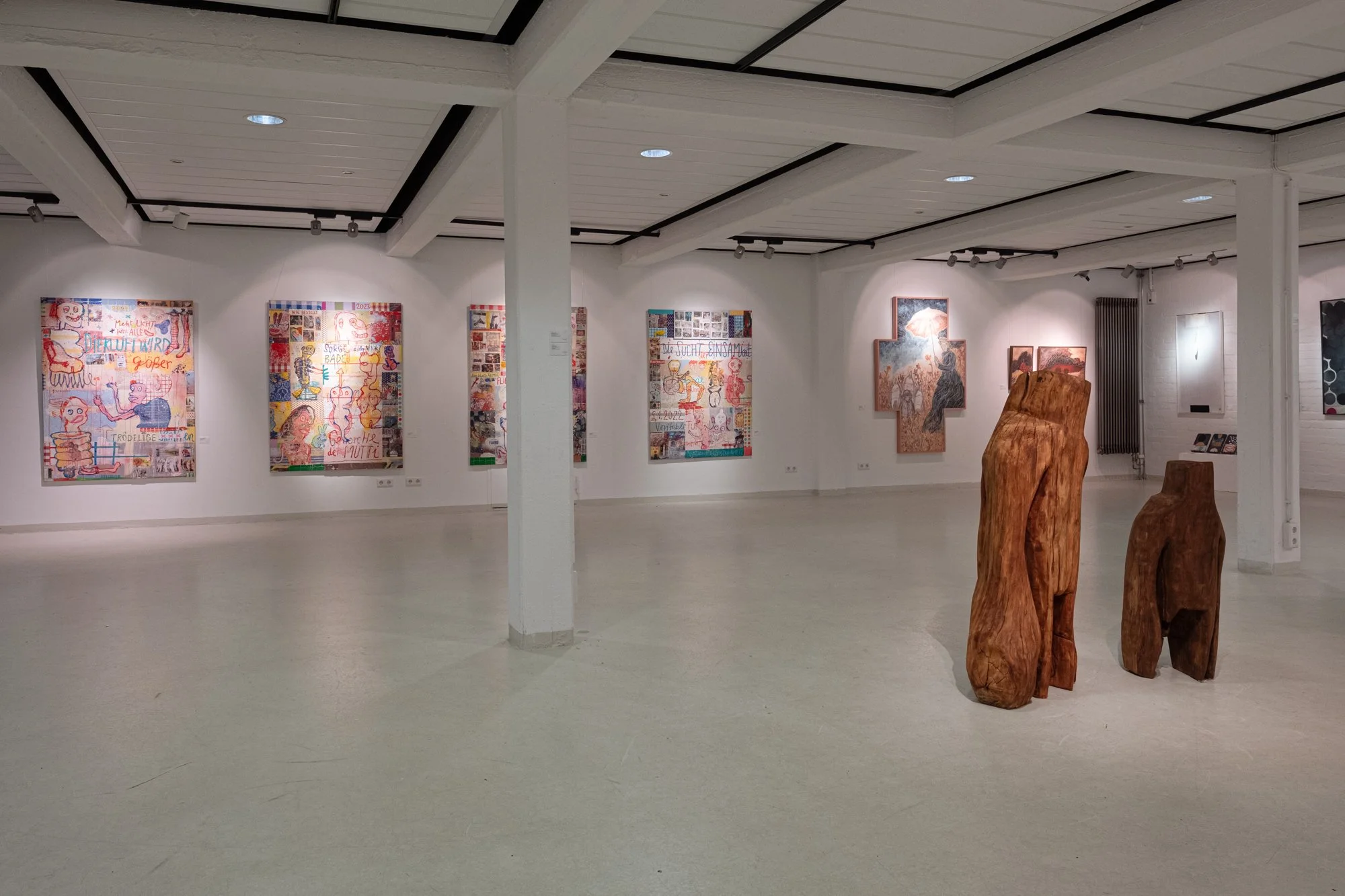
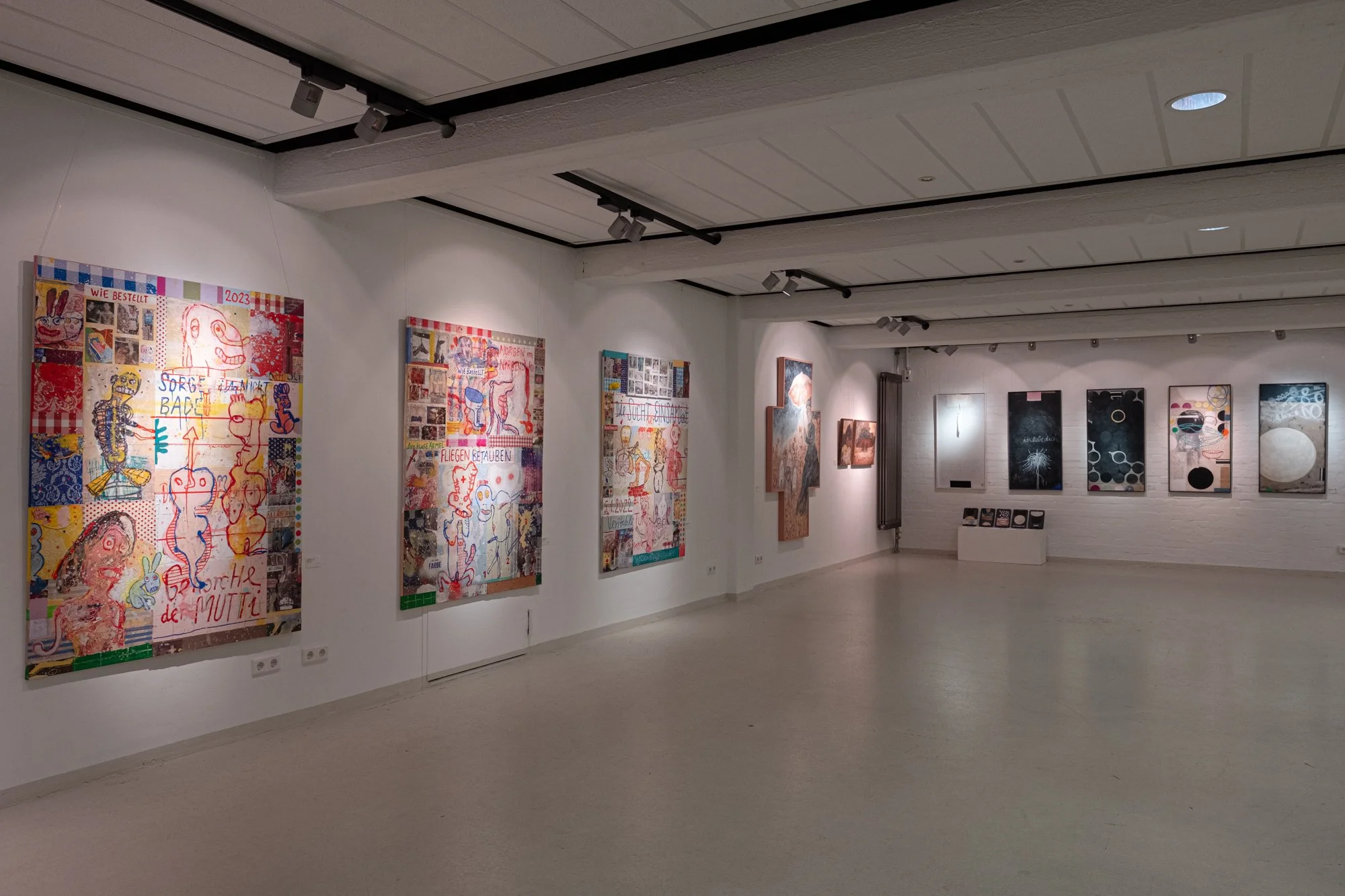
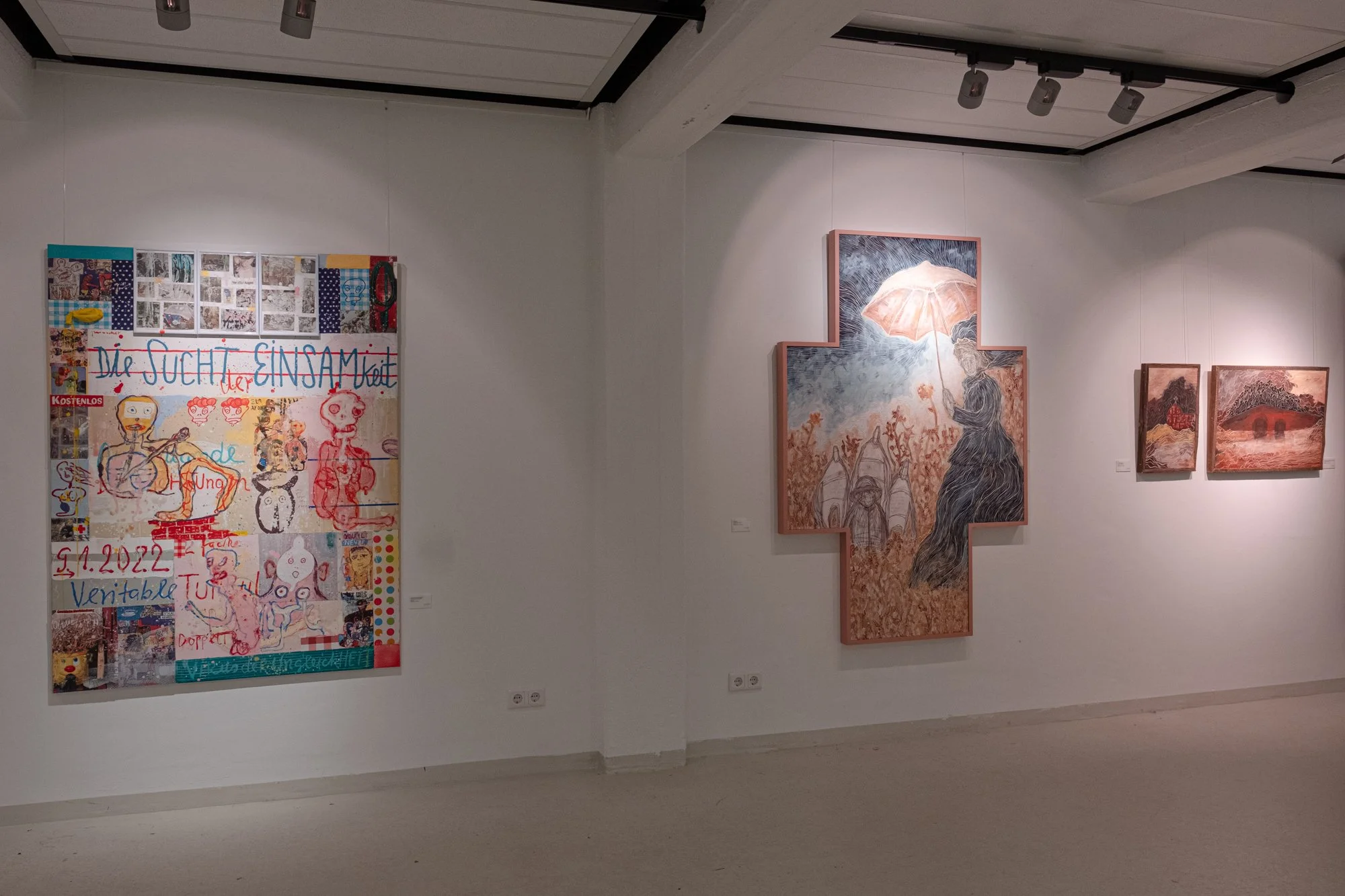
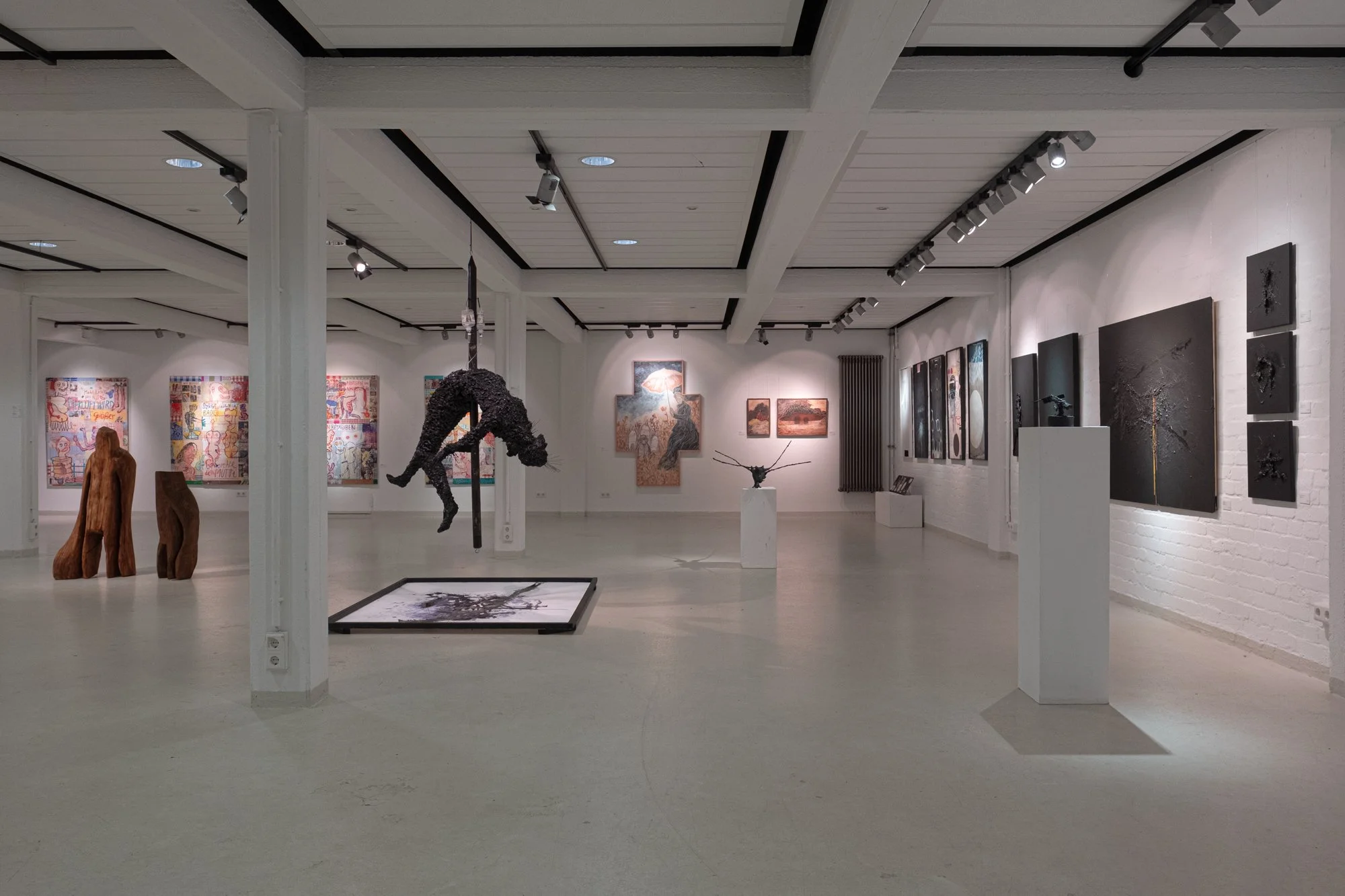
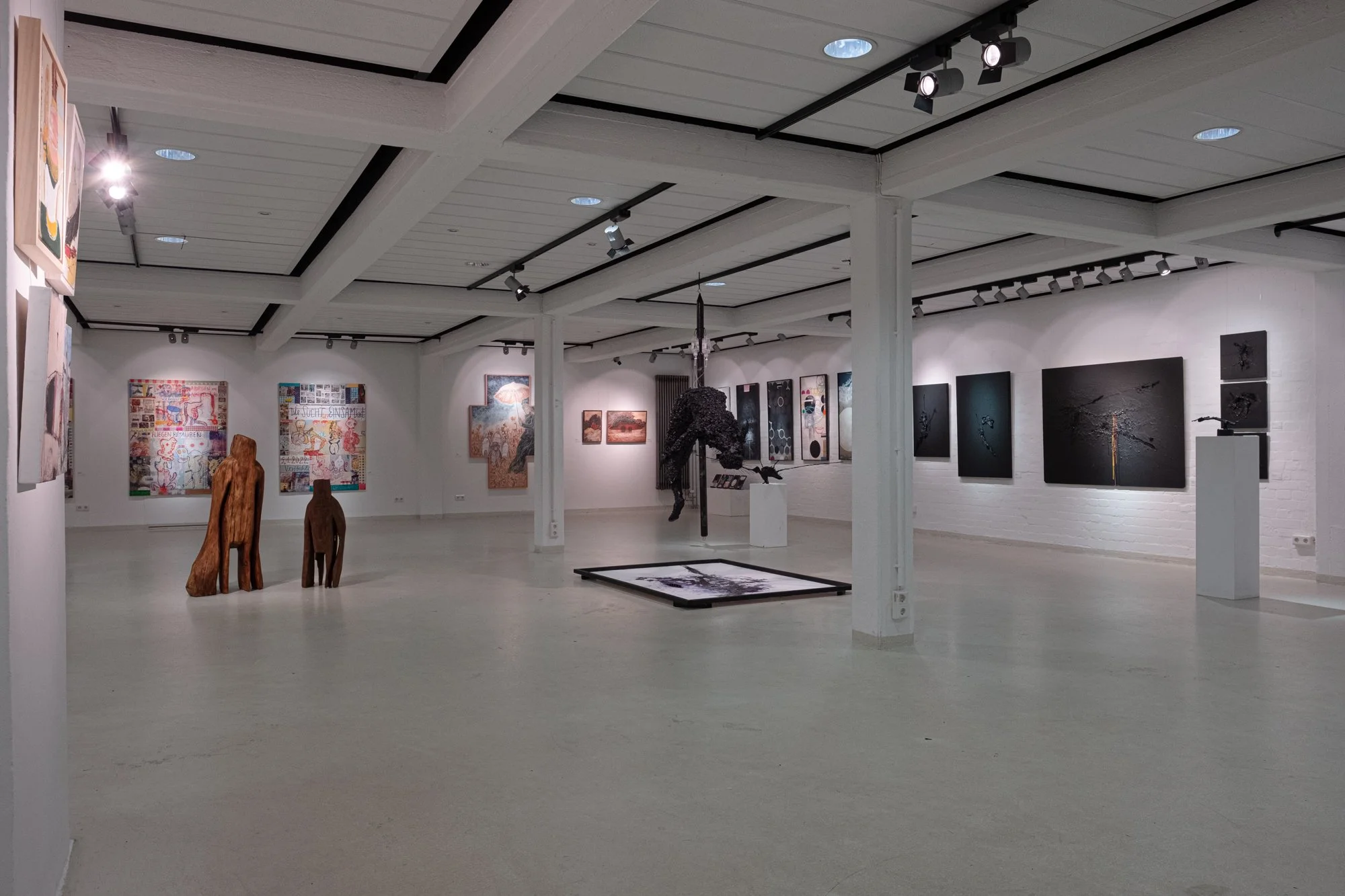
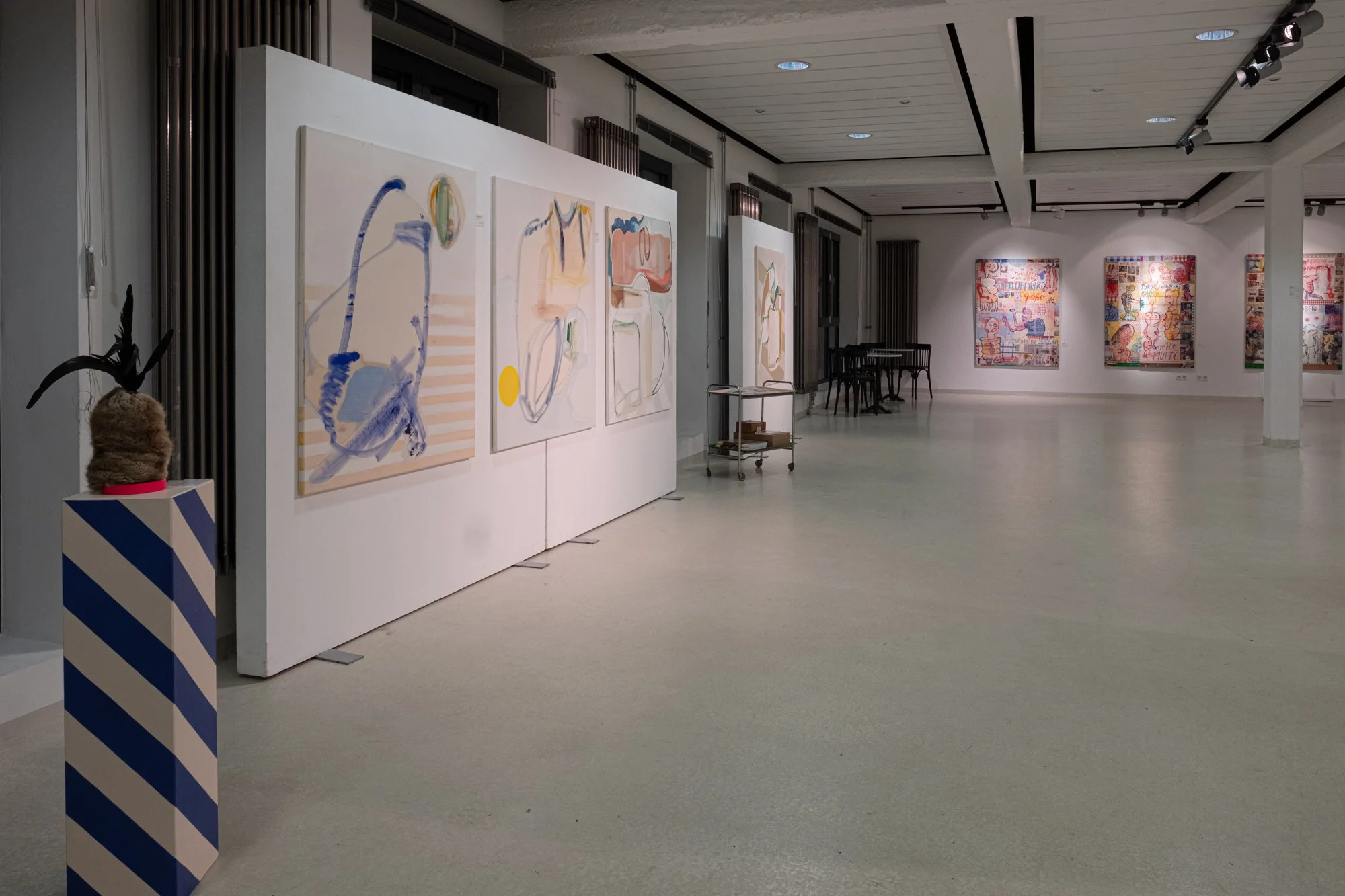
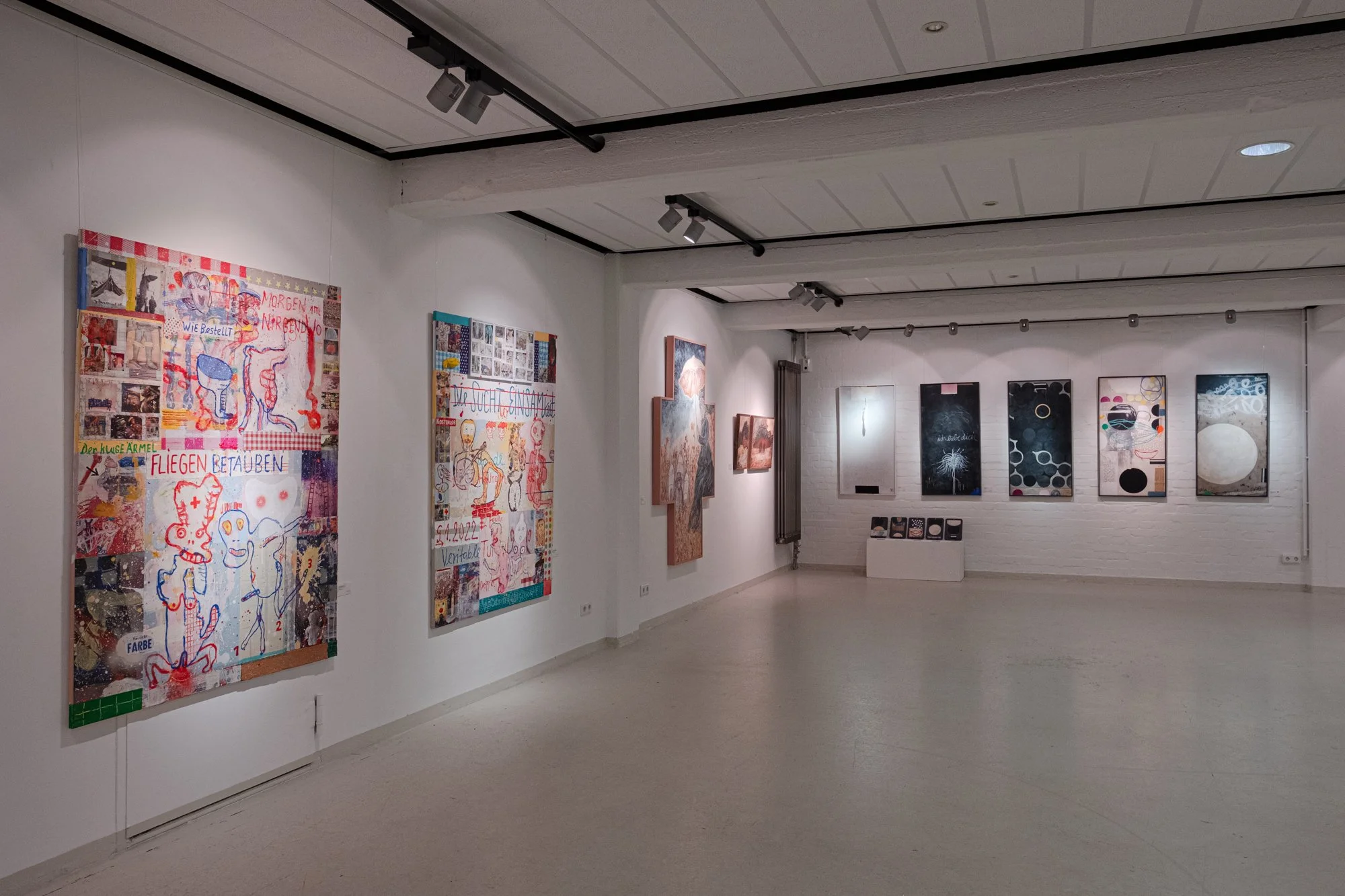
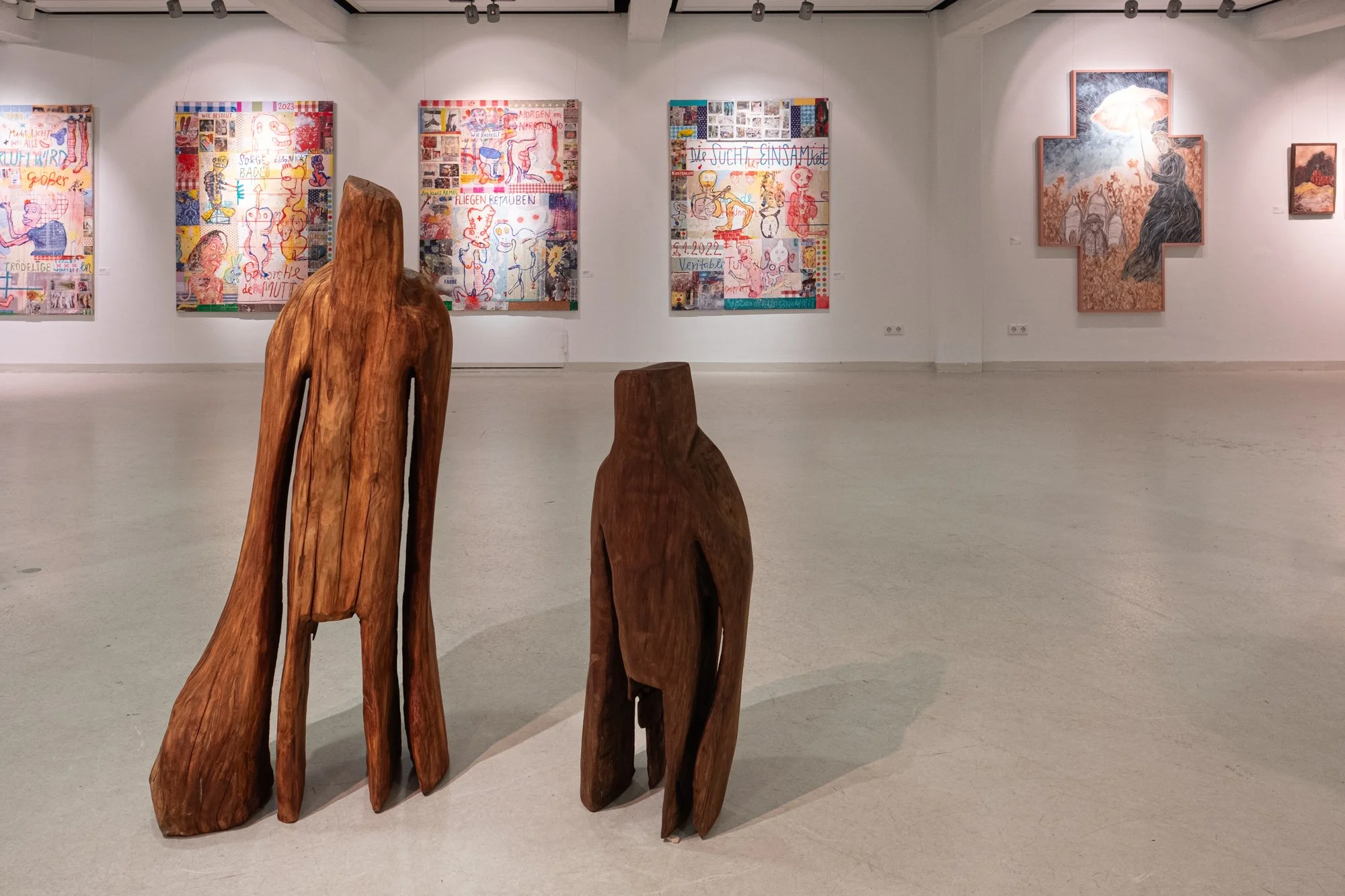
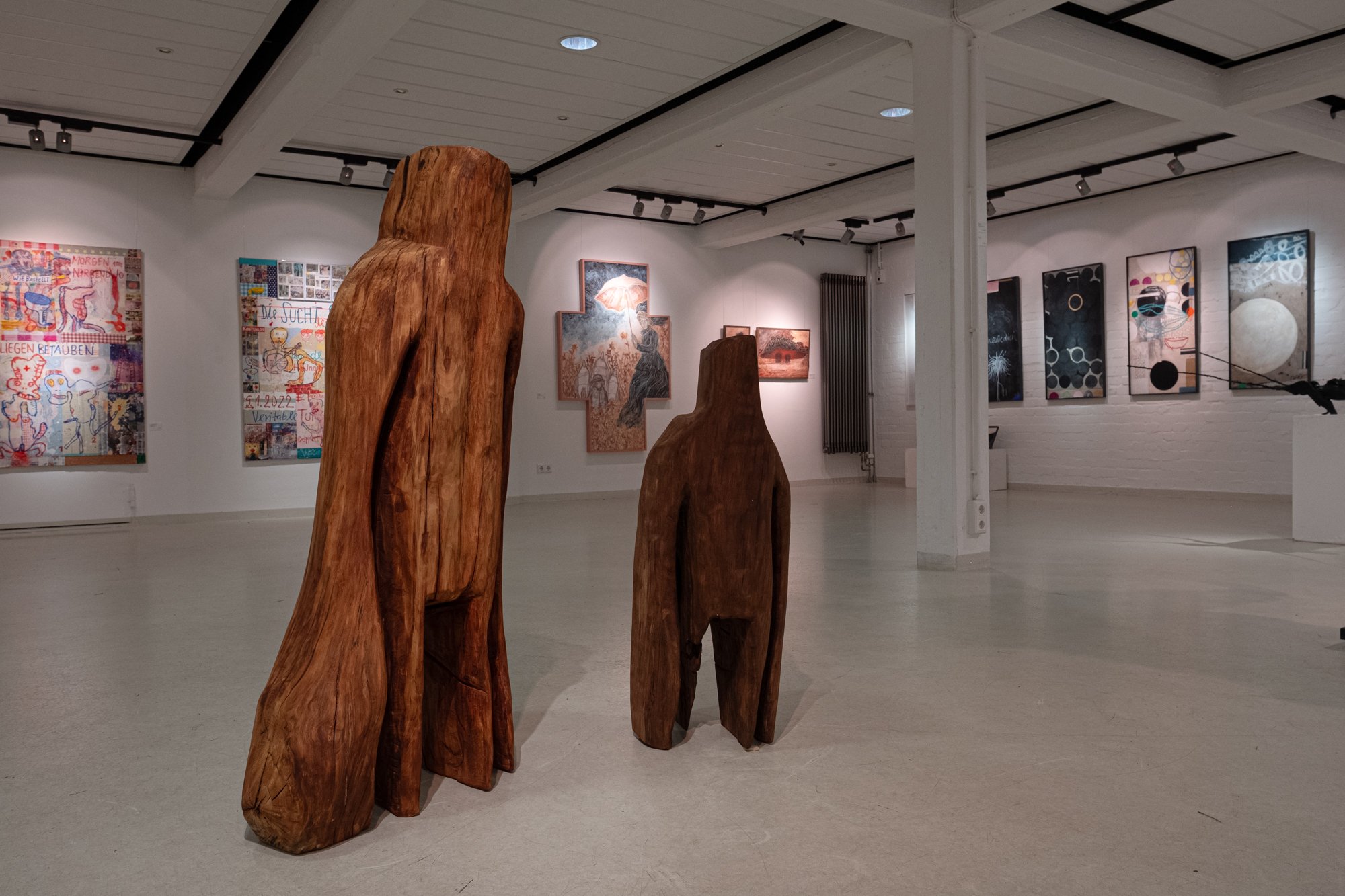
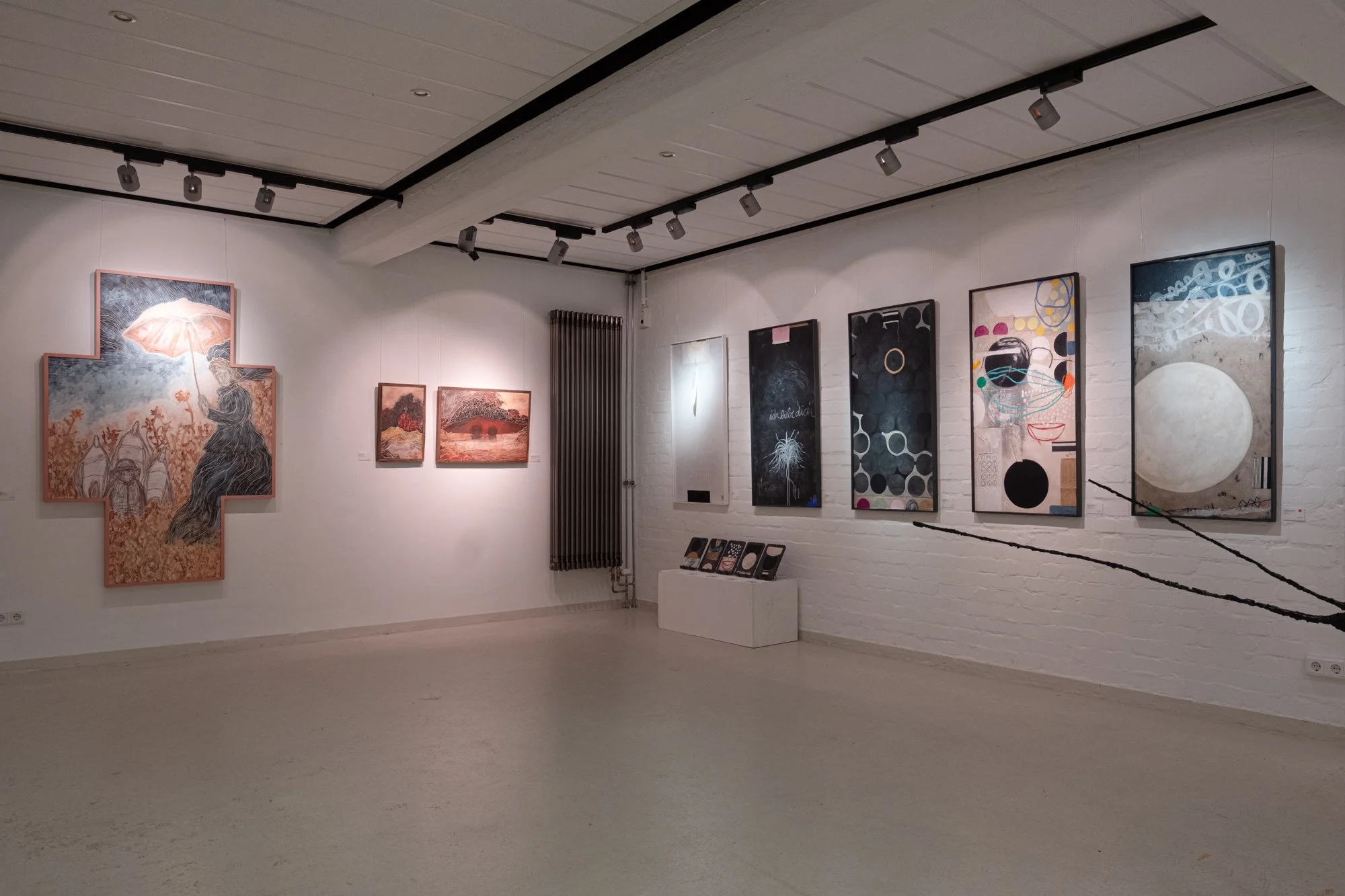
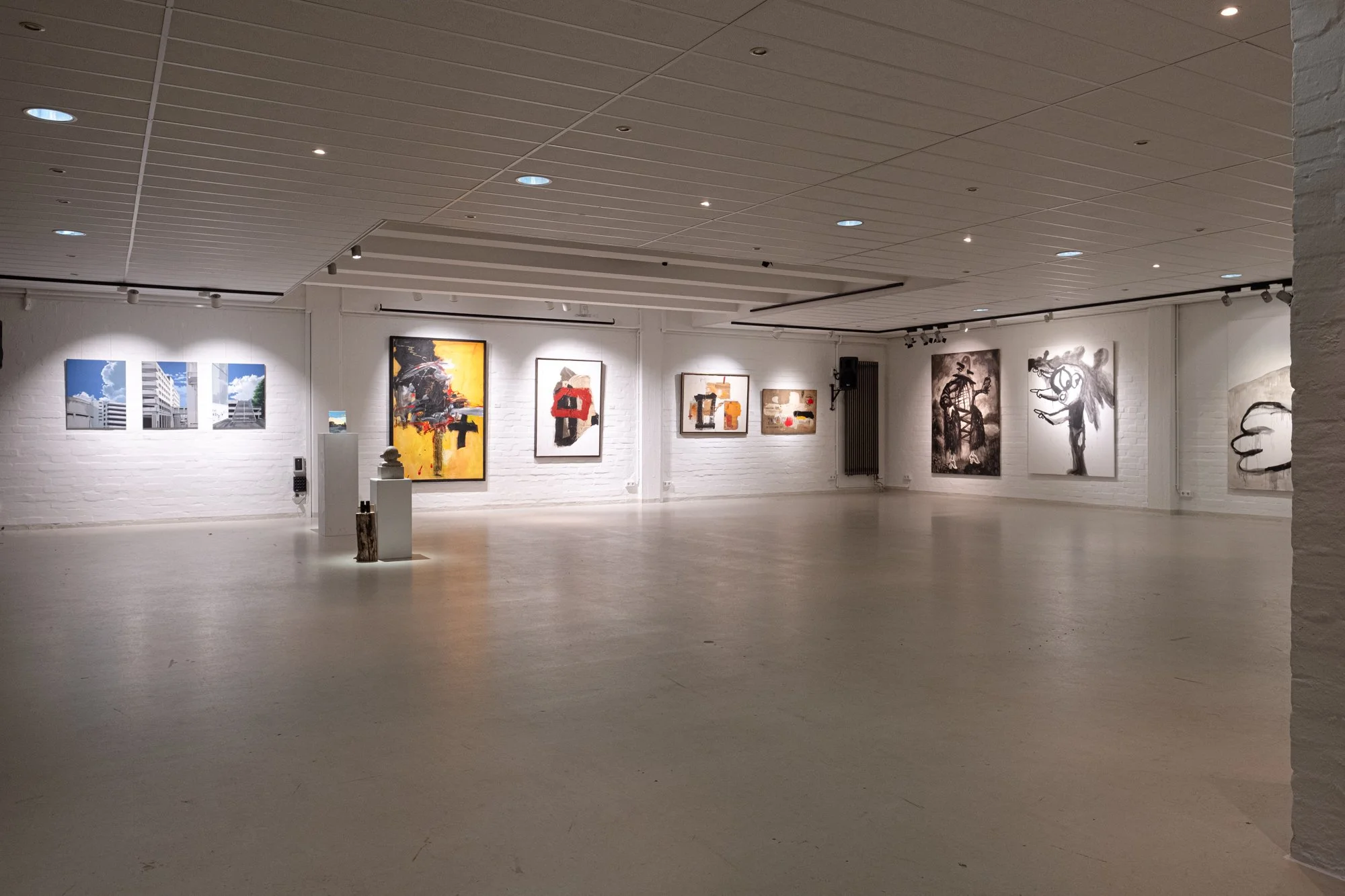
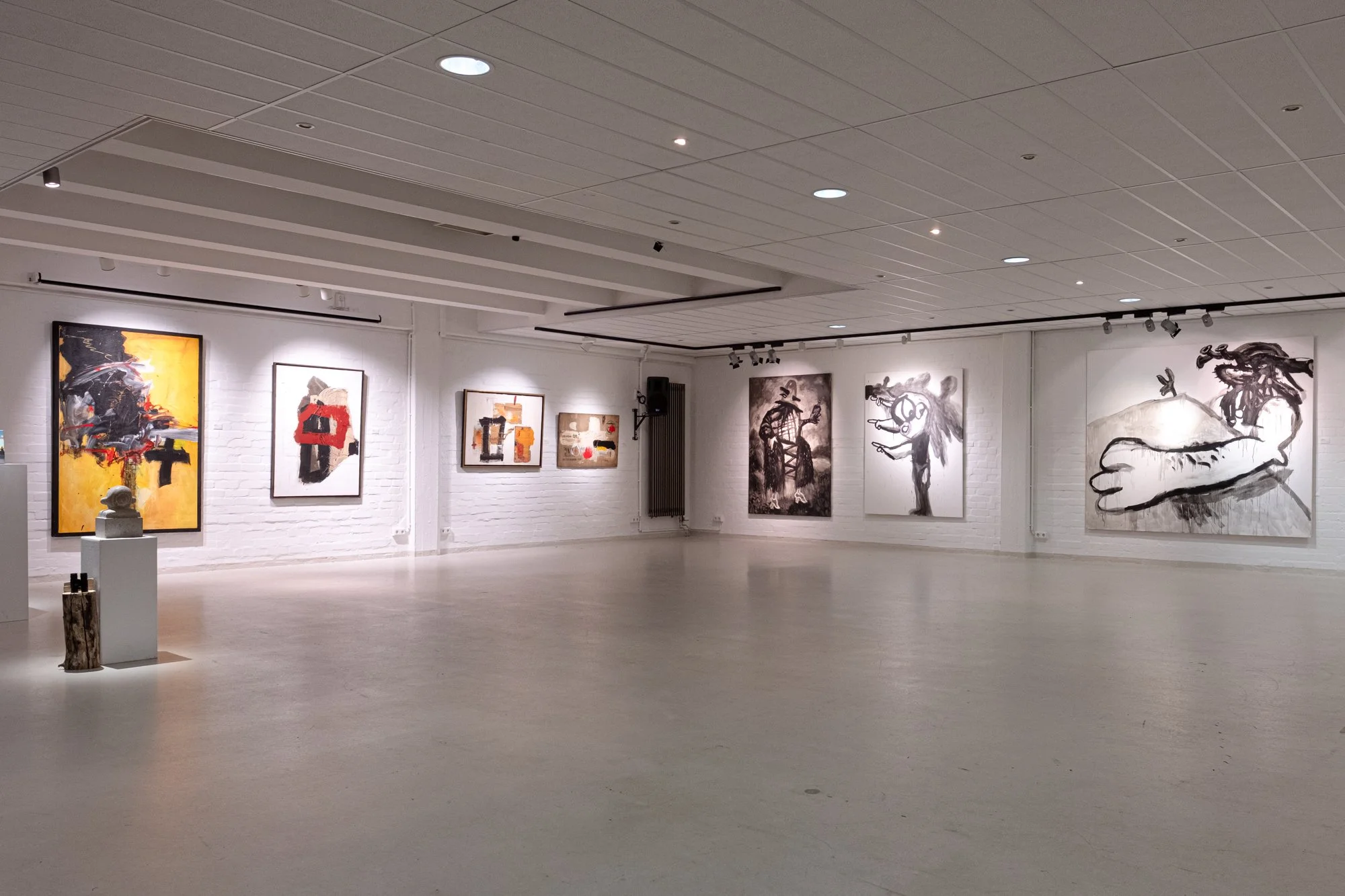
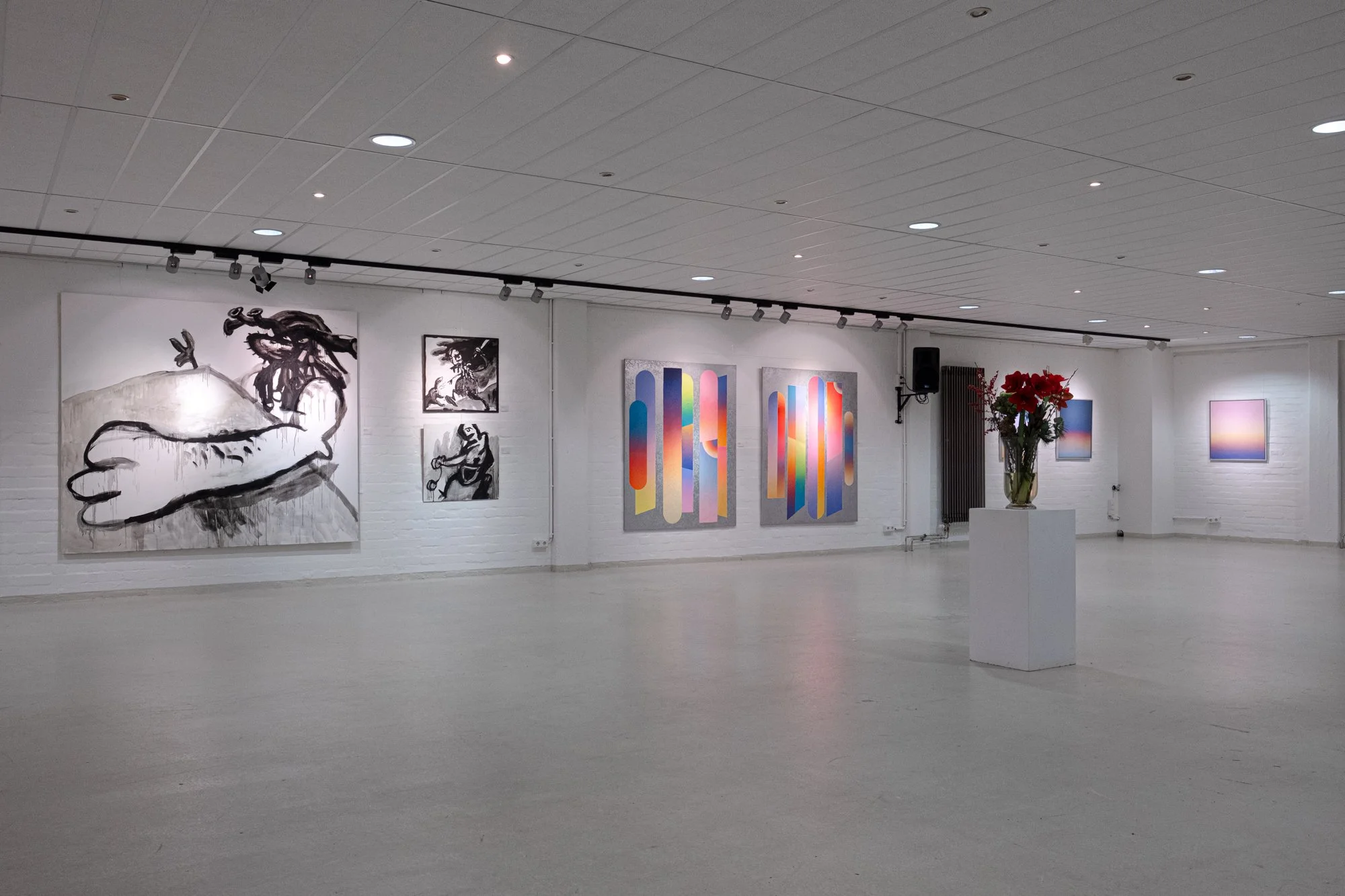
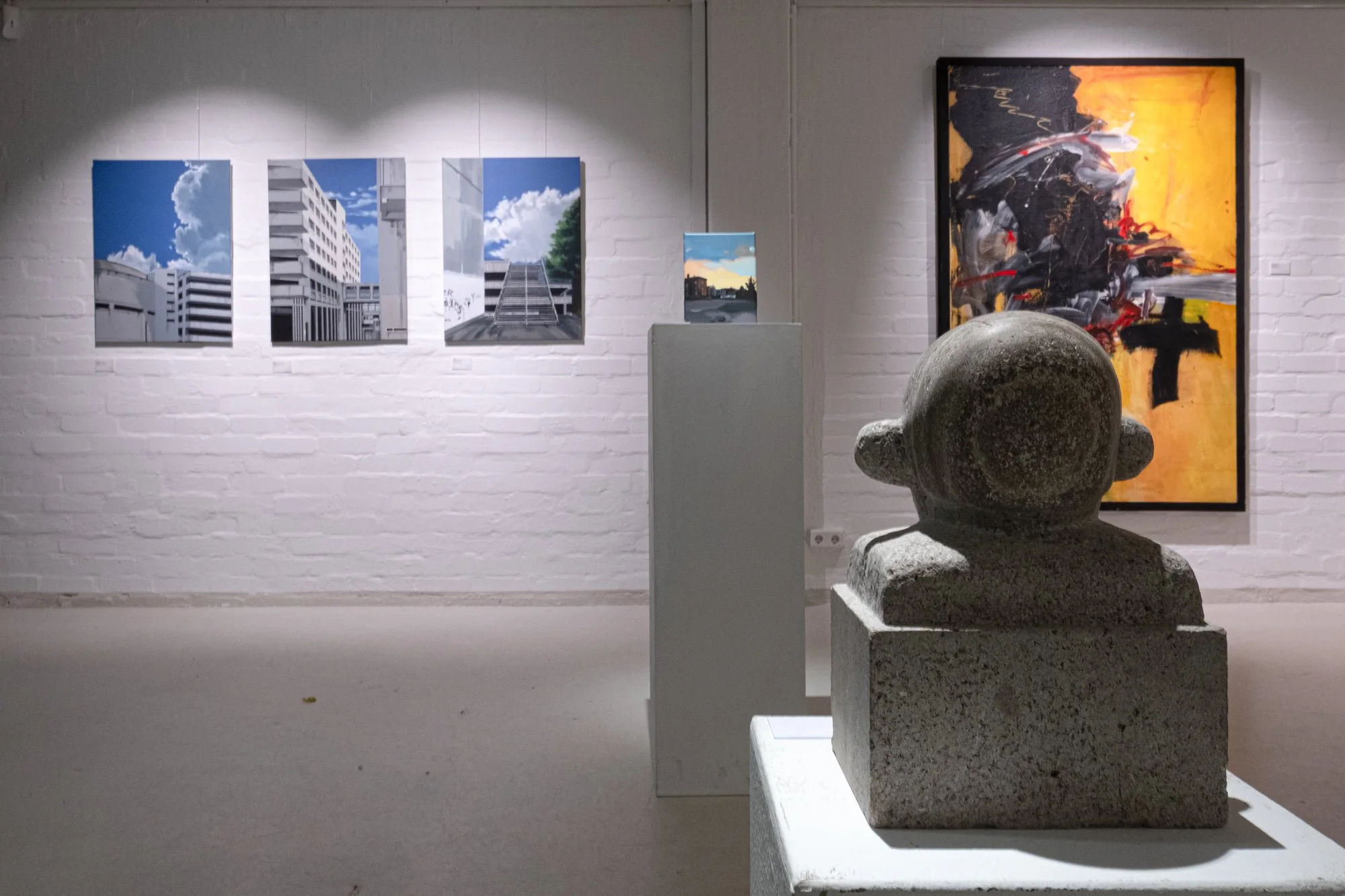
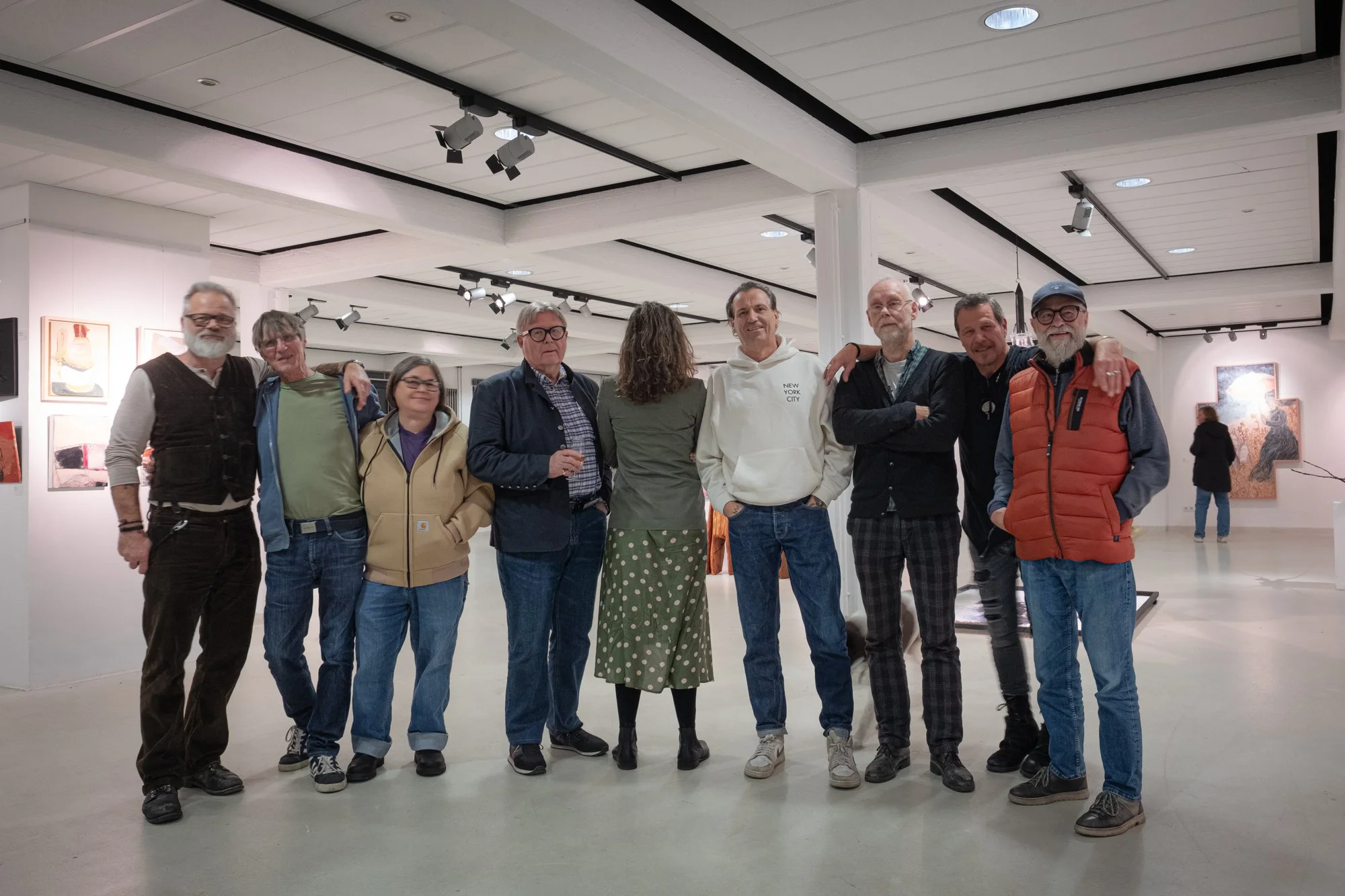
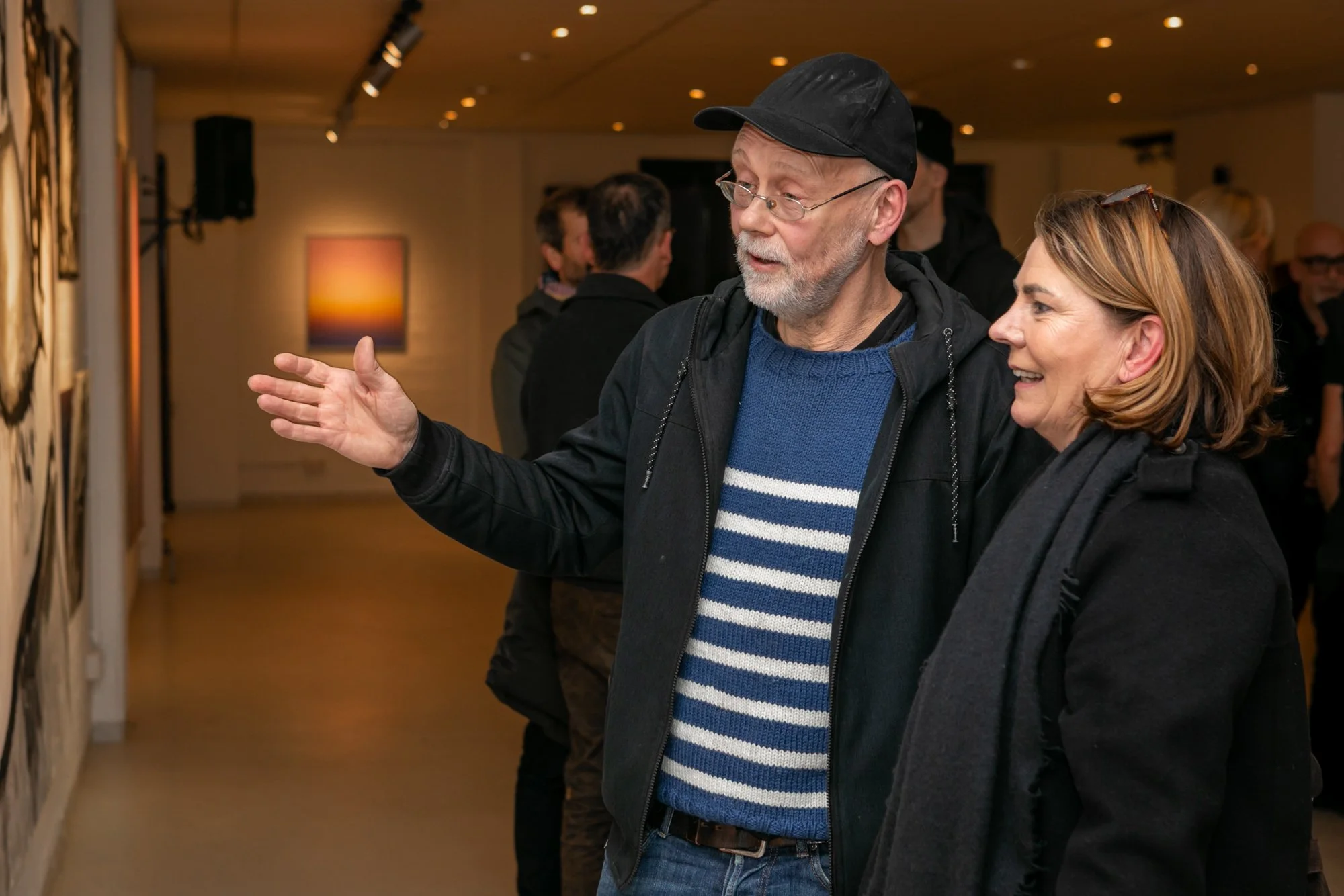
At the moment, some of my works are on display at MEGA Contemporary (location: The RANCH, Bäckerbreitergang 75) in the highly recommended group show HEAT, alongside Stefanie Rausch, Zhou Huang, Nicola Watson, and Max Klein.
On October 16th, there will also be an artist talk at the exhibition – I’ll send out a separate invitation for that. And yes, at that event, I’ll also explain why it’s so charming that Melvin invited me, even though he no longer represents me as an artist.
I’m just a small part of the group exhibition anyway, so really, there’s nothing to explain.
To make this even clearer: next year, I’ll be having my next solo show in Hamburg.
At Krüger. Feinkunst Krüger.
That’s right.
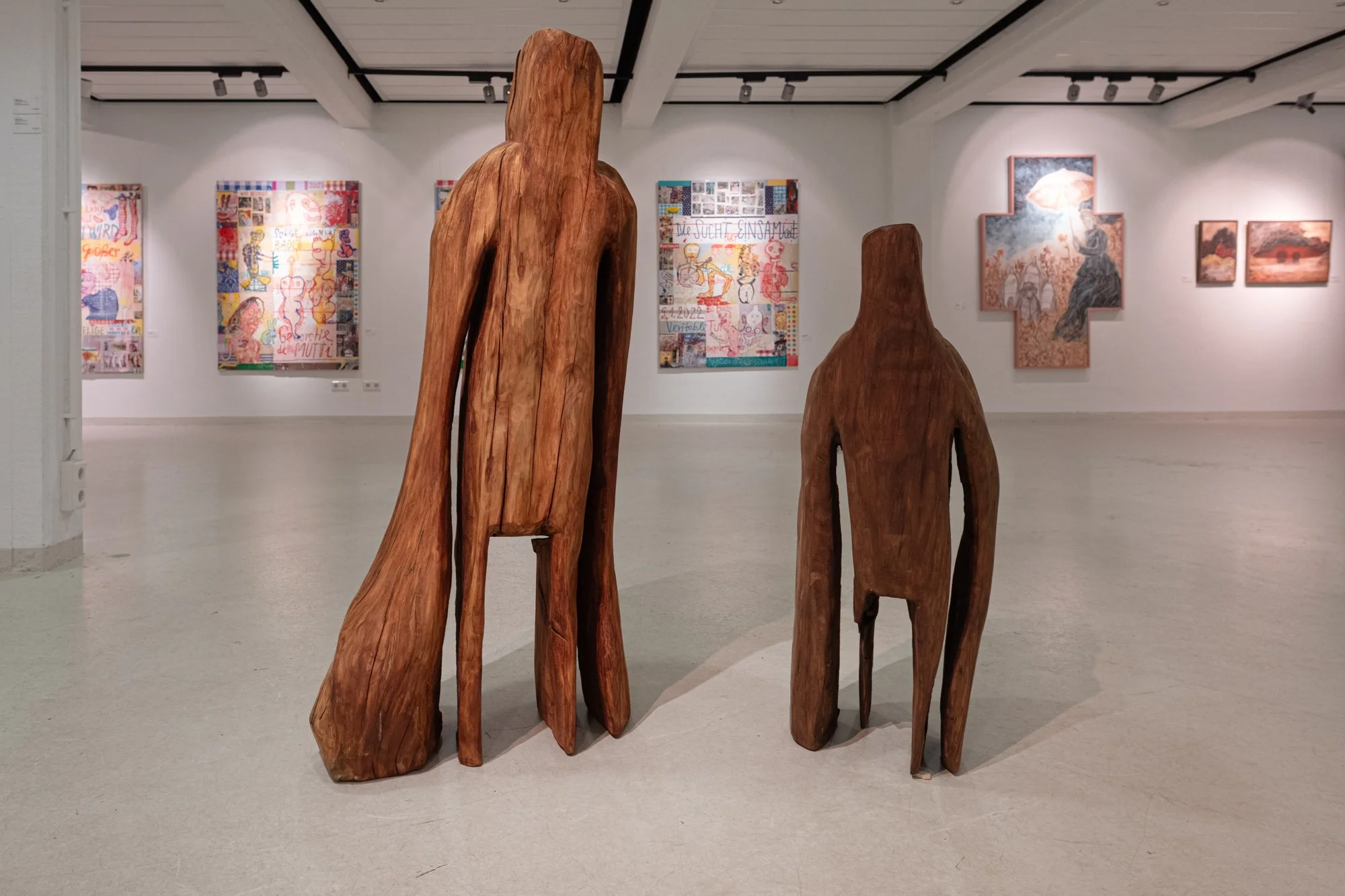
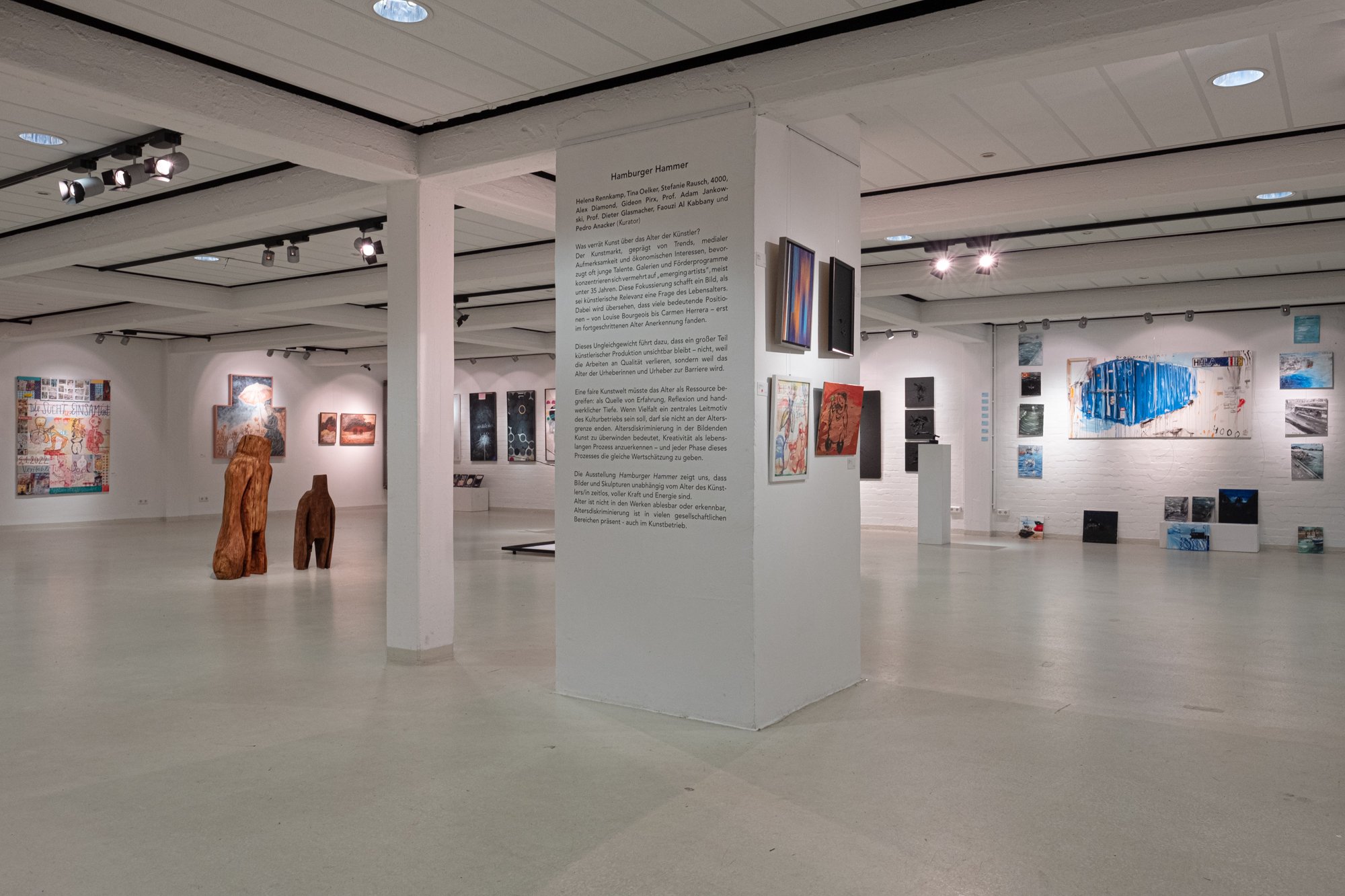
And in December of this years, there’s another chance to see my art in Hamburg – at Fabrik der Künste:
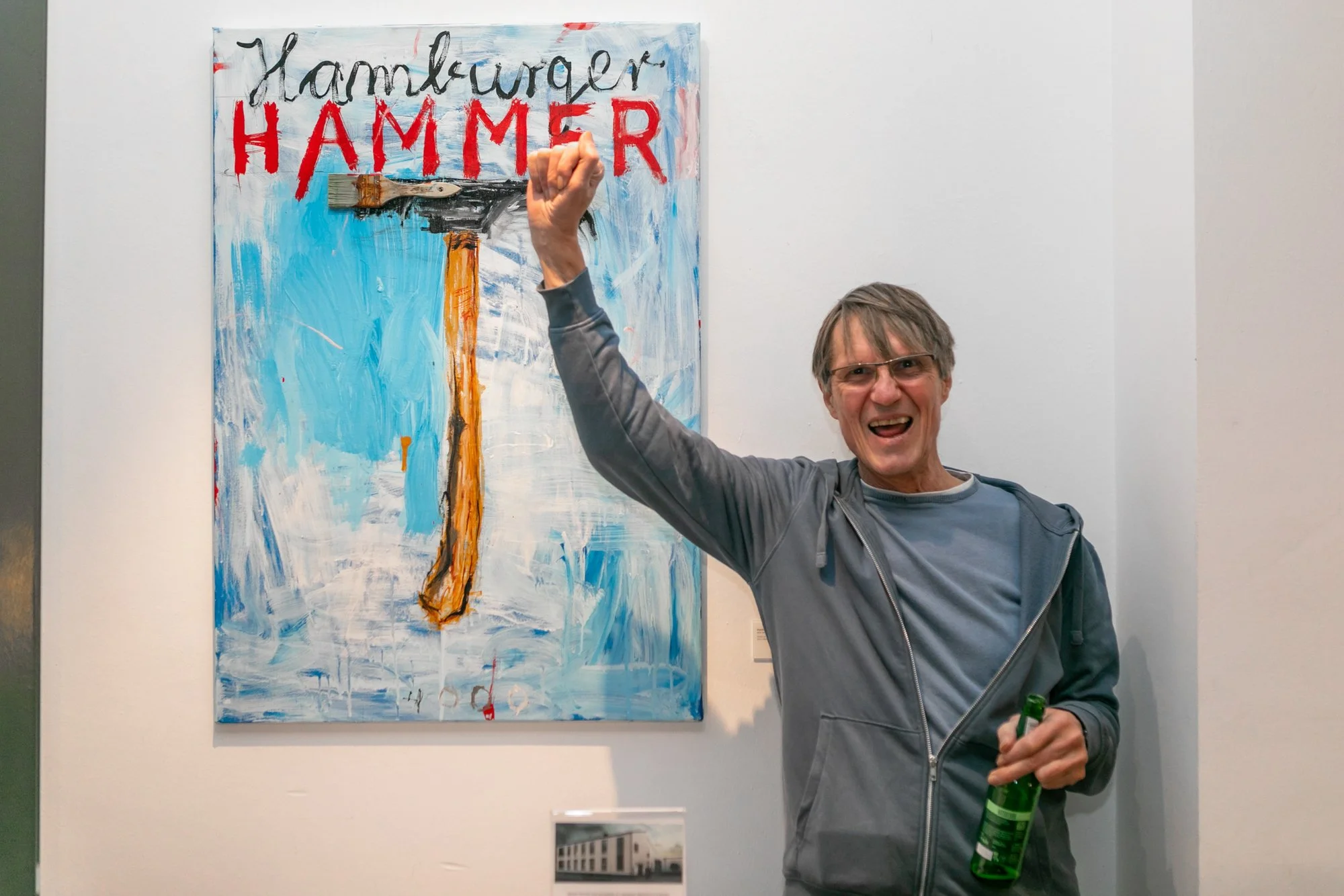
The wonderful Pedro Anacker has put together a truly illustrious group of Hamburg artists for a show called „Hamburger Hammer“.
The lineup includes Helena Rennkamp, Tina Oelker, Stefanie Rausch, 4000, Gideon Prix, Adam Jankowski, Dieter Glasmacher, Faouzi Al Kabbany, and of course, Pedro Anacker himself.
The opening will take place on Friday, December 5th, at 7 p.m.
And because all that isn’t enough, I’ll soon be heading to the Stuttgart area for a very special, incredibly exciting art project – but I can’t talk about that yet. More on that later.
And that’s enough for now.
Until next time: stay vigilant, take care of yourselves, keep fighting for democracy, freedom, and diversity in our society.
Fuck Trump & MAGA.
And fuck the AfD.
Yours,
Jörg